

Every draft cycle brings hype, headlines, and high ceilings. But every now and then, a class delivers something more: clarity. A clear No. 1. A player who rises above the competition and redefines what a top prospect should look like.
This three-part series breaks down the 2025 NBA Draft class through a tiered lens — not just ranking players but evaluating how they project at the next level, what separates their skill sets, and where their potential lies. From proven stars to raw upside bets to high-floor glue guys, we’re diving deep into the layers of this year’s talent.
Tier 1: The Prototype
This tier, in 2025, belongs to one player and one player only: Cooper Flagg. Flagg stands alone as a generational two-way talent with elite instincts, leadership, and a game tailor-made for the modern NBA. He’s the prototype — a defensive savant with offensive polish, positional versatility, and a winning mentality that’s impossible to fake. He’s not just the No. 1 pick — he’s the standard.
Tier 2: The Star Track
Only one prospect lives here, too — Dylan Harper. A poised, physical, high-IQ combo guard with NBA bloodlines and an advanced feel for the game, Harper plays with a maturity well beyond his years. He controls tempo, defends with pride, and thrives in structure or chaos. He doesn’t need to be loud to dominate — he just wins his matchups.
Tier 3: Tools, Traits, and Upside Swings
Here’s where things get intriguing. Tier 3 is full of players with elite athleticism, rare measurables, and flashes of brilliance that suggest stardom — if everything clicks. VJ Edgecombe, Khaman Maluach, and Airious “Ace” Bailey headline this group, each bringing a different flavor of upside. Whether it’s Edgecombe’s explosive slashing, Maluach’s towering rim protection, or Bailey’s scoring instincts and bounce, this tier is about projection. The ceiling is sky-high — but there’s still development to be done.
Tier 4: The Foundation
No flash, no fluff — just winning basketball.
Tier 4 isn’t about highlight reels or raw potential. It’s about trust, reliability, and role players who already understand how to make an impact. These prospects know exactly who they are, play within a system, and bring mature, translatable skill sets that coaches value from day one.
Think of Derik Queen, an offensive hub with elite footwork, touch, and passing feel from the post. Or Kon Knueppel, a sharpshooter and connective passer whose IQ and floor-spacing elevate team flow, or Collin Murray-Boyles, a hard-nosed, switchable defender who plays with a nonstop motor and finds ways to matter without the ball.
Their ceilings may not match the tiers above — but their floors are among the highest in the class. These are glue guys, system fits, and culture-setters. The types of players who help you win in March — and help you survive the grind of an 82-game NBA season. Tier 4 may not carry the hype, but it possesses the kind of reliability every great team needs.
Tier 1 — Cooper Flagg: In a League of His Own
There’s no debate. Cooper Flagg sits alone at the top of this class — a one-man tier defined by talent and impact. He’s not about flash or fanfare. Flagg’s game is built on substance, driven by one thing: winning.
From the moment he steps on the floor, every possession carries weight. He plays with a relentless motor and elite instincts, making him a force on both ends. Defensively, Flagg is a disruptor of the highest order. His floor awareness and anticipation are years ahead of his age. He rotates on a dime, contests shots without fouling, and switches seamlessly across multiple positions — a rare and highly coveted skill set in today’s NBA. His timing on blocks and steals is impeccable, often cleaning up mistakes and sparking transition plays. More than just a physical presence, he’s a cerebral defender who can anchor a unit with leadership and IQ.
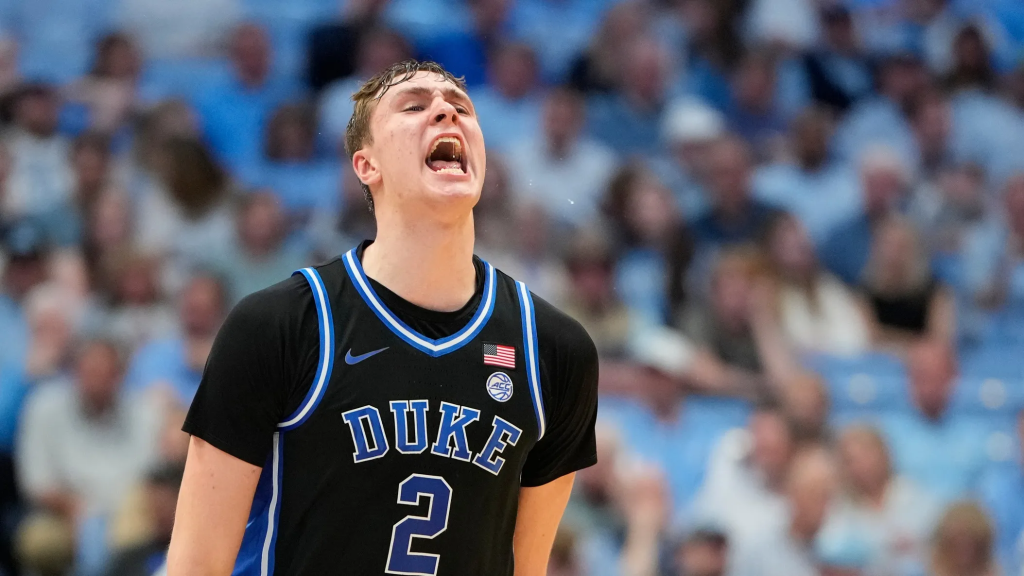
And the beauty of Flagg’s game? He doesn’t need to score to change the game.
Yet when he does shift to offense, his impact is equally impressive. He doesn’t need to dominate the ball to leave his mark — he scores within the flow, picks his spots, and always makes the right read. Whether he’s initiating the offense, finding open teammates, or stepping up with a timely bucket, Flagg’s decision-making and feel consistently elevate those around him. His playmaking stands out, not for its flash, but for its purpose — sharp passes, unselfish setups, and game-winning reads.
Then there are the intangibles: leadership, toughness, and accountability. Flagg leads not just with his voice but by example. His presence lifts his team—it becomes more cohesive, confident, and dangerous when he’s on the court. His ability to raise the level of play across the board is one of those qualities you can’t quantify but you always notice.
Flagg fits the mold perfectly in today’s NBA, where versatility and two-way impact are the gold standard. He’s the prototype for the modern game—a player who can guard anyone, create for others, and impact winning without demanding the spotlight. He has no weaknesses and is elite across the board.
Cooper Flagg isn’t just the top prospect — he’s a future franchise cornerstone. And right now, he’s in a tier all by himself.
He’s that guy.
Tier 2 — Dylan Harper: In a Lane of His Own
Call him Tier 2 if you want — but don’t let the label fool you. Dylan Harper isn’t just another name on the list. He’s in a lane all his own, defined by a rare blend of size, feel, and control that few in this class — or any class — can match.
There’s a quiet confidence to Harper’s game. A poise that never wavers, no matter the situation. He’s never rushed, never rattled. Every read is deliberate, every decision intentional. That composure comes from a deep understanding of the game — the kind that’s built over a lifetime. His father, Ron Harper, carved out a long, respected NBA career with the Bulls, Lakers, and Nets, bringing championship pedigree, defensive prowess, and leadership wherever he went. That legacy isn’t lost on Dylan. You can see it in how he plays.
At 6’6″, Harper is the definition of a modern combo guard. He can run the show or get a bucket — whatever the moment demands. He’s got the vision and passing touch of a true lead guard, often operating at his own pace, dictating tempo rather than reacting to it. When Harper has the ball, the game slows down — not because he’s dragging the play, but because he’s in complete command. He knows how to get to his spots, how to use his frame to his advantage, and when to make the right read.
His basketball IQ is advanced, likely sharpened from years spent living the NBA lifestyle. He plays with an instinctive feel that makes everything look smoother and simpler. That natural rhythm is what sets him apart.

And then there’s his versatility. Offensively, he’s a matchup nightmare — too big for smaller guards, too skilled for bigger wings. Defensively, he brings effort and discipline. He’s not chasing highlight steals or big blocks — he plays smart, helps at the right times, and rarely makes mistakes. He guards multiple positions and understands where to be and when. He’s not flashy. He’s solid. Dependable.
Still, there are questions. His playmaking is sharp in structured sets, especially out of pick-and-rolls, where spacing is defined and reads are clean. But can he create in less scripted situations? Can he consistently generate offense when plays break down? That part of his game is still evolving. And then there’s the jumper. While serviceable, his three-point shot hasn’t become a reliable weapon — yet. If defenders start to sag or go under screens, can he make them pay from deep? That will be a key test at the next level.
But the foundation is already strong. Harper plays with a calm intensity and a mature understanding of the game. He doesn’t need to shout to lead — he does it through trust, presence, and execution. That mental edge passed down from his father’s career gives him a rare veteran-like approach for a prospect his age.
Harper’s leadership, poise, and two-way potential make him stand out — even among the elite. He might not be the top name in the class, but he’s undoubtedly one of the most complete.
So yes, technically, he’s in Tier 2. But make no mistake — Dylan Harper is in a category all his own.
Tier 3 — High Upside, Rare Traits
This is the swing-for-the-fences tier. The names here might not be the most polished or game-ready today, but the potential is undeniable. Tier 3 is where projection takes center stage — where the flashes are loud enough to make you pause and wonder, what if it all comes together? From elite athleticism to outlier tools and budding shot-making, these prospects don’t just have upside — they have rare upside. And if they hit, they might just outshine everyone above them.
VJ Edgecombe — Pure Explosiveness, Unfiltered Energy
If you’re looking for a player who brings pure, unfiltered force to the court, look no further than VJ Edgecombe. He’s a walking highlight reel, defined by explosive burst, verticality, and physicality that puts defenders on skates and posters. Edgecombe isn’t just fast — he’s violent with his athleticism, using it as a weapon every time he touches the ball.
At 6’5″ with a college-ready frame, Edgecombe’s game is built around high-level tools and an elite motor. He doesn’t glide — he attacks. Whether it’s in transition or off a straight-line drive, his intent is clear: get downhill, make defenders uncomfortable, and finish through contact. That same energy translates on the defensive end, where he’s a menace in the passing lanes and brings constant ball pressure.
But with that motor comes a little chaos. Offensively, his aggression can sometimes work against him. He has a tendency to force the issue, barreling into traffic or trying to make something out of nothing. His ball-handling is still developing, and when asked to initiate offense, his decision-making can falter under pressure. Finding control within that effort will be critical to unlocking the next layer of his game.

The biggest swing skill? His jumper. Right now, it’s inconsistent, and defenders will dare him to prove he can stretch the floor without a reliable outside shot. If the shooting comes around — and if he tightens the handle — Edgecombe could evolve into a two-way impact player in today’s pace-and-space league.
There’s also the positional question. He’s a “tweener” in the truest sense — not quite a lead guard, not yet a traditional wing. But in today’s NBA, where roles are defined less by position and more by function, Edgecombe’s tools and motor give him a legitimate chance to carve out a niche. He’s a bet on energy, effort, and elite athleticism. And if the rest of the game catches up, the payoff could be massive.
Khaman Maluach — Raw, Rare, and Rising
No player in this class presents a longer-term developmental arc than Khaman Maluach — and few are as intriguing. At nearly 7’2″, with nimble feet, improving instincts, and flashes of touch, Maluach is a modern big in the making. He’s only been playing the game for four years, but the strides he’s made in that short time have scouts buzzing about what could be.
Defensively, Maluach already alters games. His length and natural timing make him a shot-deterring presence in the paint, particularly in drop coverage, where his ability to contest at the rim stands out. His block numbers don’t leap off the page yet, but the potential to anchor a defense is evident. He’s mobile for his size, and while his perimeter defense is still a work in progress — particularly when switching onto quicker guards — the raw tools are there.
Offensively, he’s still very much a project. His touch around the rim is improving, and there are occasional flashes of short-roll playmaking and even some pick-and-pop potential. But consistency beyond five feet is lacking. Part of that is system-based, but part of it is where he is developmentally. A more free-flowing, pace-and-space offense could unlock more of his tools as a rim runner, lob threat, or eventual floor-spacer.

The biggest question for Maluach is how quickly he can adjust to the pace, physicality, and complexity of the NBA game. He still plays on his heels at times, and his lateral movement remains a concern in space. But with a frame like his — and the progression curve he’s already shown — the upside is real.
He’s a long-term investment, no doubt. But if the offensive skill set sharpens and the defense continues to grow, Maluach has the chance to become a modern-day rim protector who brings value on both ends of the floor. Even if the ceiling isn’t fully realized, his physical gifts alone give him a pathway to being a valuable rotation big.
Airious “Ace” Bailey — Tools, Touch, and Time
Few players in this class have a physical profile as enticing as Airious “Ace” Bailey. At 6’9″, he moves like a guard, floats into jumpers, and shows flashes of three-level scoring that are impossible to ignore. He covers ground with ease, rises into contested shots like it’s second nature, and looks the part of a future NBA scoring wing. The intrigue is real.
Bailey’s highlights pop — deep pull-up threes, acrobatic finishes, step-backs over contests. But with that highlight-reel ability comes inconsistency. His shot selection needs refinement, and his efficiency fluctuates from game to game. While he can hit tough shots, he takes a few too many of them. And because he doesn’t generate consistent separation off the bounce, defenders often stay close enough to alter his rhythm.

Coming into the year, there was a real buzz around Bailey as a potential top-pick candidate. But the season didn’t quite match the hype. His scoring lacked the polish expected, and his playmaking — especially as a connective piece — was minimal. He still relies heavily on self-creation and hasn’t yet shown the ability to elevate those around him consistently.
Defensively, however, there’s real promise. He’s not a stopper yet, but his length and agility make him a versatile piece on the wing. He can slide with perimeter players, contest from the weak side, and become a valuable help defender with time. Add some muscle and improve the awareness, and Bailey could easily become a switchable, modern 3-and-D wing — or more.
In the short term, he projects best as a floor-spacer who can attack closeouts and offer some defensive versatility. Long-term, the upside is there. He has the frame, the fluidity, and the scoring flashes to eventually become a primary option—but it’ll take patience, structure, and growth in decision-making and consistency.
Projection Over Production
Tier 3 isn’t about being college-ready — it’s about being NBA-relevant down the line. Edgecombe, Maluach, and Bailey each bring rare traits that can’t be taught: elite athleticism, towering length, shot-making touch. The path forward won’t be linear for any of them, but the potential payoff is too big to ignore. In a few years, this could be the group we look back on as the real prize of the class.
Tier 4 — Reliability: Built for the Long Haul
They won’t blow up the highlight reel, and that’s precisely what makes them special.
Tier 4 prospects aren’t chasing the spotlight — they’re chasing wins. This group is defined not by raw athleticism or jaw-dropping upside but by an elite sense of self-awareness and professional polish well beyond their years. Call them the glue guys, the tone-setters, the winning players. Whatever the label, the value they bring is undeniable.
These are the prospects who already play the game the right way. They don’t need the ball in their hands to leave a mark. They know their role, execute with precision, and thrive in the margins — the kind of players who elevate teammates, cover mistakes and tilt possessions in ways the box score rarely captures. Coaches love them because they can be trusted, night in and night out.
Derik Queen: A Polished Post Presence with a Modern Puzzle to Solve
Sure, they may lack the sky-high ceilings of the blue-chip Tier 1–3 talents, but their floors? Arguably the highest in the draft. And when you’re building a roster to last, that kind of reliability isn’t just nice to have — it’s essential. These are the players who carve out 10-year careers, not because they dominate, but because they fit — seamlessly, silently, and successfully.
When it comes to back-to-the-basket polish in this year’s class, nobody checks more boxes than Derik Queen. The Montverde Academy big man plays like a seasoned pro, armed with elite touch, pristine footwork, and a basketball IQ that leaps off the screen. He doesn’t just operate in the post — he orchestrates from it, turning low-block touches into high-level reads and smart decisions that fuel the offense.

Queen isn’t your typical young big. He plays with poise, control, and an understanding of the game that suggests he’s been studying the art of post-play for years. Whether it’s scoring with both hands, baiting double teams, or threading dimes to cutters out of traffic, Queen acts as a hub — a centerpiece you can run your halfcourt sets through. His feel for timing, spacing, and the flow of the game is rare, and it gives him a high floor as an offensive contributor at the next level.
But for all his offensive craft, the conversation around Queen always revolves around one critical question: Can he defend well enough to stay on the floor in today’s NBA?
There’s no doubt he brings strength and active hands to the defensive end. Still, Queen’s lack of elite vertical athleticism and lateral mobility is a red flag — especially in a league where bigs are routinely pulled into space and asked to defend lightning-quick guards in pick-and-roll scenarios. Anchoring a defense requires more than smarts and effort; it requires agility, rim protection, and the ability to cover ground quickly. That’s where the uncertainty lies.
Can Queen consistently protect the paint and rotate on time? Can he hedge, switch, or drop with enough speed to not get exposed? These are the swing factors that could define his NBA role — and his staying power.
Still, there’s a curveball in his toolkit that keeps scouts intrigued: center playmaking. Queen has shown glimpses of being more than just a post scorer — he’s a potential initiator from the block, a creative connector in the halfcourt who can punish double teams and elevate the offense with his vision. In an era where versatility is king, that kind of offensive wrinkle could carve out a unique lane for him.
At the end of the day, Queen’s path to success won’t be about stuffing the stat sheet — it’ll be about finding the right system, the proper role, and the right team to lean into what he does bring while helping him grow where he’s not there yet. He may never be a traditional defensive anchor. Still, if a franchise can unlock his playmaking and insulate him defensively, they could end up with one of the smartest, most reliable bigs in the class — and a player built for the long haul.
Kon Knueppel: A High-IQ Wing Built for the Right System
Kon Knueppel isn’t the loudest prospect in the room — but he might be one of the smartest. In a class filled with highlight creators and athletic anomalies, Knueppel brings a throwback feel to the modern wing role, grounded in IQ, efficiency, and a polished offensive package that rarely wavers from its fundamentals.
The shooting is real — and it’s versatile. Knueppel knocks down threes with balance and repeatable mechanics, whether he’s spotting up off the catch or flowing into movement threes within the offense. He reads closeouts well, makes the extra pass when it’s there, and has the kind of offensive patience that’s often missing at the high school level. His game doesn’t scream for attention — but coaches notice the little things: the spacing reads, the smart cuts, the unselfish swing passes. He’s the type of player who keeps the gears turning without ever needing to dominate the ball.

But as smooth as his game looks on tape, Knueppel’s NBA projection hinges on a few crucial questions — starting with his role.
Is he a floor-spacing wing with connective passing and secondary ball-handling chops? Or is there more on-ball juice waiting to be tapped into? He’s shown flashes of operating in pick-and-rolls, especially in transition or attacking tilted defenses, but he’s not a downhill attacker or an advanced creator. His handle is solid but not deceptive, and his first step won’t blow by anyone at the NBA level. So if you’re penciling him in as a lead initiator or combo guard, you’re betting heavily on basketball IQ and decision-making to compensate for a lack of explosion — and that’s a steep ask in a league full of twitchy, shot-creating guards.
And then comes the biggest swing factor: athleticism.
Knueppel simply doesn’t have elite quickness, lateral speed, or vertical lift. Defensively, that’s where the spotlight turns. Can he stay in front of smaller guards? Can he rotate fast enough to close space? Against explosive NBA wings, will he be able to contest or even recover when beaten? These concerns raise a broader positional dilemma: if he’s not quick enough to guard twos and not long or athletic enough to consistently check threes or fours, where exactly does he fit defensively?
That’s what makes his margin for error thinner than most. In the wrong system — one that leans on iso-heavy scorers or demands switch-heavy defense — Knueppel could get exposed. But in the right situation? He becomes a real value add. A system built on ball movement, floor spacing, and team defense could maximize everything Knueppel does well. Think of a motion-heavy offense where his feel, shooting gravity, and passing unlock weakside actions — or a scheme where he’s protected by length and athleticism around him and asked to simply make the right reads and stay solid.
Shooting and decision-making will keep him in the conversation. But his swing skills—on-ball versatility and defensive adaptability—will determine whether he’s just a specialist or something more.
Knueppel won’t be for every team. But for the ones that value feel, unselfishness, and system-fit over flash? He could quietly become one of the smartest, most reliable pieces in their rotation. He may not tilt the game with raw talent — but he’ll tilt it the right way.
Collin Murray-Boyles: The Glue Guy with Game That Translates
He’s not built for the box score — he’s built for winning.
Collin Murray-Boyles is the type of player who doesn’t just play hard — he plays right. Every possession. Every rotation. Every scramble. The South Carolina forward brings a relentless edge and a no-nonsense approach that coaches love and teammates trust. From tip-off to the final whistle, Murray-Boyles sets a tone with his motor, his toughness, and his commitment to doing the little things that make big differences.
Defensively, he’s already ahead of the curve. At 6’7″, he might be undersized by traditional standards, but you wouldn’t know it from the way he holds his ground in the post or slides with guards on the perimeter. He’s a true defensive Swiss Army knife — switchable, physical, and smart. He’s built low to the ground, has a strong base, and plays with an awareness that allows him to rotate early, contest with discipline, and cover for teammates. He doesn’t chase blocks — he positions himself. He doesn’t gamble — he communicates. That kind of mature, team-first defense is hard to find, especially in a player his age.
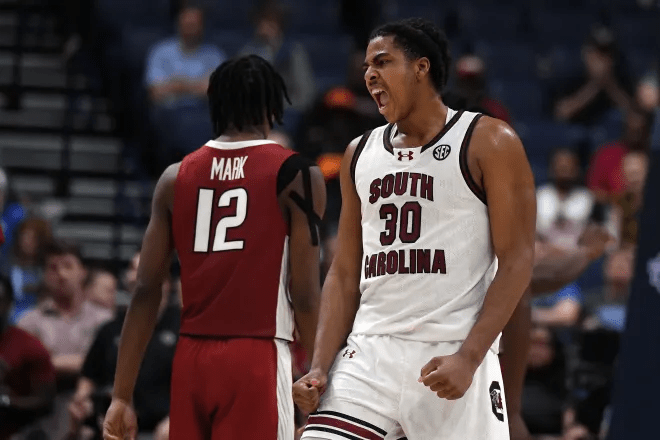
He’s the definition of a glue guy — a tone-setter, a connective piece, and a lineup-flexible forward who gives coaches options. Plug him into a switching scheme, ask him to guard multiple spots, and watch him quietly influence winning without demanding touches.
The offensive side of the ball is where things get more murky — but also more interesting.
At South Carolina, Murray-Boyles was primarily used in a big-man role: screen-and-dive actions, dump-off finishes, and duck-ins. He’s shown solid touch around the rim and flashes of face-up ability, but the perimeter game remains a question mark. The jumper is still developing, and while the mechanics aren’t broken, the confidence and consistency just haven’t fully clicked yet. If he wants to live as a modern four in today’s NBA, that’s the swing skill — spacing the floor, hitting open looks, and keeping defenders honest.
But even without a reliable jumper, there’s real value in what he does bring. He knows how to play within an offense. He doesn’t force shots, understands spacing, sets hard screens, makes sharp cuts, and keeps the ball moving. He’s not trying to be something he’s not — and that self-awareness is a skill in itself.
Right now, he projects as a bit of a tweener — not quite a big, not quite a wing. However, that versatility becomes an asset, not a liability, in the right system. He’s a connector. A culture guy. Someone who doesn’t need the spotlight to make an impact.
If the shot comes around and the offensive game continues to evolve, Murray-Boyles could develop into a do-it-all role player with real staying power. But even if it doesn’t fully pop, his defense, effort, and understanding of the game give him a pathway to minutes — and maybe more.
He’s not flashy. He’s not loud. But he matters. And on good teams, guys like Collin Murray-Boyles always find a way to stick.
This tier isn’t built for buzz — it’s built for trust. Tier 4 prospects may not headline draft night or light up social media, but they’re the names coaches circle when the games start to matter. They’re the connective tissue of rosters, the ones who do the dirty work, play within a system, and elevate everyone around them. These are the players who get it — who understand how to impact winning without hijacking possessions or chasing stats.
Whether it’s Derik Queen, a high-IQ post hub with touch, feel, and rare passing instincts for a big… Kon Knueppel, a sharpshooting, ball-moving wing who reads the game two steps ahead… or Collin Murray-Boyles, a defensive grinder who brings switchability, toughness, and nonstop effort — the common thread is clear: reliability.
You know what you’re getting with Tier 4 guys. They show up every night, they buy in, and they make coaches’ lives easier. Their ceilings may not reach the star-level potential of the top tiers, but their floors are amongst the highest in the draft class. That matters — especially when you’re building out rotation pieces, filling gaps around stars, or laying the groundwork for a winning culture.
These aren’t just role players. They’re winning players. They are the kind who help you survive the grind of an 82-game season and give you trustable minutes in playoff environments. They bring maturity, effort, and adaptability — and they don’t need the ball to matter.
Tier 4 isn’t about flash — it’s about fit. And every great team needs players who make the whole greater than the sum of its parts.


 The Center Hub
Leave a reply to GBN Tier: Part 2 – Cost-Benefit Analysis for High-Potential vs. Immediate-Impact Contributors – The Center Hub Cancel reply