
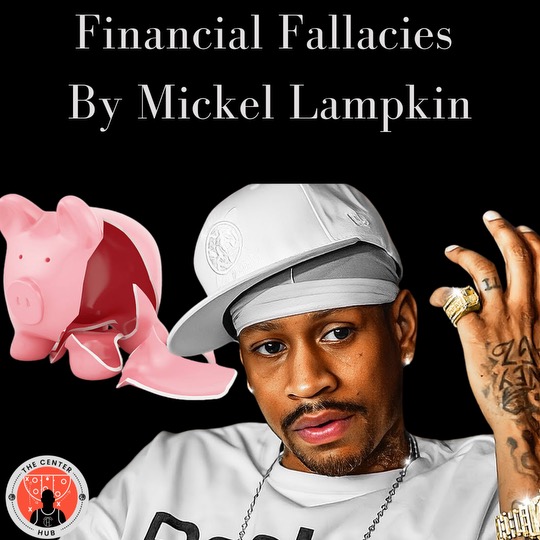
The dream of becoming a superstar basketball player and making it to the NBA is ingrained into young basketball minds at an early age. The alone time on a local blacktop basketball court, counting down to yourself 3, 2, 1 (buzzer sound)! We’ve all done it, but reality sets in once a lot of us don’t make it to college, let alone making the high school basketball team.
A lot of dreams were crushed early, on the path to NBA superstardom. But a very select few will get the chance to see the promised land and get to the top of the mountain. As a former street ball player, I never really had those dreams of grandeur, so that was not my journey in life. However, growing up in the projects close to downtown Dallas, I had friends who were very capable of getting to the NBA.
To keep their names anonymous, I’ll give them the names Clifford and Slim. Let’s talk about Clifford’s situation first. Stay with me, because I am going somewhere with this. As a young hooper, I’ll say I was about 13 years old, Clifford was in college, about 6’4″, and was, in my opinion, the next Scottie Pippen. He had all the offensive game, was a great shooter, and a decent defender.
We hooped almost everyday at Pike Park, and the games were always competitive. At 13, I was not very good, so I watched a lot and was in awe of how good Clifford was. The only thing that kept him from excelling on to the NBA stage was that he had to take care of his mother and younger brother. As a result, college basketball was not a priority for Clifford. Thus, Clifford did not finish school, but instead took care of his family and worked to help them survive. His dreams of making it out of the projects still happened, but the road to the NBA was closed for him early in life.
Slim was another local hooper and he was an amazing shooter. Slim and I were the same age. His story was one of a tragic ending. Slim and I were very competitive against one another. So much so that he left for the summer one year, and I wanted to be the first one of us to dunk the basketball once he came back. When he came, I was way better at dunking the ball, but he was way better at shooting the ball. He could shoot the lights out in a game.
During Slim’s 11th grade year of high school, he was atop the district in basketball and was sure to get plenty of college letters. While he received a few, that very same summer is when things took a tragic turn. He and a group of friends ended up killing a man during a robbery. Slim was put on house arrest during his senior year in high school but would eventually be sentenced to 15-20 years in prison for his actions. He served 10 of those years and his dreams of becoming a star player were gone.
Now, why did I tell you all these stories? First, because they are true, and it’s a testament to the environment in which one lives can have a huge impact on how successful one can become. It doesn’t matter how gifted you are as an athlete, your choices early in life can impact your future.
If those young men had access to a mentor, or simply lived in a different environment, their stories would have been ones possibly written in the NBA history books. The environment has huge implications on young men’s decision making, whether it be financial, spiritual, or mental, any positive influence can impact a young life.
As we shift over and talk about the NBA, there are some players that were in similar situations as Clifford and Slim, but these players made it to the NBA but lacked financial clarity.
My first case study is former NBA player Antoine Walker, a Chicago native. Antoine was born on the southside of Chicago, in a single parent household in which his mother raised six children. The area in which he lived was not all sunny and pleasant; but harsh and unforgiving.
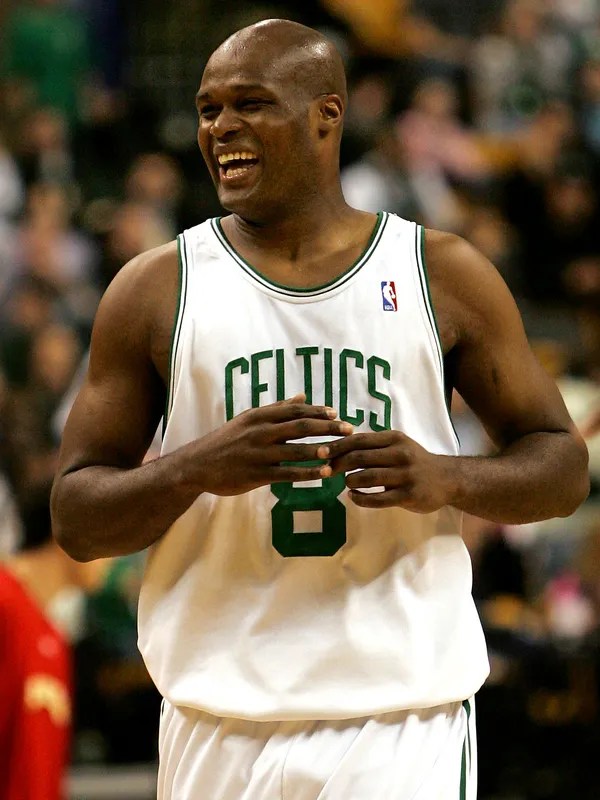
The fact that he took up the sport of basketball must have kept him from engaging in things that were nonproductive. His influences were probably the same as what I had as a youth, such as drug dealers, thugs, and highly suspicious individuals. Even the music in his era, late 90’s early 2000’s did not have many positive messages to influence better choices.
The gateway to escape the dubious lifestyle Walker was currently living was playing basketball, where he played at Mount Carmel High School in Chicago. Having a stellar high school basketball career earned him a scholarship to the University of Kentucky. At Kentucky, Walker also had a stellar college career which led him to be drafted sixth overall to the Boston Celtics in the 1996 NBA Draft.
Being drafted into the NBA was like hitting the lottery for Walker and his family. With his earnings, Antione was able to buy three properties in Chicago. He invested in businesses that did not prosper and spent his money recklessly. For his 11-year NBA career, Antoine made over $100M but just two years after he left the NBA, he filed chapter 13 bankruptcy.
With little to no financial advice, Walker was unable to maintain the money he made in the NBA. Antoine struggled a few years more after he left the NBA, but eventually became debt free and is now a financial consultant for a company named Edyoucore, and he also became a TV analyst.
“I don’t even have money for a cheeseburger“- Allen Iverson to his now ex-wife during the couples divorce proceedings
Our next case study will be an athlete that was a fan favorite, a multi-All Star, NBA MVP, and scoring champ, Allen Iverson. Iverson, who took his team the NBA finals, has so many accolades that it is hard to imagine that he was not good with money.
He grew up in Hampton, Virginia, where his mother did her best to raise him and his siblings. However, Iverson had a father in the home, but he was subsequently arrested in front of Allen when Allen was fairly young. Allen was determined to move his mother and family out of the projects, but the company he kept ultimately got him arrested.
At 17, Iverson was involved in a mass fight at a bowling alley which led to his arrest. Following this arrest, Iverson spent four months in a correctional facility, but eventually got the conviction overturned. During the time that Iverson spent locked up convinced him to get on the straight and narrow path with his life. Seeing the troubles Allen was going through, Georgetown coach, John Thompson went out to meet with Allen, which ultimately led to a scholarship offer.
Allen had a stellar career with Georgetown, winning the Rookie of the Year award, taking the Hoyas to the Sweet Sixteen, and later in his college career, led the Hoyas to the Elite 8. His talent was unmatched, which led him to be drafted as the number one overall pick in the 1996 NBA draft.
Allen had an illustrious NBA career, winning the scoring title 4x, the league’s MVP, and he took his team to the NBA Finals in 2001. A great talent indeed, but his spending habits during his career would prove to be detrimental.
When he traveled with the team, he would never wear clothes that he already had. He would purchase new clothing each road trip he was on with the team. His spending habits were well known, as he had ten ultra luxury cars, an abundant amount of jewelry, and he would overindulge at the strip clubs, spending upwards to $40,000 a night.
This type of spending led Iverson to file bankruptcy in 2012, after defaulting on a jewelry payment. He eventually got divorced, and at his divorce hearing, he stated to his estranged spouse, Tawanna, that he did not even have enough money for a cheeseburger.
Thinking back to the environment that Allen grew up in, it dictated his thought process when it came to financial sense. He didn’t have anyone around him to teach him financial literacy or guide him along the road of how to maintain the wealth he amassed at such a young age.
The silver lining to Allen’s story is that the deal he signed with Reebok, he would receive $800,000 yearly as well as a $32 million trust fund that he will have access to in 2030.
As you can see, there can be some pros to an NBA player’s life after basketball. Next, we will discuss some players that made great financial decisions with their NBA earnings.
Our first case study for the other end of the spectrum is a player that has won four NBA titles, three finals MVPs, a regular season MVP and in addition, too many other accolades to mention. This former NBA is none other than Shaquille O’Neal.
Born in Newark, NJ, Shaq was the eldest of three siblings in which, as an infant, his biological father Toney was a drug addict and was imprisoned before Shaq got a chance to know him. Stepping in, in place of Shaq’s biological father was Phillip Arthur Harrison, who was an Army sergeant.
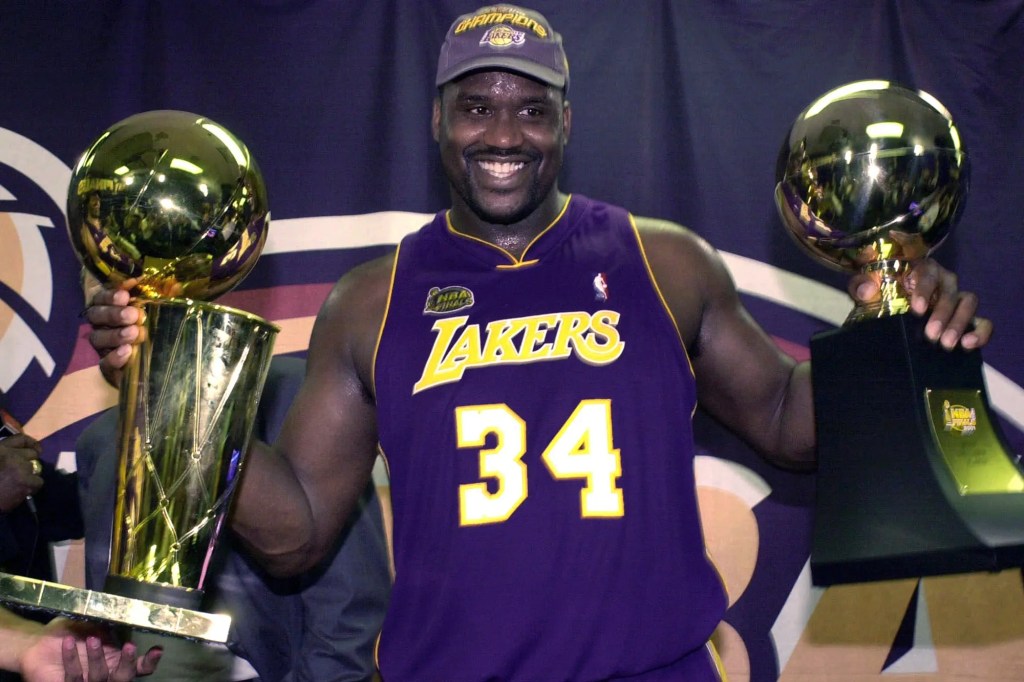
Phillip’s (Shaq’s stepfather) military career took the family from Newark to Germany and Texas. After returning from Germany, O’Neal’s family settled in San Antonio, Texas. By age 16, O’Neal had grown to 6′ ft 10″ in, and he began playing basketball at Robert G. Cole High School.
Having Phillip as a father and mentor made a lasting impression on Shaq throughout his basketball career. The discipline and wisdom that was instilled on Shaq helped him to make logical decision when it comes to finances.
So much so, that after Shaq’s stellar basketball career, he invested in Google, opened his own chicken restaurant brand, as well as investing into the Ring doorbell company. He is currently worth an estimated $500 million.
Shaq’s financial achievements are a testament to having the right people around him at an early age.
Our second case study for the other end of the spectrum is a player that was somewhat involved in a love triangle during his stint with the Dallas Mavericks. But before we go too deep into that, let’s look at the life and career of Jamal Mashburn.
Born in the Bronx, NY to a former New York police officer father named Bobby, and his lovely wife Helen Mashburn. Bobby was also a former heavyweight boxer who retired back in 1974. When Bobby retired, he lived separately from his wife and son, and he later divorced Helen after a 10-year marriage.
The separation may have been tough on Jamal, but he and his father Bobby maintained a strong bond throughout Jamal’s basketball career. “He is my best friend”, Jamal once said about his father. This quote says a lot about what type of discipline may have been installed in Jamal’s decision making.
After a stellar career at the University of Kentucky, Jamal would go on to be the 4th overall pick by the Dallas Mavericks in the 1993 NBA Draft. In Dallas, Mashburn would eventually team up with Jimmy Jackson, and Jason Kidd. Those 3 were a formidable treat to opposing teams. Jamal would stay in Dallas for three years but would eventually go on to have a twelve year NBA career.
Mashburn was never known to be a big spender, more of a philanthropist, more so at the end of his career. When he retired, Jamal focused on investing in several businesses and was very successful in doing so. He owns 40 Papa John’s Pizza restaurants and 38 Outback Steakhouse restaurants, a car dealerships in Kentucky, and he invested in real estate as well as invested in the thoroughbred horse racing industry.
Currently Jamal is worth an estimated $100 million, and possibly a still growing net worth.
“We ain’t rich. I’m rich”- Shaquille O’Neal about providing for his children
So, what does an NBA player coming into the league have to do, in order to not go broke a few years after retirement?
1. Find a trusted financial advisor as soon as possible. They can assist you with how to deal with the sudden riches that most NBA players have never had to deal with. A good financial advisor is well inept of dealing and investing wisely large sums of money.
2. The word “No” should be used frequently when dealing with family members that want you to invest into their ideas. Shaq once stated that if his children wanted money from him for a business, he needed to see their full business plan. He stated that HE is rich, not them. Family members will always be the first ones an NBA player will want to help. But the irony is that family members have to same opportunity to make their own may in life just as their rich NBA relative has done.
3. Limit the night life and the need to keep up with other players financially is a big must when it comes to keeping your riches. Players who were never taught financial literacy growing up, tend to think being flashy and impressing others is a flex. In reality, learning to grow your money for the long term, and build generational wealth is the true flex.
In conclusion, when you give a young man an exorbitant amount of money, who has no financial knowledge or guidance, it’s a recipe for failure. In the past, the NBA did not have anything in place to help young men with understanding finances in abundance. With the help of the Players Association (NBPA), players have access to their financial literacy program.
Currently there is an NBA Rookie Transition Program, which is a mandatory financial literacy class that is part of the Rookie Transition Program, which is designed to help players develop personally, professionally, and socially.
The NBA took these steps to help the next generation of players, and I hope players take advantage of what is offered. Build generational wealth!


 The Center Hub
Leave a comment