

In a league dominated by athletic giants, the shortest players are often the most memorable figures in NBA history. Muggsy Bogues, Earl Boykins, Spud Webb…all of these diminutive players (by NBA standards) have left an unforgettable and indelible mark in the pantheons of NBA originality. And although it would make sense to describe these vertically-challenged players as the personification of “heart over height,” that would be a disservice to those players and the skillsets that they each possessed. More often than not, what they lacked in size and length, they made up for it with speed, lateral quickness, crafty handles, and guile. But the aforementioned players played in the NBA and experienced success between the 1980s and early 2000s. So it begs the question: can a truly undersized player still be a consistent contributor in the modern NBA?
To date, there have been only 14 players listed at 5’8″ or under that have suited up for an NBA team and logged regular season playing time. And the two most recent of those 14 players (Markquis Nowell and Jacob Gilyard) have yet to find a definitive spot in the league – bouncing between the G-League and the NBA on Two-Way contracts or playing on nonguaranteed and/or 10-day deals. In fact, because of an inordinate amount of team injuries, Jacob Gilyard appeared in 37 games for the Memphis Grizzlies this past season, and even started 14 of those games. But with the impending return of Ja Morant and Marcus Smart, Jacob Gilyard wasn’t just bumped out of the projected 2024-25 Grizzlies rotation; he was waived altogether and finds himself a free agent waiting (hoping?) for another NBA opportunity. Meanwhile, you probably assumed the Grizzlies are looking to fill that roster spot with more size off the bench, right? Nope! The Memphis Grizzlies went on to sign 5’8″ Japanese point guard Yuki Kawamura of the Yokohama B-Corsairs to an Exhibit 10 deal!
Yuki Kawamura has long been regarded as a prodigy in Japanese basketball. His combination of pure foot speed, blinding change of pace, tight handles, audacious passing angles, and consistent ability to create off the dribble for himself and others immediately turned heads in U16 FIBA competitions. However, his tenacity and relentless work ethic is what led to him being fast-tracked in his professional development. During his high school tenure, Kawamura began his professional career under “special designated player” status with the San-en NeoPhoenix. Similar to the NBL Next Stars program, the Special Designated Player program in the Japanese B.League allows high school players to continue their high school education while receiving training and practice time with full-time professional teams. It’s been well-documented that Kawamura would not end any practice session until he individually made 600 jumpshots. That tireless dedication paid dividends as Kawamura was not only the youngest player in B.League history, but he also won Rookie of the Year and Most Valuable Player honors in his first full-time professional season.
The NBA and the Japanese B.League are obviously two very different professional basketball leagues, and as such, there will be immediate questions and concerns regarding Yuki Kawamura’s ability to adapt to the pace and physicality of the NBA. But to be fair, the average height of players in the NBA is 6’6″, whereas the average height in the Japanese B.League is 6’3″. Make no mistake, those three inches can make a big difference in what types of action a player of Kawamura’s physical stature can execute. But to his credit, Kawamura has made a career of using his opponents’ size against them. Kawamura has mastered the ability to use his low center of gravity to throw opponents off on both sides of the court. If he isn’t dribbling around or below bigs’ hips on offense, he’s grabbing steals on defense by taking advantage of an opponent’s high dribble. An even more unique and quirky aspect of Kawamura’s game is his ability to set sneaky-solid screens. For anyone who has played competitive basketball, you know what it’s like to absorb the full impact of a hard screen at the waist or abdomen. Now imagine receiving the same screen, but the brunt of the force is at your knees! A player of Kawamura’s physical build doesn’t experience the amount of success he’s had without maximizing every physical and mental tool at his disposal.
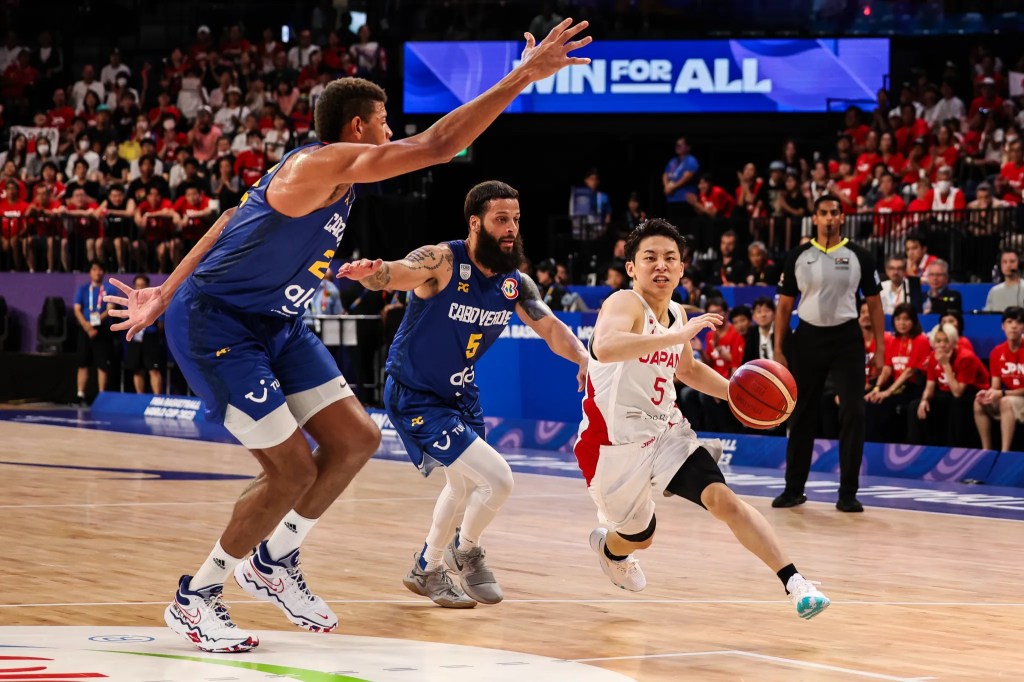
Most foreign players like Yuki Kawamura have experienced substantial success in their respective domestic leagues. But Kawamura’s B.League accomplishments are not what put him on the Memphis Grizzlies’ radar. Nope…simply put, Kawamura introduced himself to the global audience when he went toe-to-toe with Rudy Gobert and Victor Wembanyama in Japan’s Group Stage matchup vs France at the 2024 Paris Olympics. To say the least, taking it to the reigning NBA DPOY and Runner-Up and at times making the two 7-footers look foolish is one way to get the attention of basketball scouts and fans alike.
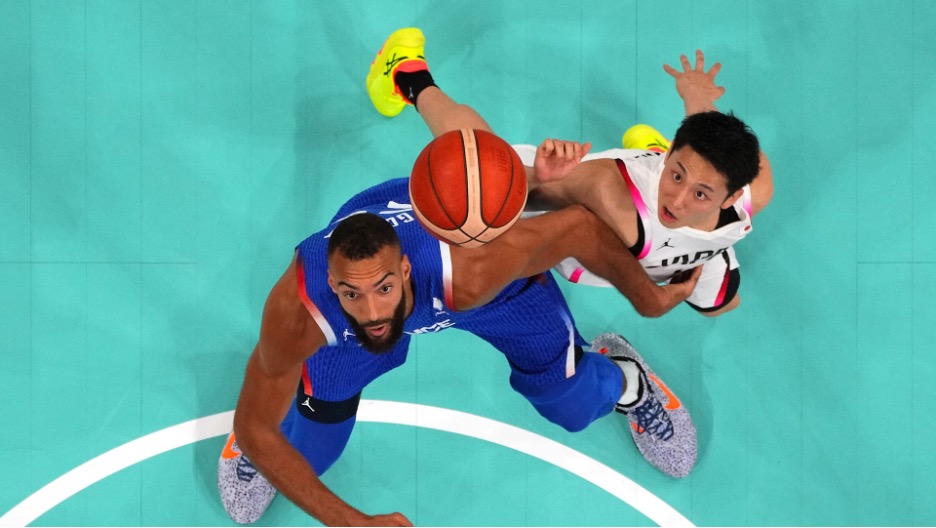
Although Japan did not advance to the Knockout Stage of the Olympic Basketball Tournament, Yuki Kawamura had a solid Olympic performance having averaged 20.3 points, 3.3 rebounds, and 7.7 assists across 3 games. His scoring and assisting averages ranked 4th and 3rd respectively among all players in the Olympic Tournament. What’s even more impressive is that Kawamura averaged the most made 3-pointers per game (4.3 made 3-pointers per game on 10.7 attempts), clearing Stephen Curry, Sergio Llull, and Bogdan Bogdanovic by a wide margin. Per Cerebro Sports, despite shooting from range at a high volume, Kawamura still ranked in the 98th percentile of usage rate (37%) while also having an assist rate of 51.1% Taken all together, Kawamura accounted for more than 70% of Japan’s offense while sacrificing little to none of his own individual scoring efficiency.
But what aspects of Kawamura’s Olympic performance, if any, are translatable to the NBA? There have been several pint-sized scoring guards that have flamed out in the NBA, assuming they ever made it on to an NBA court. At a fundamental level, Kawamura has excellent dribbling skills and very quick feet. He is adept at putting up layups while avoiding shot-blockers and is proficient at taking away defenders’ timing with his precise floaters and lightning quick-release pull-ups. He has the agility and dexterity to make pull-up threes without hesitation in front of players much larger than him.
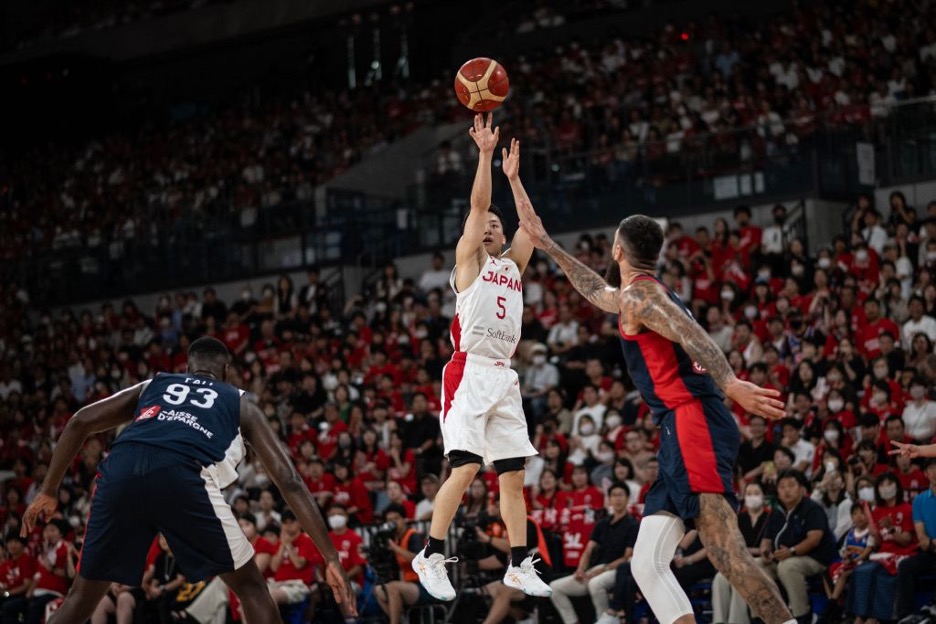
But most importantly, he is a passing maestro. Whether it’s because of heightened spatial awareness, foresight, intuition, or unbelievable clairvoyance, Kawamura has passing vision that that is fully functional due to his tight and creative handle. It may seem like hyperbole, but Kawamura can successfully make some of the most bold and daring passes. He often operates on the fine line between fearless and reckless. You know Stephen Curry can pull up from the logo. You’ve seen Ja Morant take off from below the free throw line. You anticipate Shai Gilgeous-Alexander to lull you to sleep and then stick the midrange jumper. But would you ever expect a short Asian guy to drive baseline and then curl inwards via a reverse-180 towards the restricted circle just so he can fire a cross-court pass to the strongside corner OR whip a no-look, behind-the-back pass to the weakside corner? In what is often called a copycat league, the NBA has seen teams’ style of play become far too similar. Conformity will only favor the team that plays that same style the best. For that reason, it’s only fitting that Yuki Kawamura looks different than most NBA players because his style of play is also vastly different. And that element of controlled unpredictability is exactly what Kawamura can bring to an NBA team while enhancing and diversifying their offensive sets. Muggsy Bogues dribbled below big men’s knees. Earl Boykins was a pocket Hercules. Spud Webb could soar with the best high-flyers. Perhaps Yuki Kawamura can be known as the guy that made the ball teleport through dizzying dribble drives and misdirection…

At the end of the day, the odds of Yuki Kawamura making the Grizzlies 15-man roster are slim as there are several talented, athletic, and physically-gifted players also competing for a standard roster spot. But as an Asian-American myself, I’d be remiss if I didn’t point out that Kawamura isn’t just trying to battle against physical/athletic disadvantages, but he’ll also be pushing back against stereotypes of Asian players. Unless you are gargantuan like Yao Ming, most Asian players are quickly dismissed by NBA circles for one reason or another. Regardless of an Asian player’s skill or will, those preconceived notions are hard to dispel. If an American player scores off of a reverse pivot move (a la Jordan or Kobe), that player is regarded as crafty. If an Asian player does the same thing, some critics will inevitably say that the player is afraid of contact or unable to handle the physicality of driving the lane in the NBA. If Steph Curry brushes off trash talk from an opponent, it’s because he’s mentally-tough and/or playing mind games. If an Asian player doesn’t clap back at someone taunting him, it’s because he’s meek, timid, or scared. The path to the NBA is different for all players. There are often additional obstacles for foreign players, and that’s just a reality they have to accept in order to pursue their NBA dream. 10 years ago, Kawamura’s idol and eventual veteran mentor, Yuki Togashi, attempted to fulfill his NBA dreams by playing with the Dallas Mavericks in Summer League and subsequently joining the Texas Legends in the G League (then D-League). After one abbreviated season with the Legends, Togashi was waived and anonymous NBA scouts reportedly stated that if Togashi was 6-8 inches taller, he would be on an NBA roster. I have wondered if that assessment was made BEFORE or AFTER his one season with the Texas Legends. Are diminutive Asian players like Togashi and Kawamura truly given legitimate NBA consideration, or have their NBA fates already been determined before they practice or play a single scrimmage with the big club?
It would be unfair to put the weight of the future of Japanese basketball or all Asian hoops on Kawamura’s shoulders. It would be equally unreasonable to make Kawamura the next poster boy for the viability of sub-6 ft basketball players in the NBA. But ultimately, I think all hoopers – regardless of race, age, or physical stature – want the same thing: to let their play – and their play alone – do the talking. And for Yuki Kawamura, if his play during training camp resembles anything like his Olympic performance, then he will have A LOT to say!

 The Center Hub
Leave a reply to Basketball Intelligence for 9/5/24 – NBA Standings Cancel reply