At the Center Hub, our mission is to revolutionize the basketball content creation experience by creating a dynamic, inclusive platform where players, fans, scouts, and analysts come together for a common purpose. We are dedicated to delivering innovative, high-quality content that celebrates the game, from grassroots to pros. Through engaging stories, insightful analysis, and interactive journalism, we aim to inspire, educate and connect the global basketball community, fostering a deeper appreciation and understanding of the game of basketball and its diverse voices
Meet the Team!
Steven Bagell- Director of Brand & Operations
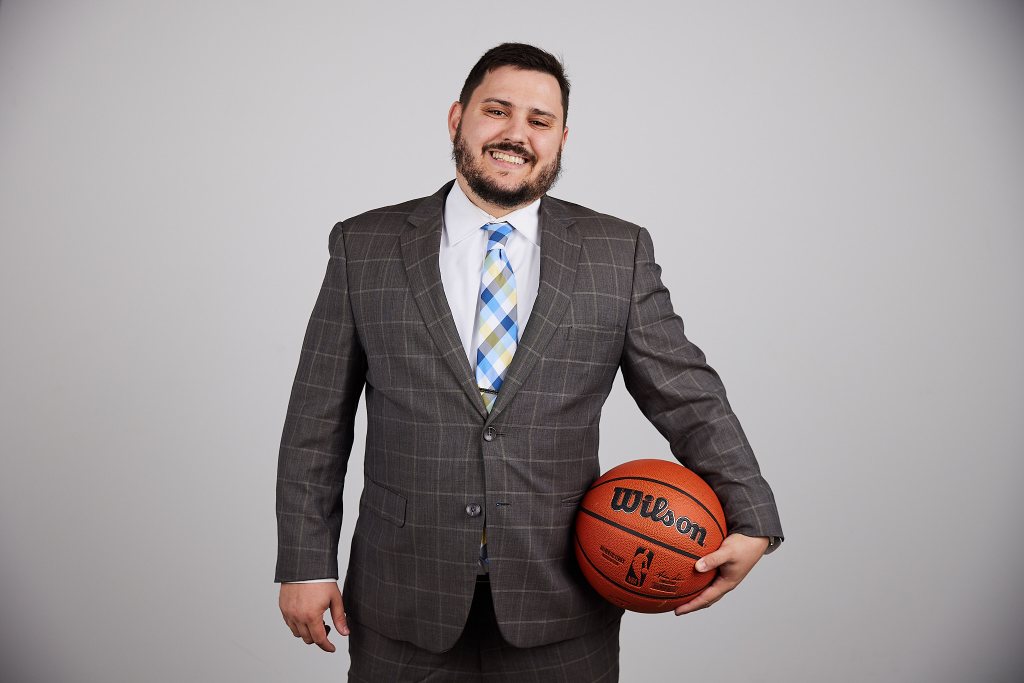
I’m Steven Bagell and I’m the host of the One & Done College Basketball Podcast and the Bird Rights Podcast. I’m an alumnus of Temple University where I received my undergraduate degree in Political Science and Philosophy, and then I received my Juris Doctor degree from Widener Delaware Law School. I was also a part of the Sports Business Classroom Class of 2024 during NBA Summer League.
Due to my infatuation with the NBA’s CBA and salary cap, I bring a different dynamic to basketball journalism. I’ve previously written for the Sixer Sense and The Lead SM and currently contribute to Busting Brackets. I’m a Philadelphia 76ers season ticket holder. Additionally, my love for college basketball allows me to speak intelligently about any player, transfer portal, NIL, and even mid-major programs!
Because I follow the NBA and college basketball so closely, the NBA draft is where those two worlds collide. My draft philosophy is typically to fall in love with players that are switchable on defense and pass/dribble/shoot wings. I am also a big proponent of lottery teams taking the best player available in the draft. My theory is most NBA teams switch on defense during the playoffs, and pass/dribble/shoot wings can fit seamlessly in nearly any offensive system. As a result, I usually undervalue big men who play drop defense and are either back-to-the-basket big men or rim runners, and also big men that strictly play drop coverage. Over the past few seasons, I’ve definitely recognized this is a flaw in my draft evaluations and I am excited for the new draft cycle!
Caleb Mueller- Lead Digital Content Manager

I am Caleb Mueller. I am a 22-year-old basketball scout and coach from Oconomowoc, Wisconsin. I am proud and humbled to say that I am one of the creators and founders of The Center Hub. Along with starting this collaboration, I am a proud representative of On The Clock Basketball, from which we are bringing two podcasts onto this platform (Six Month Madness & The War Room). You will likely find me on Twitter, bookmarking prospect tweets, or cutting film, which will primarily contribute to the content I create and assist with as Digital Content Manager. For the most part, I hope that this platform can bring together basketball fans and content creators to develop or appreciate a curated hub for ‘franchise-building’ basketball content.
Draft Philosophy:
I often look at my projection of the player’s first-year professional performance with a grain of salt; it is impossible to predict the future. However, I try various analytics and eye test evaluations to attempt to identify prospects ahead of their progression curve, or that are just plain NBA-ready beyond the analytics. An easy way to help with this projection is by finding NBA-ready skills. Suppose a player has outlier skills or traits in areas that are tough or unusual to develop, such as height or athletic ability. It may be something to invest in, as the rest of the game can develop over time. In my opinion, athletic ability is something that you just have or don’t. When identifying this ‘outlier’ athleticism, it often hits you in the face. Like wow. Guys who can make you watch something twice or go back after to find the Hudl or Synergy tape is something to always prioritize. Shooting touch is also something that I try to identify early in an eval for a player to see; even if the three-ball or even a pull-up midrange isn’t there now, maybe it can show promise down the line. Free throw numbers can be okay at helping guide you on close calls, but I often lean towards interior touch or just visual impressions. The last thing I will say in the name of being concise is defense wins championships. Every great dynasty or team has at least one or two guys that change the other team’s game plans offensively. Thanks for reading; I sincerely hope you enjoy The Center Hub!
Julian Mendelsohn- Lead Narrative Content Manager

I still remember watching my first basketball game. I couldn’t tell you the year, but it was around 2005, Bulls vs Pistons. I’ve been a 76ers fan my whole life (23 years) and an avid March Madness fan since Villanova went on their first Final Four run in 2008. Although I’m only 5’11, I played center in middle school and have always appreciated the position. I’m currently a student at Temple University pursuing my degree in Sports Recreation and Management. I’ve always wanted to do something in sports, and basketball is the sport I’ve fallen in love with wholeheartedly. I primarily talk about the draft and college basketball, but I’ll always have time to argue about my Sixers! The most essential part of creating content for me is bringing my knowledge of the game while also enjoying the fact that I can talk about my favorite sport. I’ve worked with Caleb for over two years at On The Clock and am ecstatic to continue our partnership alongside Steven and all of our other contributors at The Center Hub!
My draft philosophy changes for each position group, but I generally look for high-energy, high-effort prospects in every position. I was the kind of guy who would dive on the floor for a ball and I like players who love winning and enjoy playing the game. With my guards, I look for high-level pick-and-roll creators, table setters and guards who are comfortable both on and off-ball. I prioritize wings who can shoot at a high level, especially for my role players. I view superstar wings as prospects who can get to (and regularly make) their shot whenever they want, regardless of the contest, or can get to the rim at will. Many of the biggest draft busts and stars of all time are wings, so I tend to be a bit more wary when evaluating them, given the high variance. My true calling is evaluating centers. I primarily look for two types of centers: guys who can screen, rim run and defend P&R or those with more creative flair and stretch the floor. I trust the stats to point me in the right direction, but at the end of the day, I always trust my gut when I evaluate prospects. If I miss entirely on a player, it’s a learning experience and as I continue to find holes in my scouting, I’ll only keep improving.
Corban Ford- Content Development Manager

My name is Corban Ford and I am a true Basketball sicko. I will watch basketball regardless of age range or level, and I enjoy talking about it with any and everyone. I’m serious; you can catch me playing a full-on basketball simulation game on my phone in my free time! I’ve been a watcher of basketball since the mid-2000s, a basketball content creator for the past eight years, and a Laker fan since the days of Brian Cook and Chucky Atkins. That being said, I will watch any team with the same passion at any time. I figured a fun way to introduce myself further would be with some basketball superlatives to give a better feel for my favorite players, teams and more!
Favorite Teams: Los Angeles Lakers, Phoenix Mercury
Favorite Historical Teams: 1991 Los Angeles Lakers, 1993 Los Angeles Lakers, 2003 Phoenix Suns, 2008 Golden State Warriors, 2012 Minnesota Timberwolves, 2013 Phoenix Suns, 2016 Miami Heat, 2019 Phoenix Mercury, 2021 Phoenix Mercury
Favorite Player(s): Russell Westbrook, D’Angelo Russell, Monta Ellis, Michael Beasley, James Worthy, Clyde Drexler, Dominique Wilkins, Kahleah Copper, Diana Tuarasi, Maya Moore, Skyler Diggins-Smith, Chennedy Carter
Favorite Video Game: Basketball GM (which I honestly can’t talk about enough-any questions on that game or the various strategies within, let me know!)
Favorite Retro Video Game: NBA 2K14 (listen, it’s been 10 years, it’s practically retro at this point)
Go-To Basketball move: a sharp jab step to set up my defender, hard dribble left, followed by a smooth step back into the jumper.
Draft Philosophy: When it comes to my draft analysis, I tend to gravitate towards prospects that function as primary offensive initiators with NBA or WNBA level upside as shot creators, and I focus on those that slot in primarily at the wing or forward positions, although I am working on identifying those offensive skill sets in players that may play center or otherwise stand out of my positional preferences. I am particularly infatuated with observing the evolution of a raw athlete who may score in volume at the collegiate level but lacks more refined offensive creation skills, and looking for the tools that may aid in their development to blossom into a more complete multi-faceted offensive player (or at least player who can emulate those traits closely enough at their peak) such as Russell Westbrook, DeMar DeRozan, Blake Griffin, Anthony Davis, and Kawhi Leonard.
I look forward to sharing my love of the game, deep appreciation of NBA history, draft philosophy, and so much more with you all while working with the fine folks of the Center Hub, and I’m excited to interact with y’all even more!
Mike Shearer- Contributor

Mike Shearer is a former financial analyst who decided his skills were better spent analyzing NBA ninth men than making rich people richer. He is the founder of Basketball Poetry, an NBA blog with too many metaphors, and co-owner of Basketball Intelligence, the best NBA curation service on the planet.
He also fervently believes that the age of the superstar is dead. Winning basketball takes a whole squad; the stars-and-scrubs model is obsolete in a hyper-optimized world where teams are only as good as their weakest link.
Kam Hickey- Contributor

I’m Kam Hickey from Atlanta, Ga. played HS, JuCo, NCAA, and professionally overseas in the African islands. I am also a Coach, Trainer, and Head of Player Development for OTP (Outside the Perimeter). TP is a Puma NXT League member and an AAU program in the Metro Atlanta Area.
My philosophy is constantly trying to find that perfect intersection of a prospect’s physical profile, skillset, athleticism, production, and feel/IQ. You will see a lot of player comparisons being used to get a sense of a prospect’s developmental path and potential role in the pros/and or college. I use stats as a tool for that search. I use the previously mentioned areas of a prospect and then look into their production and competition level. at information then determines how I rank and discern the skill and level/rank differences between prospects.
Maxwell Giger- Contributor
My name is Maxwell Giger and I am an avid basketball follower, from the high school level to the professional level; I have served the game of basketball in various facets, from media to consulting to coaching. I watch and research the game daily and strive to be a ‘disciple’ of the game so I can share this beautiful game with others, no matter the capacity. I have been evaluating and scouting the draft in a working capacity since 2020. I am entering my sixth complete NBA draft cycle as we head into the 2025 NBA draft (I also evaluate WNBA draft prospects).
When evaluating prospects to play professional basketball in the NBA, I look for four significant traits, which are foundational to my draft philosophy.
First, I look at role and identity. Has the player demonstrated the ability to play within a system and in many different roles? What role(s) has this player played in their career? Does the player understand their value on the court to their team? Does the player understand ‘their job’? Do they play within themselves and the team?
Next, I look at Defensive IQ. Has the player demonstrated an above-average defensive IQ? Where is the player off the ball? Are they a purposeful off-ball defender? Does the player understand basic NBA defensive principles and concepts? Has the player demonstrated defensive growth mentally and physically?
Third, I look at jump shot ability and shooting potential. Has the player demonstrated a one-part or smooth two-part jump shot? How many revolutions does the player get on the ball when they shoot a free throw or a three-point shot? Does the player demonstrate touch on his shot when they are inside 15 feet? What are the shooting splits on the player? What is the player’s shooting volume? What shots is the player being asked to take versus taking? I they aren’t presently a net-positive shooter, can they be in their professional future?
Lastly, I look at passing ability and passing IQ. Does the player pass with purpose? Does the player create opportunities for others? Does the player have versatility in the type of passes they execute? Does the player move well off the ball for other passers? Does the player disadvantage the defense with their passing ability? Does the player create more assists than turnovers? What is the context of the player’s passing and creating turnovers?
For me to fully endorse a prospect, they must be ‘average, but trending up’ to excelling in all four of these areas. I find a healthy blend of statistics and film grind in this approach. I believe the relationship between the two is a very yin-yang style relationship
in this beautiful game that we all love.
Cody Ramsey- Contributor & Digital Content Assistant

Hi, I’m Cody Ramsey. I live in Ukiah, California. I’m 26 years old, and I have a degree in Cell and Molecular Biology and data Analytics. I have a passion for NBA Scouting and player evaluation.
I am an avid basketball enthusiast who deeply understands NBA scouting and player evaluation. With a keen eye for talent and a methodical approach to analyzing player potential, I combine my passion for the game with a strong foundation in data analysis and basketball strategy. I approach NBA scouting holistically, integrating multiple factors to form a balanced and accurate player evaluation. I understand that no single aspect can determine a player’s future success. I ensure that all areas—technical skills, analytics, potential, health, comparisons, and character—are thoroughly considered in my assessments.
My draft philosophy: NBA draft scouting involves evaluating talent, understanding team needs, projecting player development, and analyzing data. Key principles include:
Talent Evaluation: Assessing players’ skills (e.g., shooting, passing, defense) and physical attributes (e.g., height, agility, athleticism), as well as their basketball IQ.
Statistical Analysis: Reviewing player stats from college or international play and using advanced metrics like PER and BPM for deeper insights.
Projection and Potential: Projecting future development by balancing potential ceiling with the likely floor and fitting them within the team’s roster and style.
Injury and Health Assessment: Evaluating past injuries and potential long-term impacts.
Comparative Analysis: Comparing players to current and past NBA players to gauge success and draft value.
Character and Work Ethic: Assessing how players handle pressure, work ethic, and responsiveness to coaching.
These factors are evaluated holistically to provide a balanced and accurate assessment, ensuring a comprehensive understanding of the player’s fit within the team.
Garrett Bugay- Contributor

My name is Garrett Bugay. I graduated from Ohio Northern University with a Broadcasting and Electronic Media degree in 2013. I operated as the Sports Director for 94.9, W-O-N-B Radio in Ada, Ohio, and Assistant Sports Director for 1430 Yahoo Sports Radio in Fostoria, Ohio. My radio experience includes five years of play-by-play and color commentary for basketball, football, and baseball at the college and high school levels. I continued my education with certifications in voice-over work and public address announcing.
My experience in the basketball space started as a player in high school. I was a member of the 2007 Findlay Trojans team that made it to the elite 8 of the Ohio Division 1 State Tournament. In 2008, I was selected as a District 8 All-Star. I started podcasting about the NBA as early as 2015, including the beginning of my current show, Dunkin Dynasty, in October 2017. I’ve hosted, edited, and produced over 230 episodes of the show since its inception. In the summer of 2018, I graduated from the Sports Business Classroom in Las Vegas. I’ve written basketball content for RipCityProject and TheDraftClass. In 2022, I worked as a Basketball Video Scout for Sports Info Solutions.
I am currently a market researcher for RTI International. I am still actively pursuing a career in basketball and am thrilled to be a contributor to The Center Hub!
My basketball philosophy and life philosophy are that nothing is as simple as it seems. Plenty of people experience a sporting event, a movie, a play, a book, or a song, and their sole takeaway is, “That was great!” or “I hated that.” Since I was young, I’ve always wanted to know WHY those things captured my attention and were so memorable or why the two hours I just spent felt like a waste of time. That has led me to be fascinated by the elements of sports and/or media that some would consider granular, but I find it vital to understand them to the fullest.
To properly decipher basketball’s WHY, context needs to be applied in all areas. For example, coaching, player fit, player role, organizational priorities, and ownership’s commitment to spending money are just a tiny fraction of what influences wins and losses. Context can help us learn why some teams succeed while others fail and why some players reach hall-of-fame heights while others end up as overseas journeymen.
There are questions that, without context, seem perplexing. Questions such as: why was Jae Crowder so unproductive in his time in Cleveland getting open shots set up by LeBron James? The answer is not as simple as he had a prolonged shooting slump during that stint. The more complicated and context-dependent answer was that he was traded (and don’t forget, from a personal standpoint, uprooted) in the middle of the season. He went from a motion-centric offense in Boston, where he got to touch the ball and feel in rhythm, to playing in an off-ball role with LeBron, which required a lot of standing around and waiting for him to pass the ball. Some players thrive in that setting, like J.R. Smith, while others, like Crowder, aren’t as comfortable.
The more you realize that a game where ten people try to put a round ball in a hoop is quite complicated, the more rewarding it becomes to dive into the details that make it so. Here’s to getting into the nitty-gritty and appreciating all the nuance and subtlety that the sport of basketball has to offer (clinks glass).
Josh Url-Contributor

Hi, I’m Josh Url.
I’m a stay-at-home Dad, a husband, and a basketball career development coach. For the past 14 years, I have helped people pursue their dream careers in basketball.
My draft philosophy: Context matters. The coach, current roster, role, development plan, and more greatly affect player performance. Choosing for team fit can miss talent. Choosing the Best Player Available (BPA) can miss how that player will perform in that team’s context. Teams should choose the best player for their specific context.
Blake Stern- Contributor

I am Blake Stern, a student at the University of Miami studying Sports Administration. I have expanded my knowledge of the NBA’s Salary Cap and Collective Bargaining Agreement. I specialize in writing Salary Cap and Contract Analysis articles, which I have written previously for BasketballNews.com. In addition, I run and maintain updated cap sheets for all 30 NBA teams on LDsport.com, which include contract details, transaction logs, and future draft picks. I also was part of the 2024 Sports Business Classroom class alongside The Center Hub co-founder Steven Bagell.
My Team-Building Philosophy: I believe the new CBA is good for the league as it encourages more parity similar to the NFL model and discourages the idea of “buying a championship.” I’m a proponent that a two-star and role-player approach is a generally more successful team-building process than that of a Big 3. I also believe that there is no one way to build out a team, whether that be mostly through the draft or via trades and other acquisitions.
Nate Koesel, Contributor

My name is Nate Koesel and I’m a Malone College graduate who studied Sports Business and participated as the student manager for the men’s basketball team. I was a part of the program’s first G-MAC 2021 conference Championship where he helped with aspects of travel and scouting preparation. After college, I graduated from Sports Management Worldwide with an Advanced Certificate in Scouting and Basketball Analytics. My professional scouting work has included working previously as the Midwest Regional Scout for Between The Lines Sports and Midwest Scout for NXTPRO Hoops. In both roles, I created and managed multiple scouting projects including a portfolio of draft-eligible players for the 2021, 2022, 2023, 2024 NBA draft cycles. I am not new to the travel required for this industry. My scouting experiences has taken me to AAU tournaments in Virginia Beach, VA, Farmers Bank Fieldhouse in Indianapolis, IN, and covering the MAC Tournament in Cleveland, OH. I am proficient in Synergy editing, live-game tweeting through X, and game report generating. I am grateful to be joining the staff as a contributor for the inauguration year of The Center Hub!
My draft philosophy is to always take the best talent available in the lottery. You can figure out fit later. Prioritize player development over winning year 1-3 and then there needs to be a postseason appearance. Draft players with versatility who can defend multiple positions. Teams should prioritize playmakers and defense for their backcourts and length and athletic scoring skills for your front court. Focus most of your efforts on drafting a generational 2-way 3 who can defend your backcourt on switches and rim protection on occasion. The biggest thing is to commit to your best player and draft around him.
Jack Quantrill- Contributor

My name is Jack Quantrill, and I host the Drop Step podcast. I am a trade machine addict and an international fan of the NBA. Hailing from the UK, I arrived in the NBA world a little later than some of my Center Hub contemporaries but have tried my best to catch up by having some of the best names in NBA media on my podcast. Several guests have described me as a “big picture guy.” I’m constantly thinking about where the NBA is going, the state of the league, and new ways to play as the talent pool continues to expand and deepen throughout the association.
Keep an eye out for articles, videos, and podcasts on the 2025 draft, team-building strategy, player profiles, and a whole lot of trade machine shenanigans.
My Draft Philosophy:
In a nutshell, I’m a Sam Presti/Will Hardy acolyte in scouting the draft. I believe the league will continue to emphasize spacing to an even greater degree over the next half of the decade and will continue to move further away from pick-and-roll-centric offence to a diverse concoction of movement, isolation, flow, and transition offence.
As a result, I value multifaceted players who can dribble, pass, shoot, screen, and essentially function in as many ways as possible on both ends of the court.
As a rule of thumb, I’ll generally be lower on primary initiators than your average draft analyst; I’ll look for players who can play down a position as opposed to playing up and “Force Multipliers” – guys who can significantly increase the impact of their teammates by making their lives a lot easier which feature heavily high up my Big Boards throughout the year!
Conrado Pascual- Contributor

Conrado Pascual, III – Born in San Francisco, CA, and raised in The Bay Area, a Golden
State Warriors fan is not what I choose to be; it’s who I am, and Dubnation courses through
my veins! After receiving my Bachelor of Science in Bioengineering from UC San Diego, I
completed postbaccalaureate studies in Neuroscience at Stanford University. My years of
studies have led to a career in the biotechnology industry. Given my educational background
and my status as one of the older members of The Center Hub, it would be natural to
assume my basketball views and draft philosophy are rooted in analytical and cerebral
approaches. But with age comes wisdom, and my basketball journey has revealed to me
that basketball is not just a sport; rather, basketball is an art. A basketball team is like an
orchestra – where a group of players/musicians use their skills to reach a common
goal. Working to create a wide-open game-winning shot is akin to building up to the grand
finale of a symphony. Music theory analyzes the pitch, timing, and structure of music. It uses mathematics to study elements of music such as tempo, chord progression, form,
and meter. Basketball analytics is similar in that player tracking (both movement and shot
profiling) and statistical modeling lead to advanced stats that further explain how player and team efficiency can be maximized and improved. But ultimately, art – whether music or basketball – is rendered bland if it lacks three key components: passion, heart, and soul. It would be easy to dismiss these components as “emotionally-fueled intangibles.” But what is basketball without emotion? As a draft scout, I will allow the analytics – though black and white numbers – to guide me toward the intriguing prospects. But when all is said and done, a player’s basketball truth – the pure essence of the game – will keep me captivated!
John Simpson- Contributor

Hickory, North Carolina native and UNC Charlotte graduate, I, John Simpson, bring a unique blend of social work expertise and basketball fanaticism to the world of sports writing and my gig as a co-host on the One and Done college basketball podcast. With a keen eye for the game’s human element, I am more than just a stats-obsessed analyst; I am a courtside cynic who isn’t afraid to call it like I see it.
Growing up in North Carolina, immersed in ACC basketball, and as a lifelong supporter of the Duke Blue Devils and Charlotte Hornets, I have developed a deep understanding of the sport’s intricacies. My background offers a fresh perspective on the players, teams, and storylines that shape the basketball world.
I have a simple philosophy regarding the draft: athleticism, length, and basketball IQ. A sucker for potential and unique skill sets, I use a combination of metrics and eye-tests to evaluate talent. With my edgy humor and insightful analysis, I am a must-read and listen for any basketball fan.
Matt Kostoff- Contributor

I’m Matthew Kostoff from Akron, Ohio and I graduated from Miami University in 2024 with my bachelor’s degree in finance. My love for basketball first originated from playing basketball at a young age, NBA Live 2005 (Nuggets Melo cover), and watching young LeBron and the Cavs. Since I can remember, I had a fascination with scouting, the NBA draft, and recruitment. From my years of grinding franchise mode in 2K and abnormally good memory, I remember random NBA role players and where most played and went to college, which is really helpful for NBA grids. I have a deep love for the NBA and college hoops, but the recruitment, competition, and exciting landscape of the transfer portal & NIL is where my love for college hoops overtakes the NBA.
My draft philosophy is all over the place but I typically have a keen eye for lengthy wings who can slash, play downhill with ill intent and finish hard at the rim. I love players who play effortlessly and look smooth when driving to the rim but can also play defense and guard a variety of different positions due to their length and wingspan. I still remember one of my first draft takes was for the Cavs to trade back in 2013 to take a slender, long-slashing wing out of Greece who turned out to become one of the best players in the NBA, Giannis Antetokounmpo. Two wings I still am very high on who I think would be amazing if the combined into one player are Dalano Banton and Peyton Watson. Aside from wings, I have also been high on drafting upper-classman guards such as Malcolm Brogdon, Jordan Clarkson, and Jevon Carter. Sometimes where I struggle is predicting how good shot blocking and rim running bigs will be. I missed on players such as Deyonte Davis, DeAndre Daniels, Chris McCullough, Jericho Sims, and Mo Bamba. The teams I am most invested in are the University of Dayton and Cleveland Cavaliers, but I also support teams because of their coaches, such as Kim English, Dennis Gates, Bruce Pearl, Nate Oats, and Jerome Tang. I love to write, watch basketball, keep up to date on recruiting, talk to former NBA role players, and make mock drafts so helping out at The Center Hub is the best of both worlds for me.
Mickel “Big Mike” Lampkin- Contributor
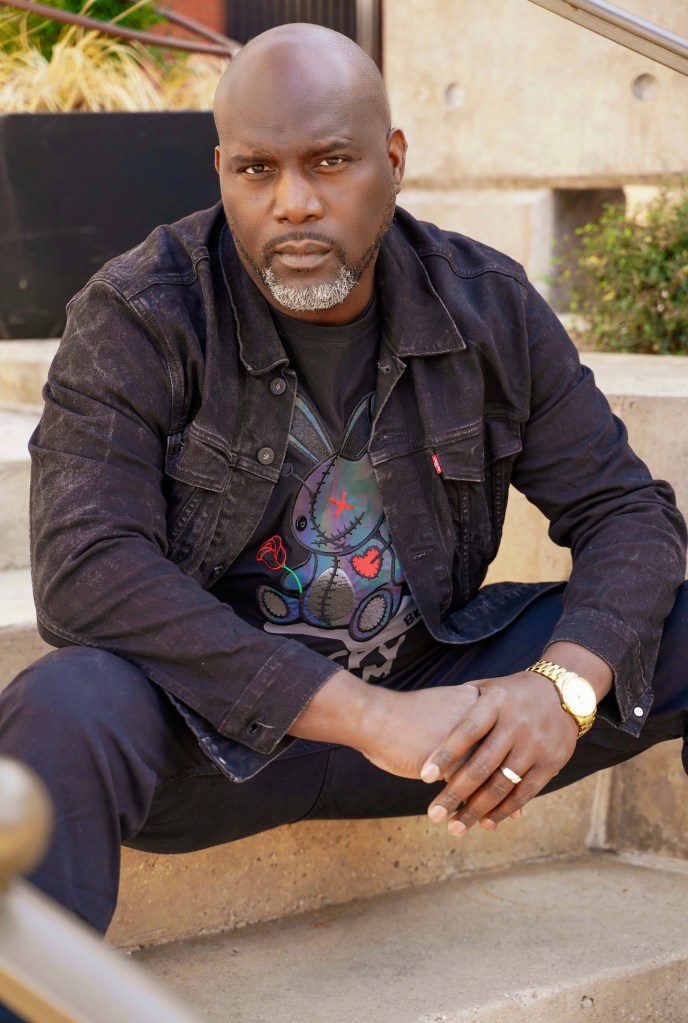
Born in Terrell, TX but is a native to Dallas, TX. Big Mike is a former AAU coach, who also assisted with boys and girls high school basketball programs in Dallas. Additionally, Mike coached a men’s rec league team. He’s formerly a writer for two local magazines (The M.A.P. & Da Streetz Magazine) and is the current host of the Swish 4 Real basketball channel on YouTube.
“I like to go in depth with the lives of NBA players inside and outside of the court, and see what lessons can be taught from it. Being able to interview players, coaches, and fans alike gives a broader perspective of basketball in general.”
“As a former coach, I’ve seen the in’s and out’s of the game, players, and the passion people put into the sport. This is one of the reasons I love the game and hope to bring that love to others in my writings.”

 The Center Hub