
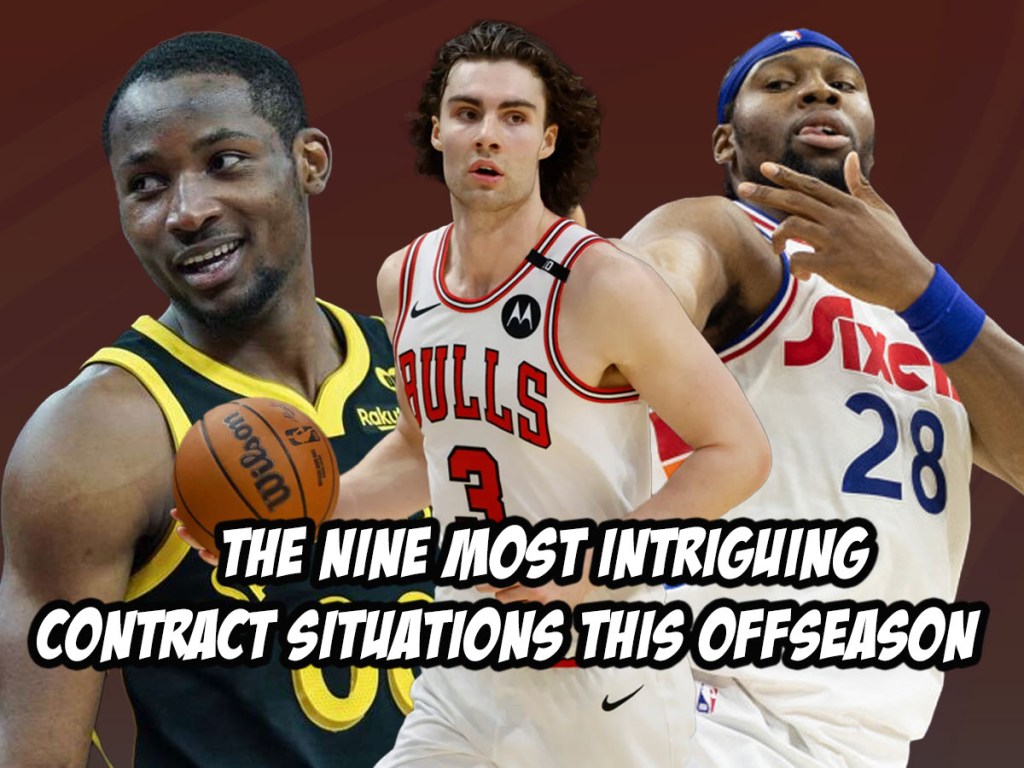
This offseason will be interesting to say the least. There’s only one team with substantial cap space (the Brooklyn Nets), and the free agent class as a whole is underwhelming. In this article, the nine most intriguing contract situations this offseason will be discussed. Here is the list of players that’ll be discussed in this article (in order from most intriguing to least intriguing):
- Jonathan Kuminga, Golden State Warriors
- Josh Giddey, Chicago Bulls
- Davion Mitchell, Miami Heat
- Guerschon Yabusele, Philadelphia 76ers
- Quentin Grimes, Philadelphia 76ers
- Ty Jerome, Cleveland Cavaliers
- Naz Reid, Minnesota Timberwolves
- Cameron Thomas, Brooklyn Nets
- Malik Beasley, Detroit Pistons
9. Malik Beasley, Detroit Pistons
It’s always tricky when a team doesn’t own a player’s bird rights. And that’s the exact situation Beasley finds himself in with the Detroit Pistons. Beasley found an invaluable role as an elite floor spacer alongside Cade Cunningham, which helped unlock Cunningham on his way to making All-NBA Third Team. Beasley averaged a career high 16.3 points per game while shooting 41.6% from three and playing in all 82 games for the Pistons. Beasley has been extremely durable as well, as he’s missed just seven games in the last four NBA seasons.
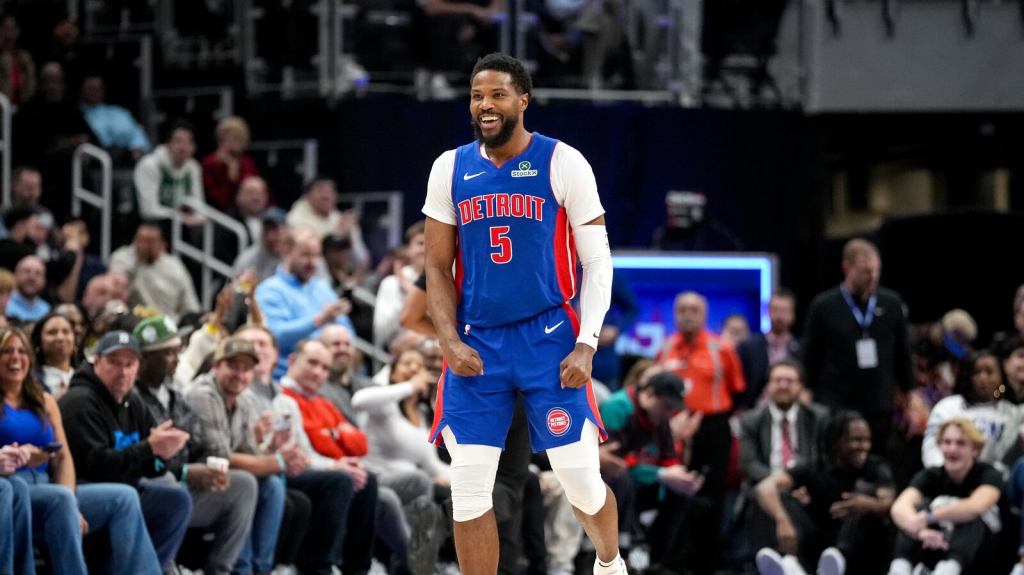
Because Detroit has Beasley’s non-bird rights, that restricts them to re-signing him for 120% of his previously salary. Last season, Beasley made $6 million, so a new deal would start at $7.2 million. This likely isn’t enough to sign Beasley, which Detroit is prioritizing. With Detroit currently projected to operate as an over the cap team, they would have access to their full mid-level exception, which is $14.1 million. This would allow the Pistons to sign Beasley for up to 4/$60.6 million deal. Detroit has some flexibility, as Detroit can renounce the cap holds of their free agents (including Beasley) and can create roughly $17 million in cap space. This would allow the Pistons to pay Beasley a hair more than the mid-level exception. It’s likely that Beasley and his agent would use the Nets as leverage as the only cap space team that can offer him more than the MLE. Additionally, it’s been reported that Detroit is after a stretch big with names such as Myles Turner and Naz Reid. If Detroit decided to clear the salary (by way of potentially moving Isaiah Stewart without taking any salary in return) and successfully used that cap space in other ways, it’s unlikely Beasley would be back in Detroit, as they’d only have the $8.8 million room exception to give him. Either way, Beasley is likely the Pistons #1 priority to return.
Prediction: Beasley re-signs a 4/$60.6 million deal with the Pistons
8. Cameron Thomas, Brooklyn Nets
Thomas is one of five restricted free agents on this list, but the other four RFAs aren’t on a team with substantial cap space. If the Nets kept Cam Thomas’ cap hold on their books but renounced all other free agents, the Nets would have an upward of $43 million in cap space. Thomas’ contract situation is also interesting because he’s averaged 22.9 points per game over the past two seasons, despite playing in just 25 games this past season. There’s also a few further questions about Thomas. Is he a “putting up good stats on a bad team” type guy? Can Thomas contribute to winning by more than just scoring? Thomas has been a ‘certified bucket getter’ since his high school days (he’s the all-time leading scorer at Oak Hill Academy), but that’s all he’s really been known for.

Coming into the offseason, the Nets essentially have Nic Claxton, Cam Johnson, Terance Mann, and five first round picks. Otherwise, it’s a blank slate. Thomas’ skillset of being able to score 24-25 points a night alone can be useful. Thomas will also be just 24 years old on opening night. However, Thomas doesn’t have the advantage of most other free agents: he can’t use the Nets as leverage. He can, however, use the Hawks $25 million traded player exception as leverage in a potential sign and trade. If not Atlanta, the likely amount another team will be willing to pay Thomas is the MLE, so Thomas doesn’t have much leverage in negotiations. Despite this, I still anticipate Thomas’ scoring pedigree to net him somewhere between the MLE and a $20 million starting salary.
Prediction: Thomas re-signs 3+1 for $84 million with a player option with the Nets.
7. Naz Reid, Minnesota Timberwolves
While Reid has a player option, it’s a certainty that Naz Reid is going to opt out. Reid’s player option is for $15 million next season, and he may earn close to double that by opting out. It’s worth noting that part of the reason why Minnesota traded franchise icon, Karl-Anthony Towns was because they wanted to maintain the flexibility to re-sign Naz Reid. Reid, the 2024 Sixth Man of the Year, averaged a career high in points this past season and seems poised to take on a starting role. While Julius Randle has a player option this offseason, it’s likely he’ll opt in and be an expiring contract this upcoming year.
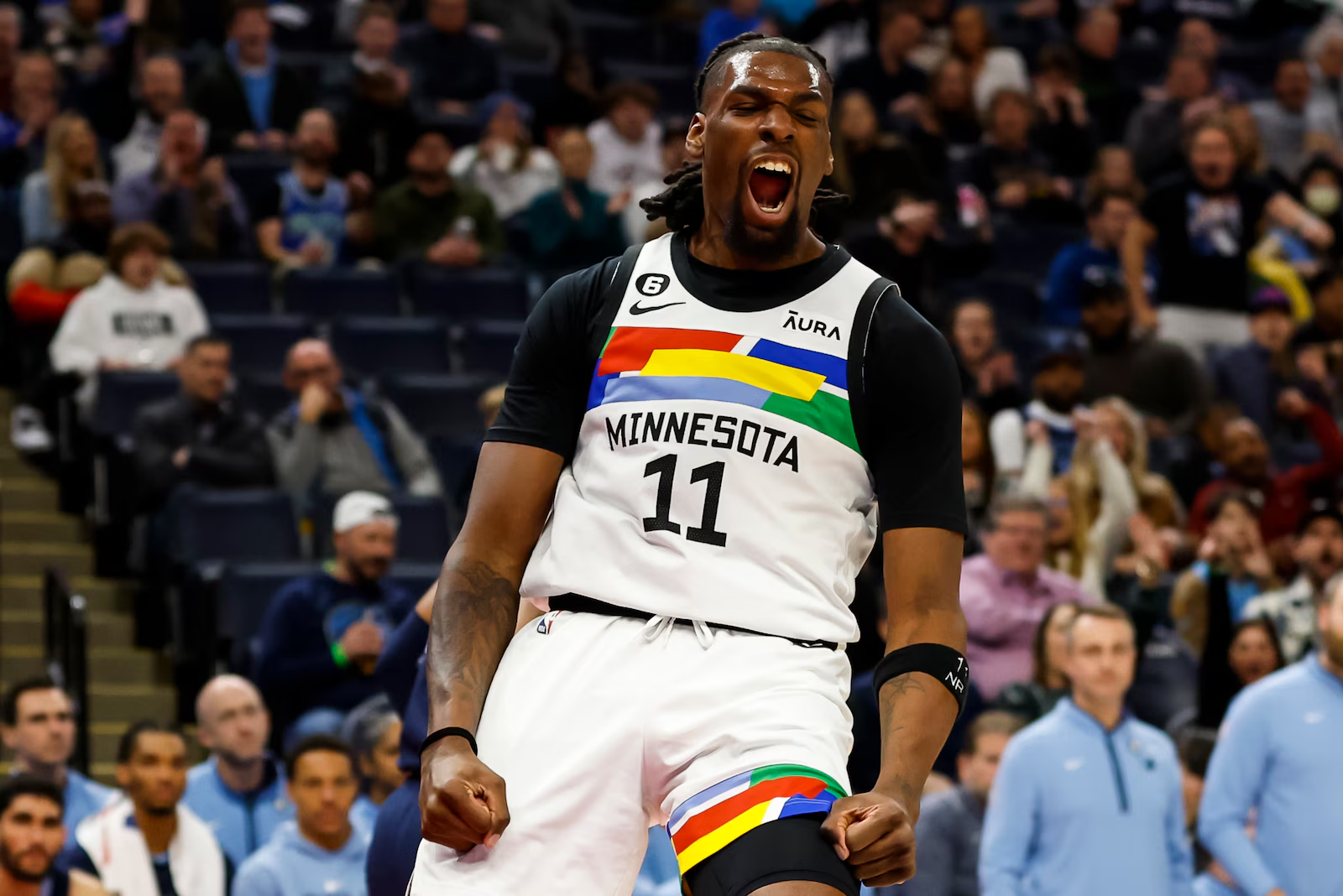
For Reid, he’s another player on this list that can use the Nets, or maybe even Detroit, as leverage to get a larger deal with the Timberwolves. It’s been reported that the Pistons are after a stretch big such as Reid or Myles Turner. It’s conceivable that Detroit can open up enough cap space to sign Reid outright, or even potentially work out a sign and trade with Minnesota. For Reid, salary dumping Isaiah Stewart, or maybe even Simone Fontecchio, may work for Detroit to open up enough cap space to sign Reid. Or, if Detroit offered both of those players to Minnesota with draft compensation via sign and trade, that would allow Detroit to obtain Reid while also using the mid-level exception on Beasley, while still retaining Dennis Schroder’s and Tim Hardaway Jr.’s bird rights. Ultimately, I expect Reid to stick in Minnesota, but a bigger role is awaiting him sooner rather than later.
Prediction: Reid re-signs to a 3+1 with Timberwolves for $107.7 million with a player option.
6. Ty Jerome, Cleveland Cavaliers
Each time a player has a career year and his incumbent team doesn’t have full bird rights (see Malik Beasley), it always a tricky contract situation for both parties. However, unlike Beasley, the Cavaliers have Jerome’s early bird rights, rather than non bird rights. With early bird rights, a team can sign a player to 175% of their previous salary or 105% of the average league salary the year prior. Given Jerome made just $2.5 million last year, he’s looking at 105% of the league average salary from this past season. According to Basketball Reference, the league average salary last year was $11,910,649. As a result, the maximum amount Cleveland can pay Jerome next season is $12,506,181.

While Cleveland is a second apron team, they’ll have a decision to make. Jerome, who was a finalist for Sixth Man of the Year, struggled in the playoffs. While Jerome averaged 12.4 points and shot 52% from the field and 44% from 3 during the regular season, but during the playoffs the efficiency fell off a cliff, as Jerome shot just 40.2% from the field and 38.9% from three, albeit in just nine games. Cleveland will need to decide if they want a key member of their rotation to return for less than MLE money, or if they want the tax savings. There will be roughly 18 teams who have access to the full MLE, so Jerome has plenty of options and potential suitors who can pay him a hair bit more than Cleveland can. With Damian Lillard and Tyrese Haliburton out for all of next season, the Milwaukee Bucks or Indiana Pacers could make some sense. Ultimately, I think Jerome has been too valuable for Cleveland to let him walk.
Prediction: Jerome re-signs with the Cavaliers for 3/$41 million
5. Quentin Grimes, Philadelphia 76ers
After being traded to the Sixers at the trade deadline, Grimes averaged 21.9 points per game in 28 games. While there may be some “good stats bad team syndrome” (see Cam Thomas), Grimes is only two years removed from being deemed “the best asset acquired at the trade deadline” when the Knicks traded him to the Pistons years ago. Grimes also has prospect pedigree, as he entered college as a five star recruit and was the 8th highest ranked recruit in the 2018 class. For Grimes, the issue is the same as Beasley. Unless he’s able to use the Nets as leverage, it’ll be tough for him to get an offer outside of the mid-level exception.
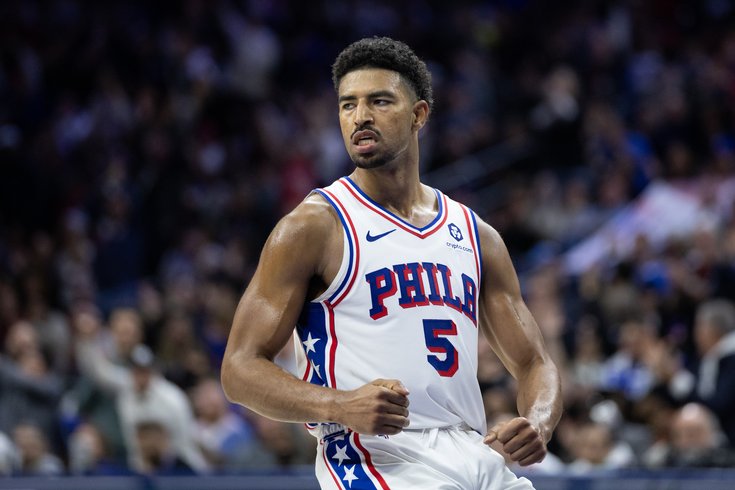
What is worth noting is that this Nets regime has a history of offering restricted free agents bloated deals to try to prevent their incumbent teams from matching. Grimes, a restricted free agent, could be the next free agent who benefits from the Nets leverage. However, in this situation, I anticipate Cam Thomas staying put and him and Grimes are a bit repetitive with each other. As a result, I think Grimes gets more than the MLE, but ultimately sticks around in Philly.
Prediction: Grimes re-signs with the 76ers on a 3 + 1 with a player option for $68.9 million
4. Guerschon Yabusele, Philadelphia 76ers
Everything stated for Malik Beasley and the difficulty of their incumbent team not having their bird rights remains especially true for Yabusele. Yabusele made his return to the NBA after five years overseas and a historic run for the French Olympic team. Given the Sixers own his non-bird rights, which only allows them to give him 120% raise from his minimum, that’s a non-starter. As a result, the Sixers will need to use an exception to offer Yabusele if they plan on keeping him. If the Sixers prioritize keeping Grimes, which they should just because they have his bird rights and he’s easier to retain, then it’s likely the Sixers will only have the taxpayer MLE. The value of the taxpayer MLE is a little less than $5.7 million. It’s highly unlikely that’ll be enough to retain Yabusele. After averaging 11 points and 5.6 rebounds while playing with a high motor and being a switchable defender, some team will throw their entire MLE at Yabusele.
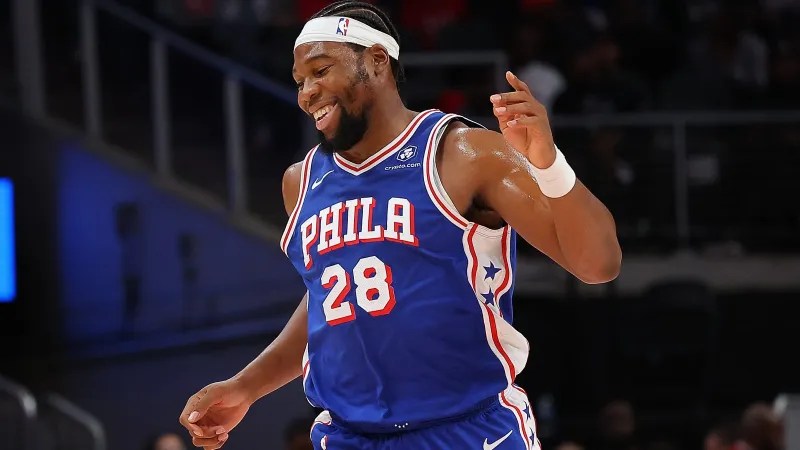
It’s been reported that the San Antonio Spurs have interest in Yabu and retain their full MLE. Additionally, Yabusele played with Victor Wembanyama on the French Olympic team. If not San Antonio, there are sufficient other MLE teams that would have interest.
Prediction: The San Antonio Spurs sign Guerschon Yabusele to a 2 + 1 for $44.5 million with a team option
3. Davion Mitchell, Miami Heat
Mitchell, a restricted free agent, was traded to Miami at the trade deadline and revived his career. As an expiring contract, the #9 overall pick in the 2021 draft was closer to falling out of the league than he was becoming a significant rotation player. But he bought into Heat Culture. For the Heat, he averaged 10.3 points per game while shooting 44.7% from 3 while playing elite defense on the perimeter. With this said, while Miami rehabilitated Mitchell’s value, the market for him in free agency may be a little murky.
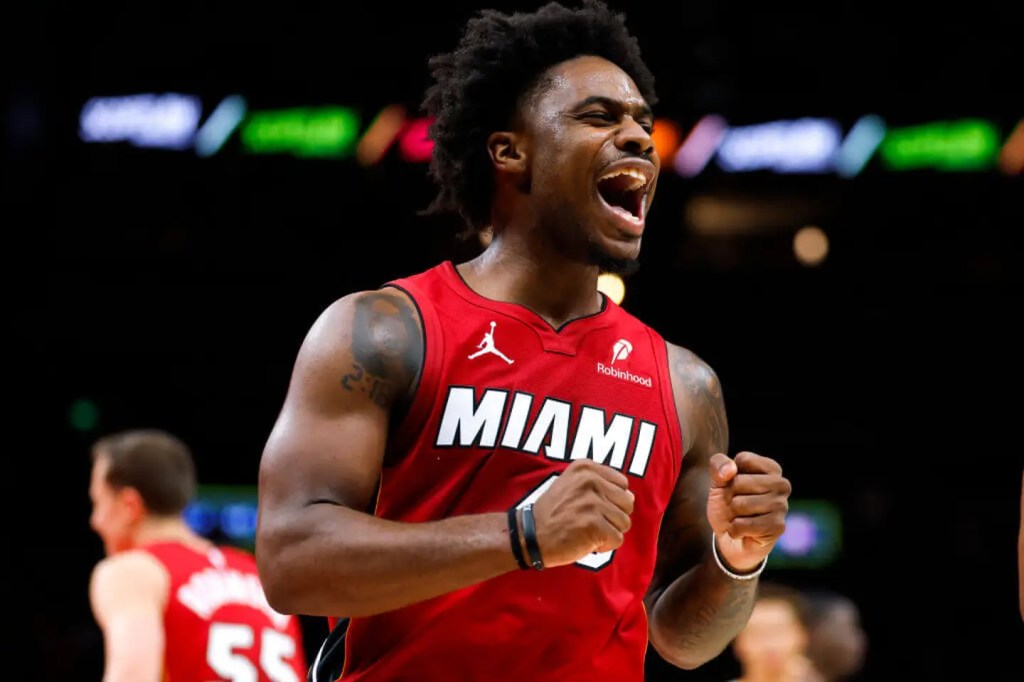
We’ve seen guys thrive in Miami and then sign elsewhere and flame out (see Tyler Johnson, Gabe Vincent, maybe even Caleb Martin?). This doesn’t bode well for Mitchell. With this said, Mitchell is valuable to Miami, and I expect he’ll be back, whether that’s Miami matching another offer for him or just re-signing him outright. It’s difficult to peg Mitchell’s value on the open market, but I’d say he’ll make between $8-$11 million starting salary this summer.
Prediction: Mitchell re-signs with the Heat for 3 + 1 for $36.6 million with a player option
2. Josh Giddey, Chicago Bulls
Giddey was an absolute monster in the second half of his contract year. After the all-star break, Giddey averaged 21.2 points, 10.7 rebounds, and 9.3 assists. In those 15 games, the Bulls went 8-7. But Giddey is likely going to want to be paid handsomely. Not only was he not a fit in OKC come playoff time, which prompted them to trade him for Alex Caruso this summer, but OKC did not have the intention to pay Giddey a massive rookie extension.
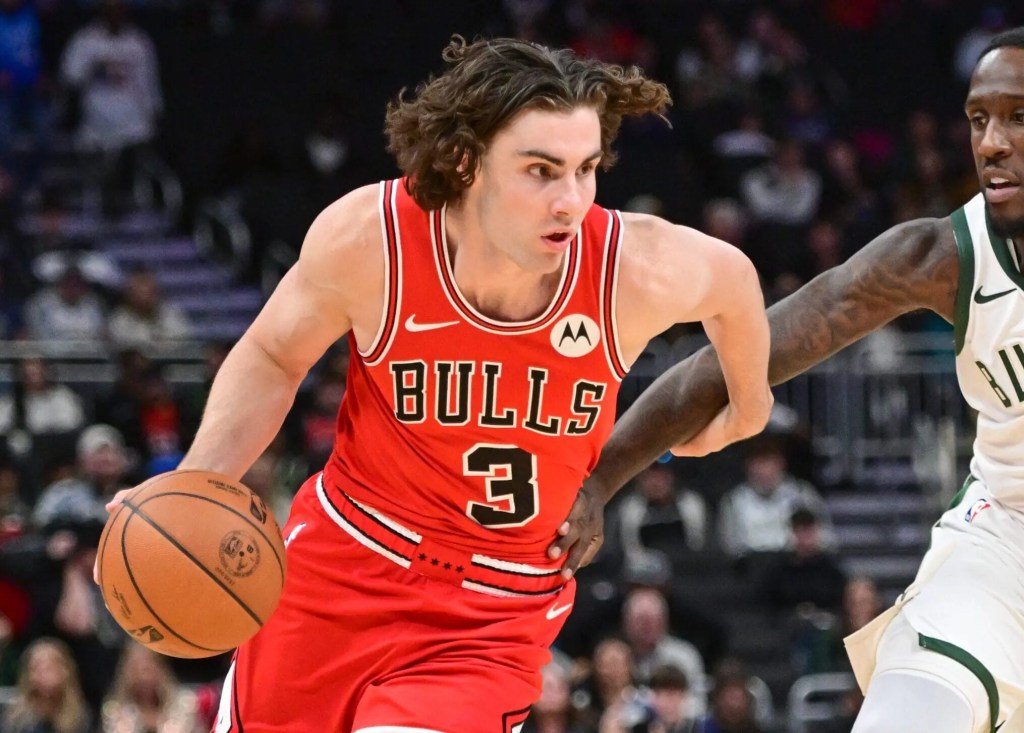
For Chicago, they need some type of direction. They’ve been teetering on the line between attempting to compete without fully tanking. Giddey, at just 22 years old, can help the Bulls continue in either direction they choose. Chicago also has a lot of money coming off the books next offseason, with players such as Zach Collins ($18 million), Nikola Vucevic ($21 million), and Kevin Huerter ($17 million) all coming off the books. As a result, the Bulls can re-sign Giddey and quickly open flexibility to continue to build around him next offseason.
Prediction: Giddey re-signs a 4/$118.5 million with the Chicago Bulls
1. Jonathan Kuminga, Golden State Warriors
It’s no secret that Kuminga has overstayed his welcome in Golden State. The former #7 overall pick never fit Steve Kerr’s system that well, and after asking for over $200 million in a rookie extension, Kuminga is now facing restricted free agency. While it’s unlikely Golden State keeps him, the Warriors have previously been willing to keep undesirable players on large deals to help facilitate deals later. For example, when Kevin Durant left for the Nets in 2019, the Warriors coveted a double sign-and-trade to give D’Angelo Russell a max contract, who they then flipped at the trade deadline for Andrew Wiggins and a first round pick (the pick that became Kuminga!). With that said, the Warriors could just re-sign Kuminga with the intent of flipping him later after he rehabilitates his value throughout the season.

Additionally, it’s likely that Golden State won’t let Kuminga walk for nothing. If Kuminga signs elsewhere in restricted free agency, Golden State will likely use their ability to match the deal as leverage in order to get something back for Kuminga. This gets tricky, as any team that would sign and trade for Kuminga would be subject to the base year compensation rule (“BYC”). Because Kuminga’s new salary will be increasing by more than 20%, he’s subjected to BYC. This means that for matching purposes in a trade, his outgoing salary will be 50% of his new salary, or 100% his previous salary (whichever is greater). For the team that Kuminga would be signed and traded to, his incoming salary for matching purposes is his full salary. This makes it tricky for a team to work out a sign and trade for him. Brooklyn is certainly an option, given they have over $40 million in cap space. But what about any other team? Maybe Chicago makes some sense. If Kuminga signs a deal starting at $26 million and wanted to be signed and traded to Chicago, his outgoing salary would be $13 million but $26 million incoming. Using salary matching rules, Chicago would need to send out a player that makes at least $21,527,000 to land Kuminga ($13 million plus $8,527,000 for trade bracket matching). Conveniently, Chicago has Nikola Vucevic who makes $21,481,481 in salary. Also conveniently, it was reported Golden State had interest in acquiring Vucevic at last year’s deadline. This trade works financially, as confusing as it sounds.
Prediction: Kuminga signs a 2 + 1 with Chicago for $81.9 million with a player option in the final year in a sign and trade, Nikola Vucevic heads to Golden State

 The Center Hub
Leave a comment