

The NBA Finals are upon us. Tomorrow, the Indiana Pacers will begin their battle with the Oklahoma City Thunder for basketball supremacy.
There should be highlights galore. The Pacers sprint around the court at top speed, playing with the controlled chaos of a top-tier jazz ensemble. The Thunder are a menacing band of highwaymen, harassing innocent ballhandlers without respecting personal space.
Make no mistake, Oklahoma City is a rightful heavy favorite. Hell, they’ve been frontrunners to win the Larry O’B since the offseason additions of Alex Caruso and Isaiah Hartenstein, and they’ve given us no reason to doubt them now. But Indiana has exceeded expectations to get here, beating the East’s five, three, and one seeds to claim their spot — and they haven’t looked particularly troubled along the way. Can they keep the magic going?
You’ll find plenty of previews elsewhere that cover the basics. Instead, here are the five most interesting things to watch for as the games commence.
1) Haliburton’s ability to do, well, anything
I promise we will dive off a springboard into the weeds in a minute, but stars still drive success — and Haliburton hasn’t found much against Oklahoma City this year.
During the regular season, Haliburton averaged 5.7 minutes with the ball. Against the Thunder, however, he averaged a measly 3.9. Entire possessions would run without Haliburton touching the rock, as he proved unable to shake the devilish tag-team of Lu Dort and Cason Wallace.
Put in simpler terms, Haliburton sucked against OKC. He averaged just 11 points and 5.5 assists against them, both of which were his lowest marks against any team in the league! Much of the time, he couldn’t even get a shot off, and with the Thunder harassing his teammates, they had problems, too:
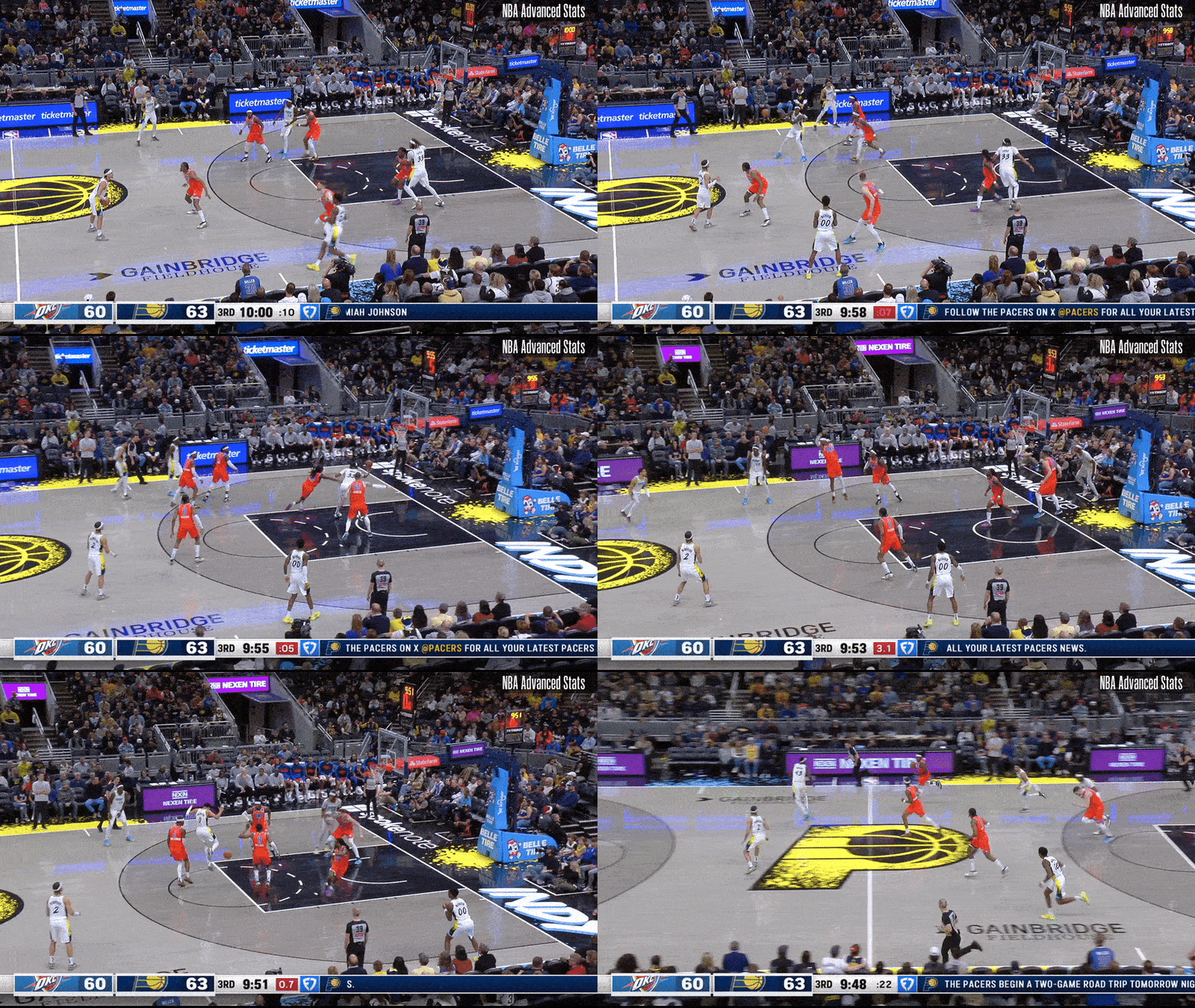
Haliburton is neither the quickest nor the strongest cat around. He creates advantages with a buttery handle, razor mind, and a little extra height. Against OKC, however, that hasn’t been enough. Indiana will have to run screen after screen for him to find relatively weaker defenders for him to attack, like, uh… Shai Gilgeous Alexander, who received All-Defensive Team votes this year? Isaiah Hartenstein, who was third in the league in Defensive EPM last season? There aren’t a lot of good options to poke at, and I don’t have many easy answers for Indiana (SGA can be lost off the ball on occasion; Hartenstein is vulnerable one-on-one; the Thunder’s tendency to overhelp can occasionally be turned against them).
But if the Pacers want to keep things close, Haliburton will have to find a way to showcase his star bonafides.
2) Corner threes
For most defenses, shutting off the corners is a basic tenet. Dunks, free throws, and layups are the most efficient shots in basketball, but corner threes are right after. Even role players are comfortable taking them. Defenses naturally want to limit opportunities from that space.
However, Oklahoma City’s historic defense may change that thinking going forward. They allowed more corner threes in the regular season than any other defense (12.3% of opponent shots). OKC prefers to allow their corner defenders to aggressively help on drives and jump passing lanes. In coach Mark Daigneault’s opinion, giving up a corner three is well worth the boost to turnovers and paint protection:
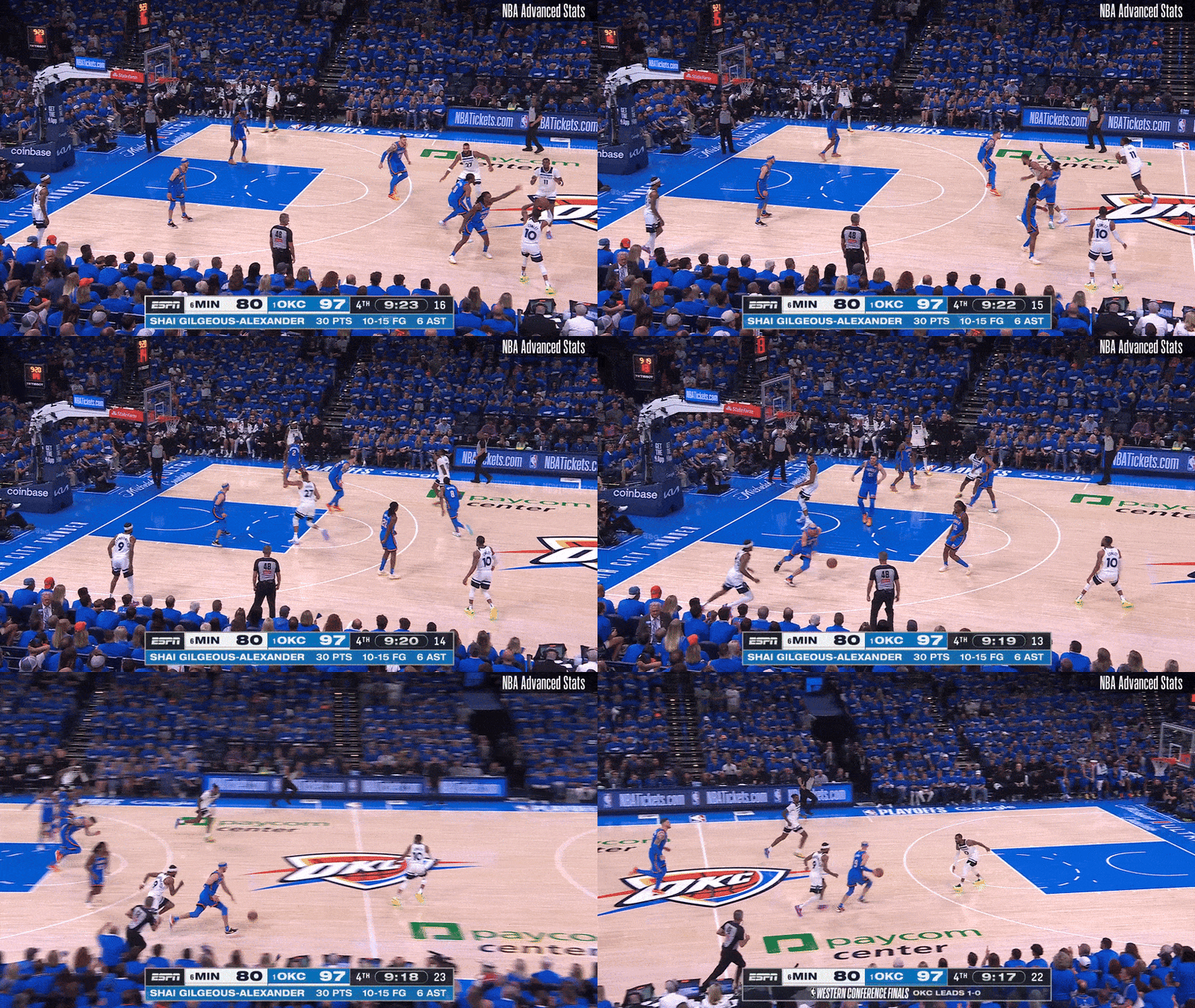
I wonder if we won’t see more teams copy this strategy going forward.
The Thunder took this to an absurd degree against Minnesota in the conference finals, allowing the Wolves to jack up more than 15 corner threes per game. For reference, the Suns led the league in the regular season with fewer than 12. Minny was ice cold for the first few games before finding the range, but it didn’t matter, as they drowned under a deluge of turnovers and fastbreak points.
Indiana doesn’t typically generate a ton of corner threes, but they shoot 40% on them. They may try to turn OKC’s aggressiveness against them, as those shots will be open. A couple of hot shooting nights would do wonders for Indy’s ability to pull an upset, and here’s where I should note that Indiana has led the playoffs in effective field goal percentage. They’re coming in red-hot.
3) The Thunder’s halfcourt offense
There’s one place in the series where Indiana has a massive edge (perhaps the only place): halfcourt offense.
OKC’s best offense is their defense — they’re averaging a whopping 23.8 points off turnovers in the playoffs, more than five points more than second-place Indiana. But when teams successfully keep them out of the transition game, OKC hasn’t had nearly as much success. They’ve averaged 97.3 points per 100 halfcourt possessions —roughly average for playoff teams, although seven points worse than their regular season average.
Indiana, by contrast, has scored a whopping 105.8 points per 100 halfcourt possessions, far better than their regular-season number.
The Pacers, appropriately, want to play with pace. But that term can be misused at times. Playing with pace doesn’t necessarily mean sprinting up and down in a state of permanent transition, although that can be part of it. Another, lesser-discussed part is simply getting into and running your halfcourt sets faster. One of the Pacers’ secret superpowers is that everyone cuts hard, cuts purposefully, on every possession. Few things make coaches madder than a lackadaisical cut ruining an offensive set — that never happens on a Rick Carlisle team. Pace can exist even without fast breaks.
OKC’s halfcourt offense too often devolves into watching Shai Gilgeous-Alexander dribble into the midrange for a pull-up or fadeaway middie. That is perfectly fine in medium-sized doses when you have an MVP, but the midrange game has far less of a halo effect on teamwide offensive success than any other part of scoring. The Thunder’s halfcourt offense is good, but it isn’t great. That distinction matters.
4) The battle of the midrange
Speaking of middies, this series should appeal to old-school basketball fans who miss the days of elbow turnarounds. Both of these teams are in the top eight for most frequent midrange-takers, and both are ranked higher even than that for accuracy.
There might be a reason for that. The midrange game is more valuable in the playoffs. Better defenses take away what opposing offenses do best. But the midrange jumper is the one shot that is relatively defense-proof. Ballhandlers can almost always at least get a shot off; superstars can make them. That resiliency becomes more important as the competition gets tougher, so perhaps we shouldn’t be surprised that two of the best midrange teams are meeting in the Finals.
SGA’s skill in the midrange is well-known. He’s got pristine footwork and a geometrist’s command of angles. We’ll see a whole bunch of him doing his MVP thang. His running mate, Jalen Williams, isn’t quite as shifty, but he loves the pull-up fifteen-footer, too:

And Indiana has a team full of players comfortable with off-the-dribble jumpers. In fact, the Pacers’ five leading minutes-getters over the season (Haliburton, Pascal Siakam, Myles Turner, Bennedict Mathurin, and Andrew Nembhard) are all in the top quintile of midrange chuckers for their position, as is TJ McConnell. With the Thunder clamping down on Haliburton, expect to see a lot of Nembhard. Just take a look at Indy’s first points in these teams’ December meeting:
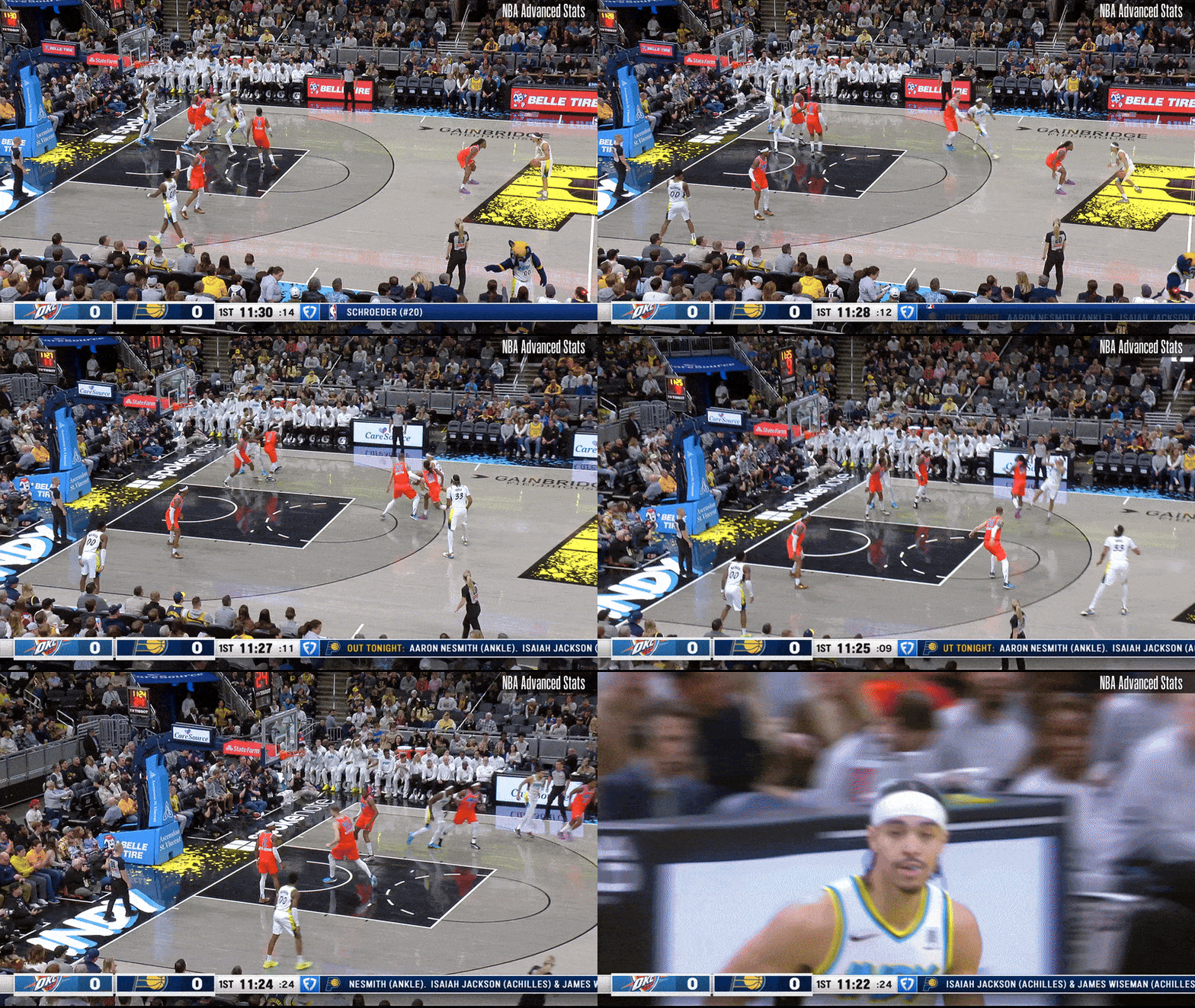
That’s an anachronistic shot. It’ll be hard to build a sustainable offense solely on midrange jumpers, but sometimes, good defenses leave no other option. Whichever team can better capitalize on their opportunities will have an advantage.
5) Indiana’s defense
Oklahoma City’s defense is a known thing. It’s mythological. Cthulhu, but all too real. However, the Pacers, while better known for their offense, have had some excellent defensive performances of their own during these playoffs.
It shouldn’t come as a shock. The Pacers’ defensive rating was just 21st at the end of calendar year 2024. But Andrew Nembhard’s return in December gave them an important piece back and allowed Pascal Siakam to shift back to a more help-oriented role. Indiana actually had the 10th-best defensive rating after January 1st.
And wait, there’s more! I’ve talked in other venues about the Pacers’ ability to level up against better competition. They actually posted the best defensive rating in the NBA — yes, better than OKC — in 15 games against top-ten teams in calendar year 2025.
Indiana does it with heavy doses of ball pressure, full-court press, and zone, things top offenses aren’t used to seeing (how the Thunder deal with Indiana’s pressure will be a fun thing to watch). They are heavily dependent upon the physicality of Nesmith and Nembhard to steer ballhandlers toward help as Siakam provides nail help and Myles Turner cleans up messes at the rim.
While Indiana hasn’t been quite as lockdown in the playoffs, they’ve repeatedly clamped opponents in statement games. Is it possible that the gap between Indiana’s and OKC’s defense isn’t the vast chasm we think it is?
We’ll find out soon enough. The Finals start tomorrow, people. I can’t wait.

 The Center Hub
Leave a comment