
As we enter Tiers 9-12, the focus shifts to players who possess significant upside but may still be works in progress, along with those whose specialized skills offer potential value in niche roles. This group includes athletes with physical tools, shooting potential, and developing skill sets that make them intriguing prospects for teams willing to invest in their growth. While not all of these players are ready to contribute immediately, many have the potential to evolve into key role players or even surprise with further development. For Tier 1-4, click here. For tiers 5-8, click here.
Whether it’s the defensive versatility of wings, shooting specialists who can space the floor, or high-motor forwards, the players in these tiers offer a variety of tools that can be refined over time. Some may take a little longer to adjust to the NBA level, but with the right development, they could become dependable contributors. In a league that values adaptability and depth, these prospects present intriguing options for teams looking to add specific skills or take a chance on raw potential.
Tier 9 — Solid Performers with Unique Attributes
This group may not have defined NBA roles yet, but they’ve solidified their place in the Top 30 through consistent production, intriguing skill sets, and the kind of intangibles that catch the attention of scouts and decision-makers. Each brings something distinct to the table — traits that may not immediately scream lottery pick but could translate into long-term value if developed correctly.
Yaxel Lendeborg: The High-Energy, Versatile Forward Who Makes Winning Plays
Yaxel Lendeborg is the type of rotational prospect who earns his minutes through effort, defensive intensity, and an ability to embrace any role. Standing at 6’9” with a strong, sturdy frame and an endless motor, Lendeborg combines physical tools with intangible qualities that make him a coach’s dream. He’s the kind of player that makes winning plays — whether it’s crashing the glass, making timely switches on defense, or contributing in the margins offensively.
At UAB, Lendeborg primarily operated as a big, anchoring the paint, cleaning up inside, and using his strength to affect the game in the trenches. However, as he continues to develop, he projects more naturally as a modern hybrid forward — someone who can defend multiple positions, fit into different lineups, and impact the game on both ends of the floor.
Defensively, Lendeborg’s versatility is his true calling card. He can guard on the ball, switch seamlessly onto smaller guards, and provide secondary rim protection. His instincts and effort on defense stand out, allowing him to be a constant disruptor, even when he’s not scoring. His ability to lock in defensively, combined with his toughness, gives him the potential to be a valuable asset in any system. Lendeborg’s ability to make an impact without the ball in his hands will be a key part of his development as a defensive specialist.
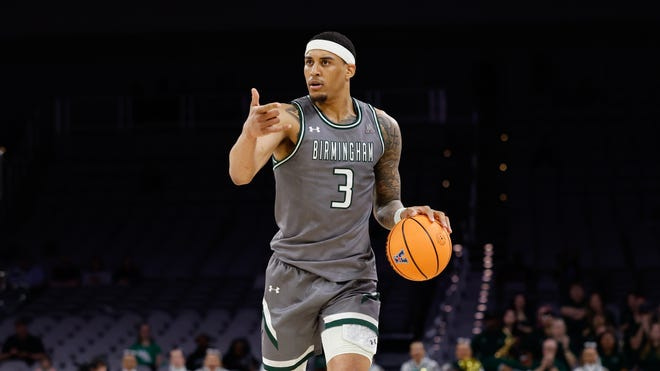
Offensively, Lendeborg is still growing, but there’s plenty of room for optimism. Over the past year, he’s begun to show more perimeter skill — handling the ball in transition, attacking closeouts, and knocking down occasional jumpers. His face-up game, coupled with his passing feel, adds intriguing upside to his profile. While his jumper is still a work in progress, the foundation is there. With continued development, Lendeborg has the tools to expand his offensive game and add value as a floor-spacer and playmaker.
Lendeborg isn’t likely to be a featured scorer in the NBA, but his ability to do the dirty work, bring energy, and make smart plays will allow him to carve out a solid role. His defense, combined with his evolving offensive skill set, makes him an ideal rotational player — someone who can contribute right away and grow into a versatile two-way contributor. If his shooting continues to improve, Lendeborg could easily become a key piece for a team looking for a switchable, high-energy forward who can impact the game on both ends.
Danny Wolf: Uniquely skilled Big Who Brings Offensive Versatility and Playmaking
Danny Wolf stands out as one of the more unique big men in this class, offering a rare blend of size, skill, and basketball IQ that sets him apart from many traditional frontcourt prospects. At 7 feet tall with a sturdy frame, Wolf doesn’t rely on raw athleticism or verticality to make an impact. Instead, he leans heavily on his polished offensive instincts and ability to facilitate from various spots on the floor.
During his time at Yale, Wolf operated with the freedom to explore multiple roles on offense — even occasionally taking on the ball-handling duties in pick-and-roll situations. This flexibility showcased his creativity but also exposed some limitations. Offensively, Wolf thrives as a connector. His court vision and passing touch allow him to initiate offense from the high post, elbows, or even from the perimeter. He consistently finds cutters, makes skip passes to shooters, and can function as a decision-maker in short-roll actions. His ability to read the floor is advanced for a player his size, and flashes of high-level feel suggest he could be a hub in motion-heavy or ball-sharing systems. However, that freedom also led to some inconsistency, with a high turnover rate as Wolf sometimes overextends his role or tries to thread overly ambitious passes. While the flashes of playmaking are real, he will need to tighten up his decision-making and play more within himself to earn trust at the NBA level.
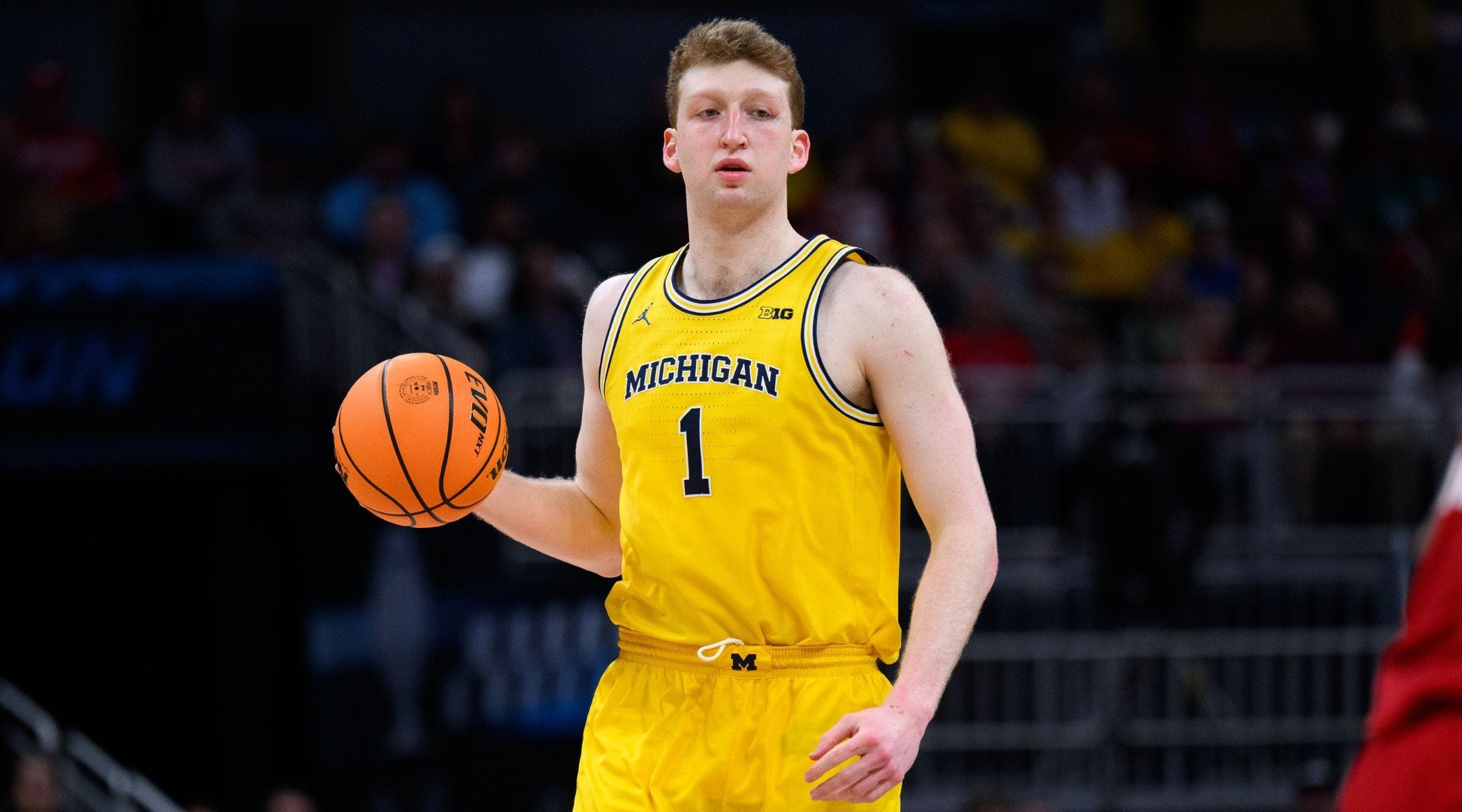
As a scorer, Wolf uses his size and touch to finish around the basket and has shown some capability from mid-range. His three-point shot is still a work in progress, but there’s optimism that he can develop into a credible floor-spacing threat. While he may not be a primary scorer, he doesn’t need to be. His ability to space the floor, facilitate ball movement, and play unselfishly fits well in modern NBA offenses.
Defensively, Wolf faces more question marks. His lateral quickness is a concern, limiting his ability to switch or contain quicker guards on the perimeter. Though he has decent instincts and timing as a help defender, he isn’t a natural rim protector and would likely struggle if asked to anchor a defense on his own. Wolf’s defensive viability will likely depend on the system he’s in — he may be best utilized in drop-coverage schemes or paired with a more mobile big who can cover ground. Improving his foot speed and conditioning will be crucial to his long-term defensive success.
Looking ahead, Wolf projects as a rotational big — someone who comes off the bench to provide smart passing, floor spacing, and ball movement. While he won’t have the same level of freedom he had at Yale, he can still be effective in a more simplified role that focuses on short-rolls, high-post facilitation, and stretching the floor as a big. Teams looking for a skilled, unselfish big who fits into a motion-heavy offense and can provide connective tissue between lineups will find value in Wolf, especially if he continues to refine his shot and cut down on turnovers. He may never be a featured option or a defensive anchor, but his offensive utility, basketball IQ, and willingness to play a role give him a real shot at sticking in the league as a modern, cerebral frontcourt piece.
Ben Saraf: A Jumbo Guard with Poise, Playmaking, and International Experience
Ben Saraf brings a distinct blend of poise, size, and playmaking to the table — a jumbo guard steadily rising on the radar after a breakout performance on the FIBA circuit for Israel. His international showing helped put him on the map, showcasing his confidence, creativity, and ability to command the floor against top-tier competition. Since then, Saraf has continued to develop his game in Germany’s G-BBL, gaining valuable experience against older, more physically mature players in the top professional league.
Standing at 6’5” with solid strength and a calm, calculated approach, Saraf excels as a primary ball handler in structured halfcourt sets. He plays with excellent pace, rarely rushed, using his body and change-of-speed dribbles to navigate traffic and manipulate defenses. His court vision and passing craft are standout attributes, whether threading passes through tight windows or patiently operating out of the pick-and-roll. Saraf plays like a seasoned veteran when it comes to playmaking.
While his scoring is effective in certain areas, it still has its clear limitations. He’s not yet a well-equipped outside shooter — the mechanics are decent, but his three-point consistency remains a work in progress. Where Saraf truly excels is in the pull-up mid-range game, where his touch, rhythm, and patience allow him to create space and capitalize. He can finish in the lane using craft and body control, but without top-tier burst or verticality, he relies more on angles and timing than physical dominance.
The big question moving forward is what role Saraf will ultimately take on at the next level. Will he be a true lead guard, or settle into a combo-guard role, relying more on his playmaking than high-volume scoring? This could depend on his continued development as an off-ball player. Currently, much of his value comes with the ball in his hands. Off the ball, he’s not yet an impactful mover or catch-and-shoot threat, so developing his floor-spacing ability and understanding how to cut or relocate will be crucial to maximizing his versatility.

Defensively, Saraf gives effort and has solid instincts, but his limited lateral quickness and athleticism raise questions about his ability to defend quicker, more dynamic guards. His strength and size help in certain matchups, but he’ll need to become a more disciplined team defender and find ways to overcome his physical limitations. Still, there’s a lot to like about his game. Saraf’s feel for the game, playmaking chops, and international experience give him a real shot at becoming a valuable rotation player.
If Saraf can develop into a more reliable shooter, learn to play effectively off the ball, and hold his own on defense, he could carve out a long-term role as a smart, composed, multi-functional guard who adds value through decision-making and control. His professional reps in the G-BBL, combined with his breakout showing for Israel, suggest he’s trending in the right direction.
Bogoljub Markovic: The Stretch Big with Upside from KK Mega Pipeline
Bogoljub Markovic has emerged as a quietly intriguing prospect out of the KK Mega pipeline — a program known for developing NBA-caliber talent. Standing at 6’11”, Markovic brings legitimate stretch big upside with a smooth, confident shooting stroke that’s already translated in pro settings. He’s played real minutes in the Adriatic League, holding his own against older competition and displaying offensive tools that are hard to ignore at his size.
Offensively, Markovic projects as a hybrid 4-5, offering a blend of size, touch, and spacing. His three-point shot is fluid, and he’s comfortable operating both as a pick-and-pop option and as a floor-spacer who can punish drop coverages. While he’s not someone you run offense through, Markovic shows solid passing feel, keeps the ball moving, and understands where to be in team concepts — all signs of a high-IQ player. While he may never be a high-usage option, his ability to contribute without demanding touches is part of his appeal.
Bogoljub Markovic brings intriguing defensive potential, thanks to his impressive length and raw athleticism. While still developing, his physical tools give him a legitimate chance to impact the game on the defensive end at the next level. His length allows him to disrupt passing lanes, challenge shots, and guard multiple positions, though his consistency and overall defensive awareness are still works in progress. With time and development, Markovic has the potential to become a versatile defender, capable of making plays and contributing to a team’s defense in a variety of ways.
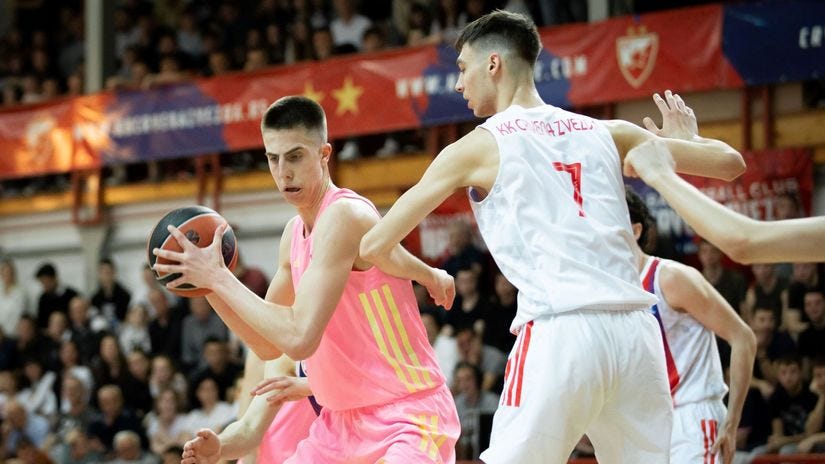
Physically, Markovic is still developing. He’ll need to add strength to better handle interior matchups and adapt to the pace and physicality of the NBA. He’s mobile in space and has decent instincts, but rim protection likely won’t be a major part of his game. He’s not a natural shot deterrent — lacking elite vertical pop or timing — which limits his ceiling as a true 5 defensively. However, his ability to stay with stretch forwards or operate in switch-heavy systems could allow him to contribute on defense with the right team structure.
Markovic isn’t a finished product, and he may not be a guaranteed NBA lock. But his combination of size, shooting, and feel — especially in a league that values spacing and versatility — makes him an appealing rotational prospect. If he can continue to grow into his frame, add strength, and tighten up his defensive awareness, there’s a path for him to become a valuable bench piece who contributes through size, skill, and spacing. He’s the type of under-the-radar forward who can quietly stick around and carve out a niche if his development continues on its current track.
Though none of these players are guaranteed NBA staples, each has shown enough talent, competitive drive, and unique attributes to raise their stock. With continued development, they could carve out valuable roles at the next level. These are players to monitor closely, as their potential to impact the game grows with each passing season.
Tier 10 – Big International Names & Young NCAA Talents
Tier 10 is a mix of raw, high-potential prospects who have shown flashes of brilliance but still have a long way to go in their development. These players come from both the international scene and the younger ranks of NCAA basketball, and while they each have unique skills that could translate into NBA success, they remain works in progress. What stands out about this group is the boom-or-bust nature of their upside. If they reach their potential, they could be difference-makers, but they’ll need to refine their skills and prove their consistency to make it at the next level.
Thomas Haugh: The High-Feel, High-Motor Forward with Quiet NBA Potential
Thomas Haugh has quietly carved out a name for himself as a high-feel, high-motor forward with the kind of cerebral game that often flies under the radar in early scouting circles. At 6’9” with a wiry frame and a natural sense for the game, Haugh brings a unique blend of instincts, timing, and versatility that fits the mold of the modern utility forward. He may not be the loudest name in the 2025 class, but he’s the type of player evaluators circle as a potential long-term investment.
A former four-star recruit out of Pennsylvania and now part of Florida’s program, Haugh brings an unselfish, team-first approach that pops on film. His offensive game is defined less by volume and more by feel — he knows when to move the ball, where to be on the floor, and how to operate within structure. While not a primary scoring option, Haugh excels in connective actions: short-roll passing, baseline cuts, and timely screens. His court vision is advanced for a forward, and he routinely makes the extra pass to keep the offense flowing.
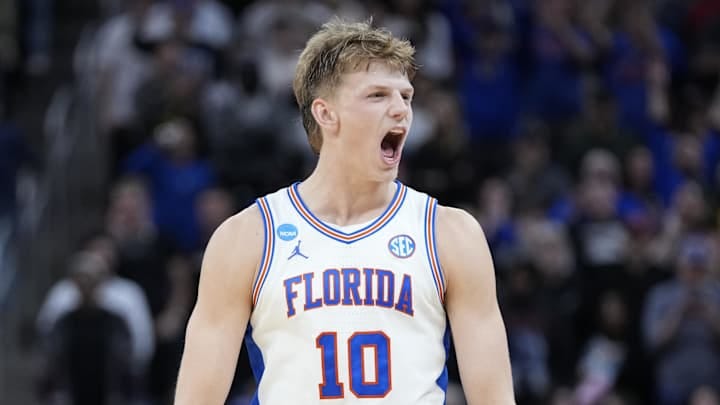
Where Haugh has made his biggest strides is as a face-up shooter and midrange operator. His mechanics are solid, and while his three-point volume is still relatively low, he’s shown enough touch to suggest long-term stretch potential. In pick-and-pop actions, he’s a willing and capable option, especially when given time and space. The development of a consistent perimeter jumper will be crucial to unlocking his full offensive value.
Defensively, Haugh is competitive and cerebral. He’s not a vertical shot-blocker, but he uses his length, timing, and awareness to make plays at the rim and rotate effectively as a help-side defender. He moves well laterally, allowing him to switch onto wings and hold his own against quicker players. What he lacks in raw strength or vertical pop, he compensates for with positioning and anticipation. As he adds muscle, his ability to defend post players and absorb contact will improve.
The biggest question marks around Haugh’s pro potential center on his physical development and assertiveness. He’s still growing into his frame and can be outmuscled at times — particularly when matched up against more physically mature, interior-focused competition. There are stretches where he can fade into the background, operating more as a connector than a true difference-maker.
That said, what sets Haugh apart is his willingness to embrace the dirty work — the kind of effort plays that don’t always show up on the stat sheet but help win games. He’s the first to dive on the floor for a loose ball, battle for a tough rebound, or rotate late to contest a shot. His motor runs hot, and he takes pride in making hustle plays, showing a clear understanding of how to impact the game even when he’s not scoring. That mindset, combined with his self-awareness and eagerness to improve, gives him a strong foundation to build on as he adds strength and refines his offensive skill set.
Still, the foundational traits are there: basketball IQ, feel, passing, and positional versatility — all wrapped in a long, agile frame. He’s the kind of player who may not project as a lottery pick but could quietly work his way onto an NBA roster by doing the little things that impact winning. In the right developmental system, especially one that values ball movement and defensive flexibility, Haugh could blossom into a valuable role player at the next level.
He’s not flashy, but he’s functional — and in today’s NBA, that might be his biggest asset.
Alex Condon: The Raw, Athletic Prospect with Tremendous Long-Term Potential
Alex Condon is the type of prospect who immediately draws attention when he steps on the floor — a physical specimen with clear athletic upside and a frame built for the modern game. At 6’11” with a strong base and fluid mobility, Condon has the kind of raw tools that are hard to teach and easy to envision at the next level. His movement in space, ability to cover ground quickly, and vertical pop around the rim give him a natural edge in transition and on the defensive end.
From a physical standpoint, few prospects check as many boxes as Condon. He runs the floor like a wing, elevates with ease, and can play above the rim on both ends. He’s shown flashes as a lob threat, rim finisher, and weak-side shot blocker — all of which point to long-term utility as a rim-running big or hybrid 4 in a switch-heavy system. When locked in, he can change the dynamic of a game with his energy and physical presence alone.
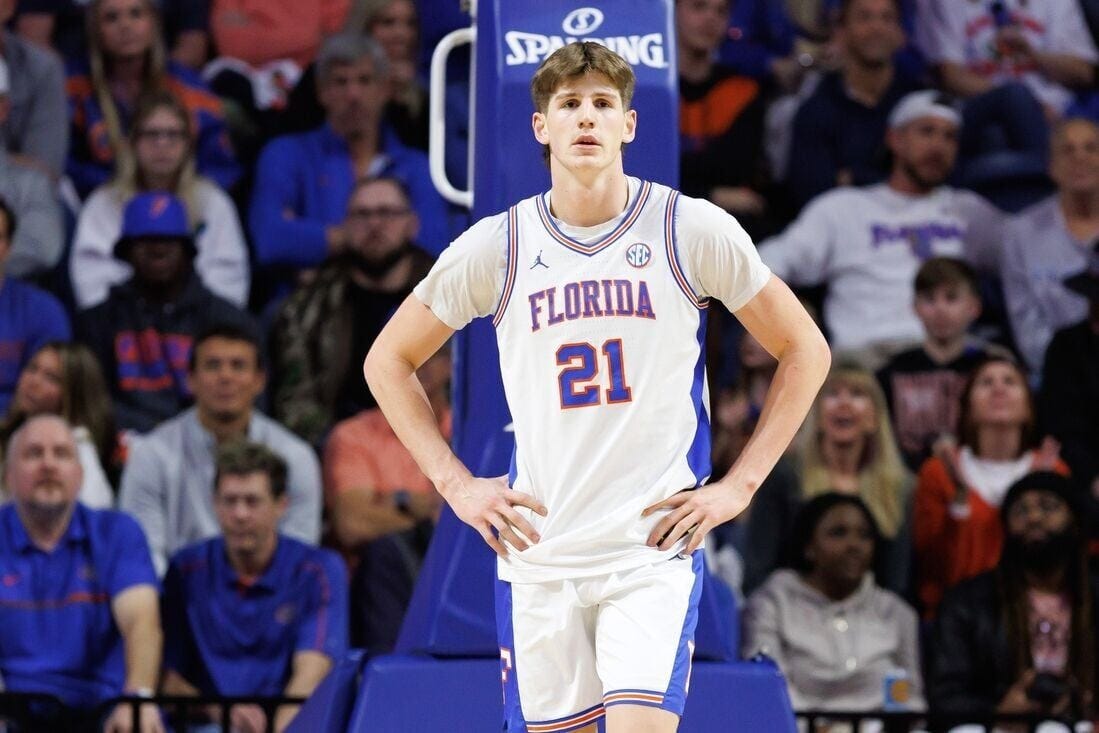
But while the tools are tantalizing, the refinement is still a work in progress. Condon is still learning the nuances of the game — from reading defensive rotations to making the right decisions as a short-roll passer or help defender. His feel in half-court sets can be inconsistent, and at times, his instincts lag behind his athleticism. One of the more noticeable areas for improvement is in the pick-and-roll game. Condon often lags behind the play, struggling to get to his spots on time, which allows defenders to recover, adjust, and anticipate the action. Timing and pace are critical in these situations, and Condon’s current rhythm doesn’t always match the speed of the decision-making required at higher levels.
Offensively, Condon’s skill set is still being shaped. He’s capable around the basket and can finish through contact, but he’s yet to develop a reliable midrange or perimeter shot. His touch around the rim is solid, but his footwork and post timing are areas that will benefit from continued reps and coaching. As a passer, he shows flashes of awareness but isn’t yet a consistent decision-maker in traffic or when pressured.
What makes Condon an intriguing long-term bet is the combination of physical gifts and competitive spirit. He plays hard, doesn’t shy away from contact, and competes on the glass. Coaches rave about his work ethic and willingness to be coached — key traits for any developmental prospect. He’s shown flashes of high-level impact, particularly in open-court situations and defensive scrambles, where his tools shine brightest.
Condon isn’t a finished product, and he may not be NBA-ready right out of the gate — but that’s not a knock. In an era where long, mobile bigs with defensive versatility and rim-running ability are constantly in demand, Condon fits the prototype. If he can tighten up his fundamentals, improve his pick-and-roll execution, and raise his basketball IQ through reps and experience, he has a chance to be more than just a project — he could become a rotation-level big with long-term staying power.
The ceiling is there. Now it’s about refining the instincts and polishing the timing to unlock it.
Boogie Fland: High-Ceiling Lead Guard with Elite Scoring, Playmaking, and Physicality Questions
Boogie Fland is one of the more electrifying on-ball creators in his class — a shifty, confident guard with a scorer’s mentality and the handle to break down just about any defender in front of him. His game is built around pace, craft, and timing, with a deep bag of moves that allows him to get to his spots and generate space, especially in isolation or high ball-screen actions. He thrives in one-on-one matchups, often using a tight crossover or hesitation dribble to create the separation he needs to rise up for his signature mid-range pull-up.
Fland’s ability to score off the bounce is his calling card. Whether it’s a step-back three, a quick pull-up from 15 feet, or a smooth floater in the lane, he has multiple counters to keep defenders off-balance. His rhythm and body control allow him to make tough shots look routine. He’s comfortable in late-clock situations and has shown flashes of shotmaking brilliance that suggest real long-term upside as a perimeter scorer.
However, for all his shot creation and flair, Fland remains a work in progress when it comes to decision-making and overall offensive maturity. At times, he can fall into tunnel vision, hunting difficult shots rather than making the simple read. Fland has shown impressive poise as a playmaker — boasting a strong 3.7 assist-to-turnover ratio, which speaks to his ability to handle pressure and make the right reads. He doesn’t just score — he facilitates. Whether it’s finding a shooter off a drive-and-kick or hitting a rolling big in stride, Fland has demonstrated the ability to keep the ball moving and make timely decisions. His handle allows him to navigate tight spaces, and he’s shown maturity in not forcing plays when defenses collapse.
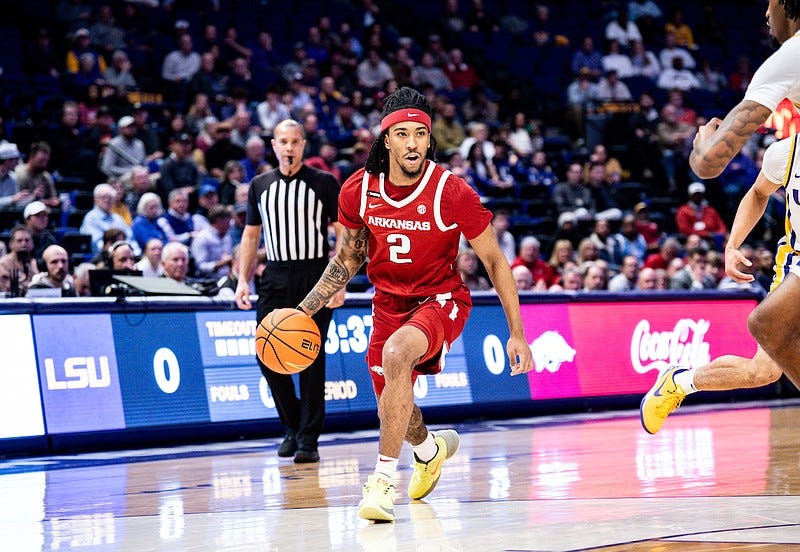
What sets him apart from other young scoring guards is that his passing isn’t just reactive — it’s purposeful. He reads help defenders, anticipates rotations, and can deliver the ball with accuracy off a live dribble. While he’s not a pure point guard in the traditional sense, he brings enough playmaking equity to be trusted with initiating offense, particularly in late-clock or isolation-heavy possessions.
Still, there’s room for refinement. At times, he can over-dribble or settle for tough shots instead of keeping the offense flowing. As he continues to grow, balancing his scoring instincts with consistent playmaking will be key.
Off the ball, Fland is still developing. He’s most comfortable with the ball in his hands, which can lead to stagnant possessions when he’s not initiating the offense. Learning to relocate, cut with purpose, and function within structured sets will be important if he’s to adapt to higher levels of play, especially in systems that emphasize ball movement and off-ball activity.
Another area of concern lies in his physicality and interior finishing. Despite his quickness and shiftiness, Fland struggles to consistently finish through contact or absorb bumps in the lane. He often relies on finesse rather than power, which limits his effectiveness against longer, more physical rim protectors. Developing a stronger base, embracing contact, and learning how to shield the ball more effectively will be essential to becoming a more complete scorer at the next level.
Perimeter shooting, while streaky, shows promise — especially off the dribble. His mechanics are sound, and he’s capable of hitting tough shots from deep, but efficiency and shot selection remain inconsistent. More reps, coupled with improved shot discipline, could turn him into a reliable floor spacer in time.
Defensively, Fland is active and competitive, but he’ll need to get stronger to handle bigger guards and fight through screens. His lateral quickness gives him a baseline to build from, and he has the tools to be a plus defender if he locks in and commits to that end of the floor.
In the end, Boogie Fland is a high-ceiling guard who brings undeniable offensive juice, especially when the ball is in his hands. His shot creation and isolation scoring will translate, but his long-term success will depend on how well he evolves as a decision-maker, finisher, and off-ball contributor. If the pieces come together, he could be a microwave scorer with secondary playmaking upside — the kind of backcourt spark plug that every NBA roster values.
Nolan Traore: High-IQ European Lead Guard with Size, Playmaking, and Developmental Questions on Shooting and Defense
Nolan Traore entered the season with significant buzz — and for good reason. A standout performer for France during FIBA competitions and long considered one of the top prospects on the international circuit, Traore came into this year carrying high expectations. His size, court vision, and natural feel for the game had scouts circling his name early, and many viewed him as one of the premier young guards coming out of Europe.
That hype, however, met real-world adversity when he began his season in France’s LNB Pro A — one of the most competitive domestic leagues in Europe. The physicality, speed, and structure of the pro game exposed several of Traore’s inconsistencies, particularly in the early going. Turnovers, defensive lapses, and a lack of shooting confidence were all evident during the first half of the season as he adjusted to the demands of playing against seasoned professionals.
But to his credit, Traore didn’t shy away from the challenge — and his growth over the course of the season has been noticeable. In the second half of the year, he began to settle in, playing with more composure and showing flashes of the dynamic playmaker that made him such a coveted name in the first place. His comfort operating in pick-and-roll sets has only improved, and he’s shown better command of tempo, often slowing the game down to his pace and making advanced reads against veteran defenders.
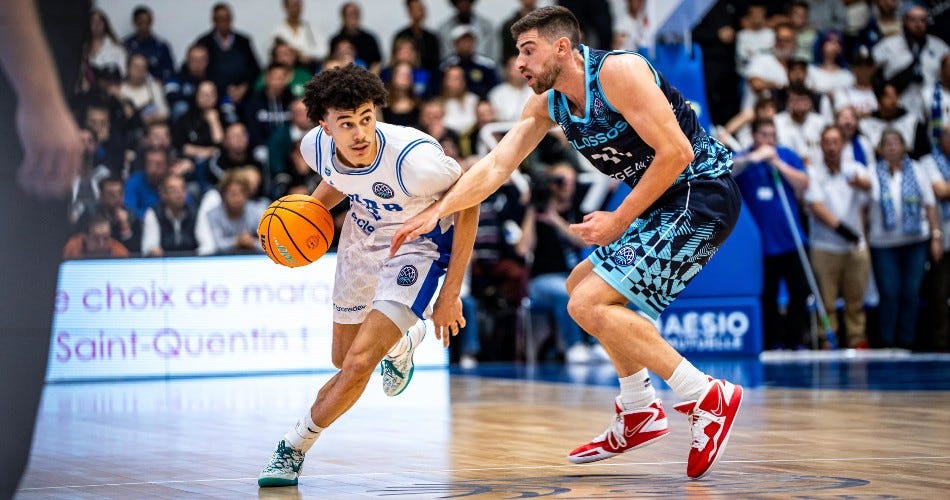
His feel for the game remains his most bankable trait. Traore’s poise in ball-screen situations is impressive for his age, and his vision allows him to consistently find open teammates in tight windows. He understands timing, spacing, and how to manipulate the floor — qualities that point guards typically develop later in their careers. At 6’5”, he also has positional size that gives him an advantage as a passer and shot creator.
Still, areas of concern remain, particularly on the defensive end and as a shooter. Traore’s perimeter shot is still streaky, with an inconsistent release and occasional hesitancy on catch-and-shoot opportunities. He has the tools to be a more reliable outside threat, but it will take time, reps, and mechanical refinement. Defensively, he has the length and mobility to be impactful, but he needs to stay locked in — improving his lateral quickness, discipline, and ability to fight through screens.
Physically and mentally, he’s still maturing — but the upside is real. Traore projects as a long-term investment: a high-IQ, pass-first guard with size, feel, and international pedigree. His performance in the latter half of the season has rekindled belief in his ceiling, reminding scouts why he was so highly regarded coming into the year.
The path hasn’t been linear, but that’s part of the story for many high-level European prospects. With continued growth, particularly in his shooting and defensive consistency, Traore could evolve into a highly valuable two-way guard who fits the modern NBA mold. The tools are already in place — it’s now a matter of putting it all together.
Tahaad Pettiford: Undersized Shotmaker with Scoring Punch, but Can His Physical Tools Hold Up Against Pro-Level Size and Pressure?
Tahaad Pettiford is a dynamic guard with clear offensive talent, capable of swinging momentum with his shot-making and quick-twitch playmaking. A former five-star recruit and McDonald’s All-American, Pettiford entered his freshman season at Auburn with considerable hype — and while he didn’t always get starter minutes, he made the most of his opportunities as a high-impact sixth man.
Pettiford’s greatest weapon is his shooting. He’s a lights-out marksman with deep range and a compact, repeatable release that translates well to the next level. Whether it’s pulling up in transition, working off screens, or spotting up from the corner, Pettiford doesn’t need much space to get his shot off. His confidence as a shooter is unwavering, and when he gets going, he can change the rhythm of a game in a matter of possessions.
Despite coming off the bench for much of the season, he showed flashes of brilliance — scoring in bunches and bringing a spark to Auburn’s offense in spurts. He’s a capable playmaker when he’s locked in, using his burst to get downhill and collapse defenses. He thrives in space, has a tight handle, and flashes solid vision in the pick-and-roll. When the pace is in his favor, Pettiford looks every bit the part of a high-level scoring guard.
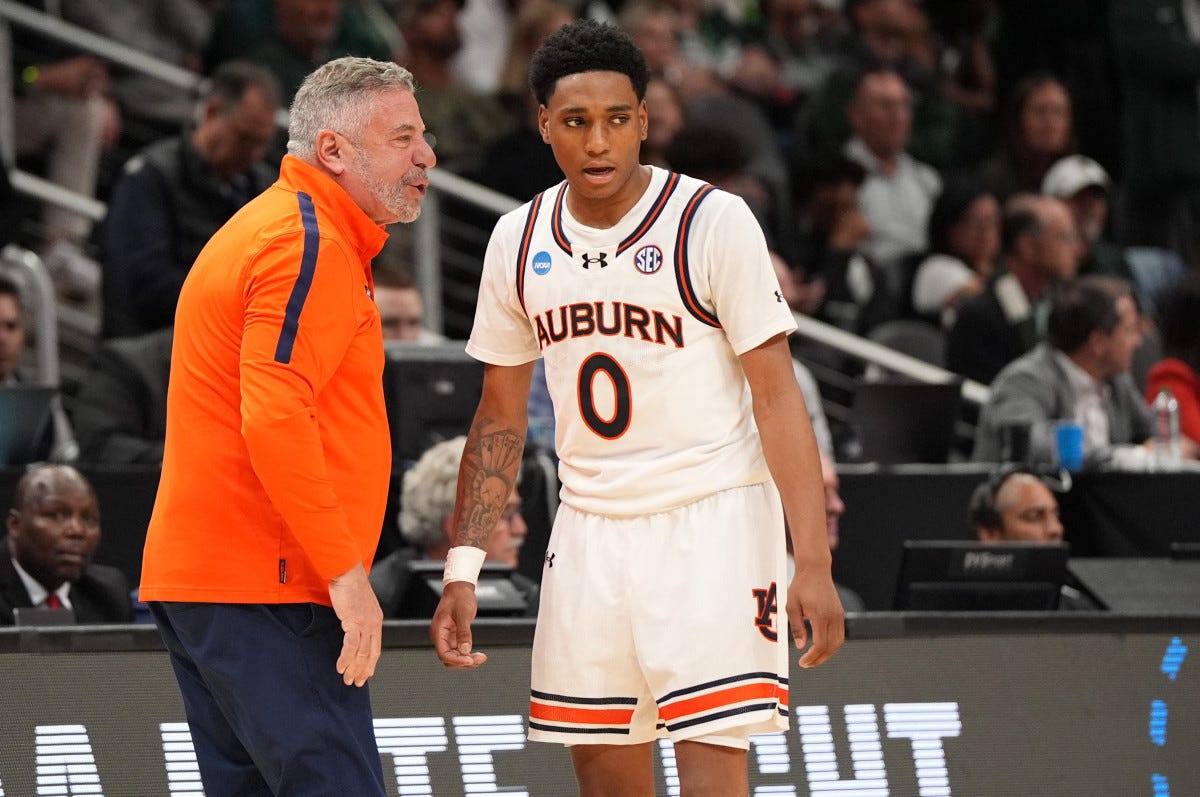
However, consistency remains a question mark. There were stretches where he struggled to impose himself on the game, especially against more physical and disciplined defenses. His size — listed generously at 6’0″ — makes finishing around the rim a challenge, particularly when facing length and contact. In the SEC, that lack of size showed up in traffic, and it’s a concern that could be further magnified at the NBA level.
Defensively, Pettiford competes, but he’s limited by his physical profile. He can get lost on screens, and while he’s quick laterally, bigger guards can shoot over him or bully their way to their spots. His frame doesn’t project to switch-heavy systems, so he’ll need to prove he can hold his own at the point of attack.
The upside with Pettiford lies in his elite shooting and microwave scoring potential. In a league that values spacing and instant offense, there’s a role for undersized guards who can catch fire and stretch defenses. But his long-term outlook will depend on how well he adjusts to the speed and physicality of the pro game, and whether he can consistently make good decisions under pressure.
He’s got the skill — no question. But at his size, the margin for error is razor-thin. If he can tighten up his shot selection, improve his finishing craft, and hold his own defensively, he has a chance to carve out a role as a scoring spark plug off the bench. But in a league where smaller guards must be exceptional to stick, Pettiford’s development curve will be one to watch closely.
Hugo Gonzalez Peña: Explosive Off-Ball Wing with Untapped Two-Way Potential — But Can the Real Madrid Product Break Through Without Real Minutes?
Hugo Gonzalez Peña is one of the more intriguing young names emerging from the international scene — a prospect brimming with raw talent, athleticism, and positional versatility. Standing at 6’7” with long arms and explosive leaping ability, Gonzalez has the physical profile that immediately grabs attention. While still developing, he’s shown enough flashes to warrant serious long-term interest from scouts tracking the next wave of European wings.
What jumps off the screen with Gonzalez is his athleticism and off-ball activity. He moves with purpose and energy, constantly cutting, relocating, and finding gaps in the defense to create easy scoring opportunities. Whether it’s backdoor cuts, transition sprints, or second-chance positioning, Gonzalez has a knack for being in the right spot — and he finishes well above the rim when given a runway.
Offensively, he doesn’t need the ball to make an impact. He thrives in motion-heavy systems where he can feed off playmakers, attack closeouts, and leverage his athleticism in open space. However, for him to reach his ceiling at the NBA level, his perimeter shooting will need to evolve. Right now, his outside shot lacks consistency in both form and results. He’s hesitant at times, and defenders often sag off, daring him to shoot. Adding confidence and efficiency from beyond the arc will be a key developmental milestone.

Defensively, Gonzalez is a mixed bag. On one hand, he has all the tools — length, quickness, anticipation — to become a disruptive perimeter defender. On the other, he often gambles for steals or jumps passing lanes prematurely, leaving his team vulnerable to rotations and backdoor actions. While the instincts are there, his discipline and positioning need refinement. With the right coaching, those tendencies can be harnessed, but he’ll have to prove he can stay locked in over the course of possessions.
His current situation adds a complex layer to his evaluation. Gonzalez is part of the prestigious Real Madrid system — one of the most competitive and talent-rich organizations in European basketball — but he’s not seeing meaningful minutes at the senior EuroLeague level. That reality is a double-edged sword: on one hand, it could mean we’re undervaluing him due to lack of exposure and opportunity; on the other, we might be overvaluing potential that hasn’t yet translated against elite competition.
It’s important to understand the context. Real Madrid’s senior team is stacked with veteran talent and experienced international stars, which makes it difficult for even high-level prospects to break through. But that lack of playing time has inevitably hindered Gonzalez’s stock this season, leaving scouts and executives asking the “what if” question — what if he had come stateside and played in a system that prioritized his development with more consistent minutes?
Ultimately, Gonzalez Peña is a long-term investment — not a plug-and-play prospect, but one with genuine upside. His combination of athleticism, off-ball instincts, and defensive potential gives him a valuable foundation. If he can tighten his handle, develop a reliable jumper, and mature defensively, he has the chance to become a versatile two-way wing in the NBA.
There’s work to be done, and the path might be unconventional — but wings with his tools, energy, and pedigree don’t go unnoticed for long.
Alex Toohey: Productive Positional Tweener or Future 3-and-D Glue Guy? The Sydney Kings Forward Is Quietly Building an NBA-Ready Résumé in the NBL
Alex Toohey is one of the more productive international prospects flying slightly under the radar — a versatile forward who’s carved out a meaningful role in Australia’s NBL while flashing intriguing long-term upside. At 6’7” with a strong frame, good instincts, and a willing motor, Toohey has shown he can impact the game on both ends, even if his positional identity remains somewhat undefined.
That’s the big question with Toohey: what is he at the next level? Is he a wing? Is he a small-ball four? Or is he something in between — a tweener in the best or worst sense of the word? Right now, the answer is a bit of all of the above. Toohey has guard skills in a forward’s body, but not quite elite quickness to defend wings full-time, nor the vertical pop or rim protection of a prototypical power forward. And yet, despite that positional ambiguity, he’s been consistently productive in one of the best leagues outside the NBA.
His time with the Sydney Kings in the NBL has provided a strong test of his physicality, decision-making, and ability to adapt. Unlike many prospects who enter the professional ranks through college, Toohey has been battling seasoned veterans and grown men — and he’s held his own. He makes smart plays, competes defensively, and doesn’t shy away from physical contact. His rebounding has improved, and he’s shown real effort rotating and defending in space, even if his lateral quickness can get tested by quicker wings.
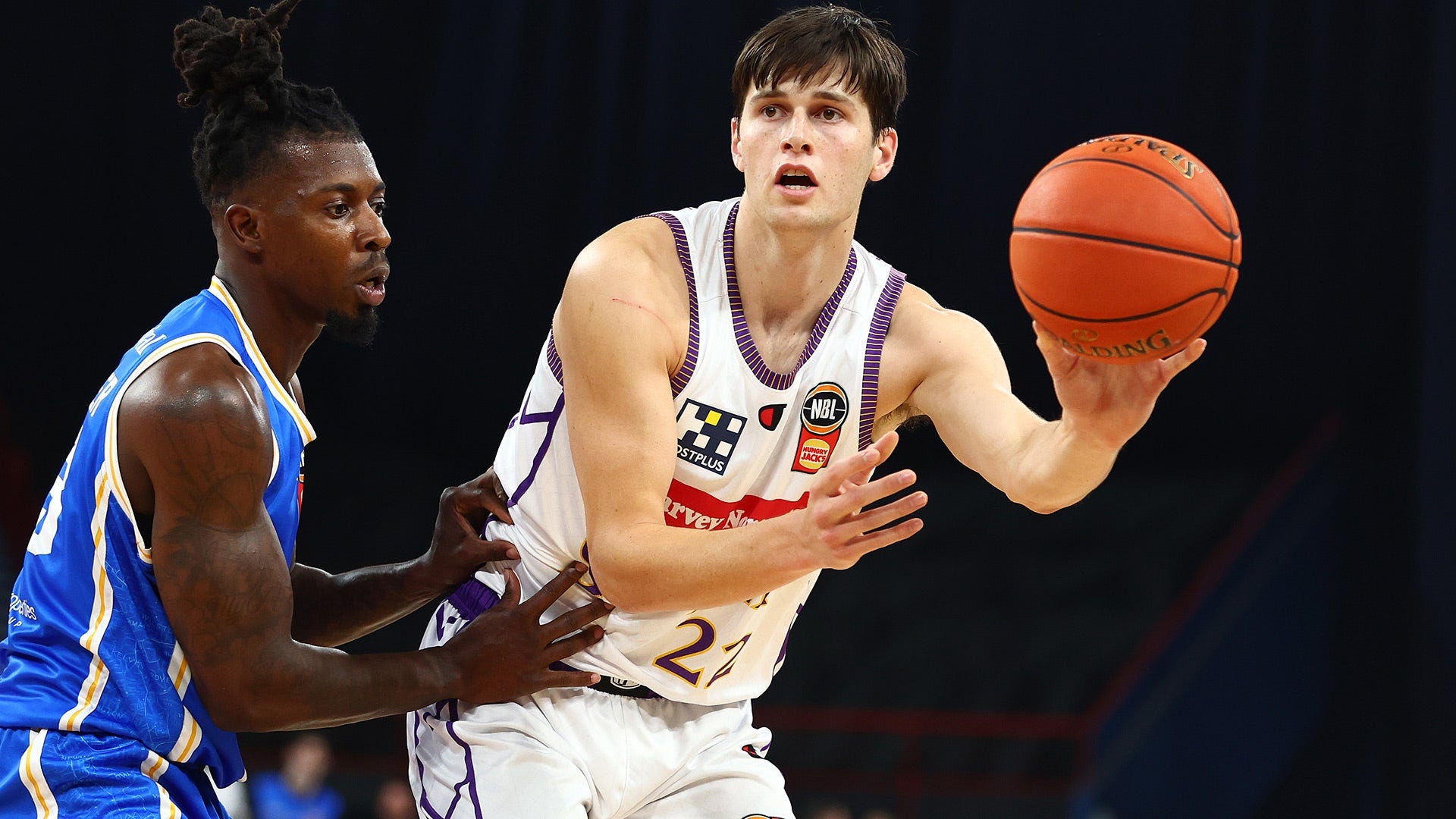
Offensively, Toohey is a connector. He’s not going to create a ton of offense in isolation, but he plays within the flow of the game, moves well off the ball, and can knock down open shots when his feet are set. His feel is strong — he makes timely cuts, keeps the ball moving, and shows flashes of creativity when attacking closeouts. His midrange touch is solid, and he’s continued to work on extending his range to become a more reliable floor-spacer. If the jumper becomes a consistent weapon, it significantly raises his ceiling as a rotational wing-forward hybrid.
Defensively, he competes. Toohey isn’t a lockdown guy, but he’s switchable across the 2–4 spots and uses his body well to hold his ground. He communicates, boxes out, and plays with a toughness that coaches value. He won’t blow you away with highlight plays, but he’ll do the little things — dive for loose balls, rotate early, and play within a system.
What makes Toohey appealing is that he doesn’t need the ball to be effective. He’s the kind of player who fills gaps, makes the right read, and doesn’t overcomplicate possessions. In a league where role players are increasingly valued for doing the small things right, Toohey fits the mold.
Ultimately, Toohey’s success at the next level will depend on how much he can sharpen the edges of his skill set — particularly his shooting and perimeter defense. If he can become a true 3-and-D wing with some secondary playmaking ability, he has a real chance to carve out an NBA role. If the jumper stalls or he struggles to defend quicker players, his positional ambiguity could become a liability.
Still, his productivity in the NBL, maturity on the court, and team-first approach make him a compelling developmental bet. He may not have a defined role yet, but his ability to adapt and contribute in a high-level pro environment speaks volumes. Alex Toohey isn’t flashy — but he’s solid, reliable, and trending in the right direction.
Joan Beringer: Raw, Bouncy, and Booming With Upside — Can the Adriatic League’s Athletic Marvel Turn Tools Into NBA Impact?
Joan Beringer is a classic upside swing — a raw but undeniably gifted international prospect with the physical tools and athleticism that NBA teams are constantly on the lookout for. Standing at 6’10” with a long frame and explosive leaping ability, Beringer profiles as a modern-day rim runner with clear vertical pop and a massive catch radius. He thrives in space, finishes lobs with ease, and offers intriguing potential as a play-finisher in transition and pick-and-roll sets.
At his best, Beringer brings energy, vertical spacing, and a disruptive presence around the basket. He covers ground quickly, elevates with minimal load time, and plays above the rim effortlessly. His hands are reliable, and his coordination allows him to catch passes in traffic or on the move — giving him a natural advantage as a target for guards in high-paced or spread-out offenses. In a league increasingly built around spacing and athleticism, Beringer’s physical profile fits the mold of a high-ceiling developmental big.
However, his game is still very much in the early stages of refinement — even within the context of the Adriatic League. While his athleticism gives him an undeniable edge, Beringer remains a raw player on both ends of the floor, more reliant on his physical gifts than on polished skills or consistent feel. Competing in the Adriatic League — known for its physical play and veteran talent — has given him a valuable test, but also exposed some of the areas in need of growth.
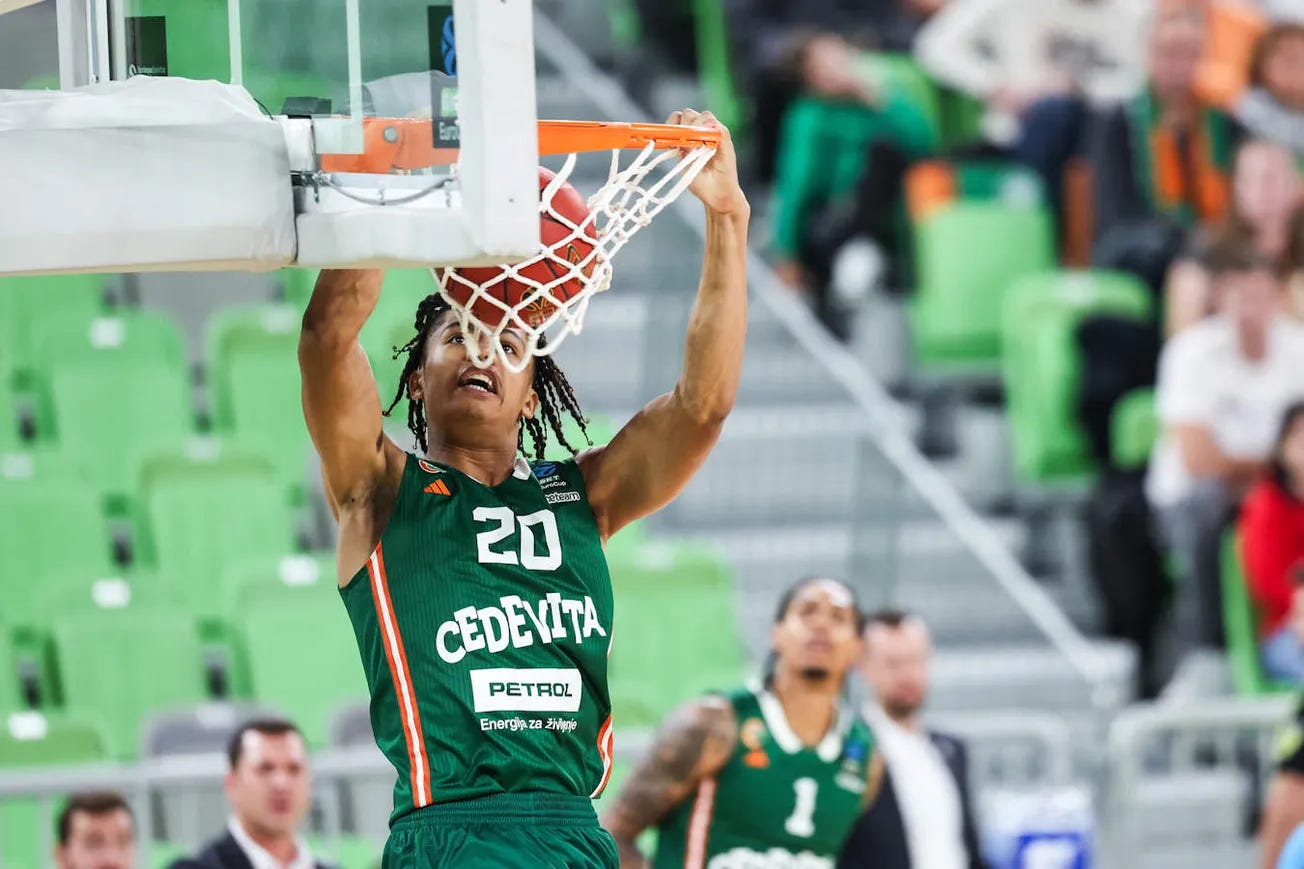
His instincts often lag behind the pace of the game, particularly on defense. He can be late on rotations, overcommit on contests, and at times finds himself out of position, relying on length and bounce to recover. While he has the mobility to guard in space, switching onto quicker players and handling more physical bigs remains a work in progress. Adapting to the NBA’s speed, complexity, and strength will be a steep challenge unless he develops better discipline and understanding of team defensive schemes.
Offensively, Beringer’s role is clear — but currently limited. He’s a vertical spacer and lob threat, capable of punishing defenders who fall asleep in transition or in ball-screen actions. But outside of that, his offensive toolkit is still developing. There’s no consistent jump shot to speak of, and his range is largely confined to the paint. He hasn’t shown much touch outside of dunks and finishes at the rim, and his free throw shooting further suggests that there’s a long way to go before he becomes a reliable floor-spacing option. That lack of shooting severely limits his versatility and could hinder his ability to stay on the floor in certain lineups.
The good news? He doesn’t need to be a 15-point scorer to make an impact. If Beringer can continue to improve his instincts he should be able to carve out a niche as a high-energy big, and become more disciplined as a rebounder and rim protector, there’s a path for him to stick at the next level. But he’ll need to fill out his frame, build functional strength, and tighten his fundamentals to avoid being overwhelmed in more physical matchups.
Right now, Beringer is more of a developmental bet than a finished product — but the flashes are real. In the right system with patience, a strong developmental staff, and a defined role, he could grow into a valuable rotation big. The blueprint is there: vertical spacing, defensive mobility, and athletic upside.
He may not be ready to contribute right away, but players with his physical profile don’t stay off radars for long. With time and the right environment, Beringer could grow into a low-maintenance, high-energy contributor — a modern rim runner who thrives in transition and protects the paint. The question is not whether the tools exist, but whether he can sharpen them fast enough to meet the demands of the NBA.
Drake Powell: Defensive Menace With Untapped Wing Potential — Is UNC’s Underutilized Swiss Army Knife Poised to Break Out at the Next Level?
Drake Powell is a high-upside prospect with the physical tools and defensive versatility that translate well to the modern game. A long, rangy athlete at 6’6”, Powell has flashed two-way potential, showing the ability to make an impact without needing high usage or touches. While his offensive game is still coming into form, it’s his defense — and the foundation of his physical profile — that makes him one of the more intriguing young wings in this class.
Defensively, Powell is ahead of the curve. He’s a true multi-positional stopper, capable of defending 1 through 4 at the college level, using a combination of quick feet, length, and anticipation. His lateral movement and closeout speed are elite for his age, and he consistently makes plays without gambling or overcommitting. Whether it’s switching onto quicker guards, contesting shots on the perimeter, or battling with bigger wings in the post, Powell brings a competitive edge and a high motor to the defensive end — traits that project well into a versatile, NBA-caliber role.
Offensively, the picture is more nuanced. Powell has shown flashes of scoring upside, especially when operating in transition or attacking closeouts. He’s capable of finishing through contact and has a solid frame that allows him to absorb physicality at the rim. His perimeter shooting has also taken strides — not yet a strength, but enough to suggest he could become a respectable threat with continued development.
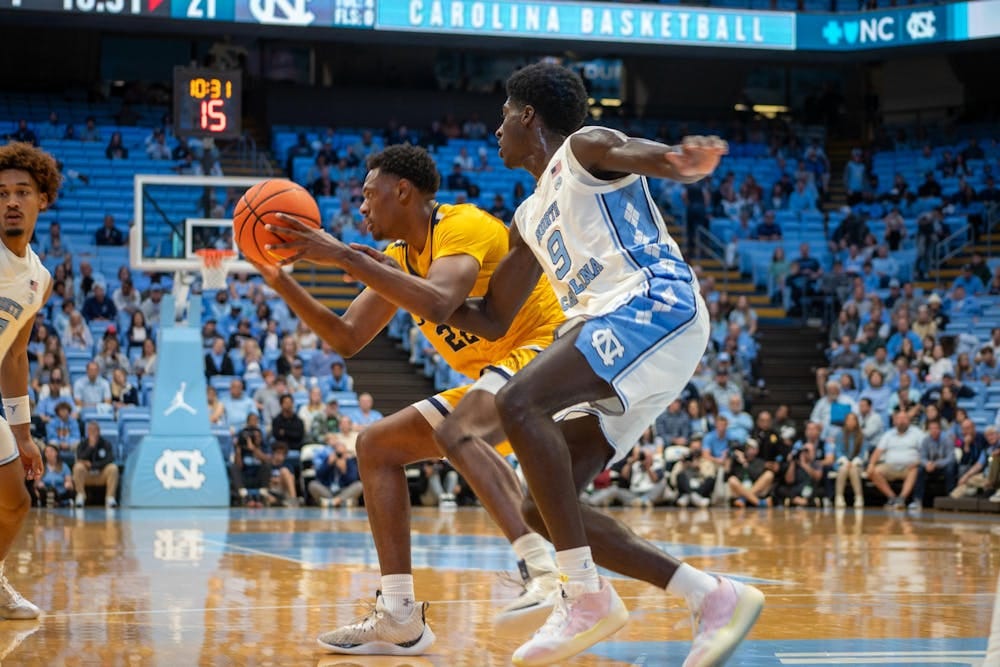
However, his production on offense was inconsistent this past season, in large part due to the chaotic nature of North Carolina’s overall team dynamic. The Tar Heels had a turbulent year, struggling with spacing, rhythm, and cohesion — and Powell’s role within that system didn’t always allow him to showcase his full skill set. He was often slotted into the 4-spot, tasked with rebounding, defending bigger players, and filling gaps rather than being featured or given room to operate on the wing — where he’s more naturally suited.
He didn’t get many on-ball reps, which makes his decision-making somewhat of an unknown heading into the draft process. While he rarely forced the issue or turned the ball over, the lack of opportunities to create for himself or others raises questions about how comfortable he’ll be in a secondary playmaking role. His offensive usage was modest, and as a result, the consistency of his scoring and rhythm wavered — though it’s fair to argue this was more a product of UNC’s playstyle than a reflection of his ceiling.
Projection-wise, Powell fits the mold of a modern NBA wing — a defender who can switch, rebound, and contribute without demanding touches. To fully unlock his potential, he’ll need to continue developing his jumper, polish his handle, and gain confidence in making quick decisions with the ball. But the foundation is solid: he plays hard, doesn’t take possessions off, and brings the kind of defensive value that earns early rotation minutes.
In short, Powell’s stock isn’t about who he is now — it’s about what he could become. If placed in the right developmental system, with space to play his natural position and expand his offensive game, he has the tools to grow into a highly valuable two-way contributor. There’s work to be done, but the flashes are real — and the defensive floor gives him a real chance to stick.
Tier 11 — Proven Players with Rotational Potential
Tier 11 consists of older, more polished prospects who have already proven themselves at the collegiate level. These players have demonstrated consistent skill and basketball IQ, which makes them strong candidates to fill valuable rotational roles in the NBA. While they may not possess the high ceilings or raw potential of younger, more unrefined prospects, their experience and refined skill sets offer immediate utility for NBA teams looking for dependable contributors. Each of these players has the ability to impact games in specific roles, providing depth and stability to a roster.
Kam Jones: A Steady Hand in a Scorer’s Body — Why the Marquette Guard Could Be a Plug-and-Play Asset in the NBA
Kam Jones has quietly developed into one of the more dependable and mature scoring guards in college basketball, showcasing a blend of shot-making, ball-handling, and decision-making that translates well to a backup combo guard role at the next level. A steady presence with a high basketball IQ, Jones doesn’t rely on elite athleticism to be effective — instead, he leans on skill, rhythm, and a polished understanding of how to operate within an offense.
One of the most notable aspects of Jones’s development this past season was his shift into more on-ball responsibilities. After primarily functioning as a secondary scoring option earlier in his career, Jones was tasked with heavier playmaking duties — and he took those on-ball reps in stride. Despite the added pressure, he maintained a strong assist-to-turnover ratio, highlighting his ability to manage tempo, make smart reads, and take care of the basketball. He showed poise in pick-and-roll settings, displayed an improved ability to hit the roller or kick to shooters, and rarely forced the issue.
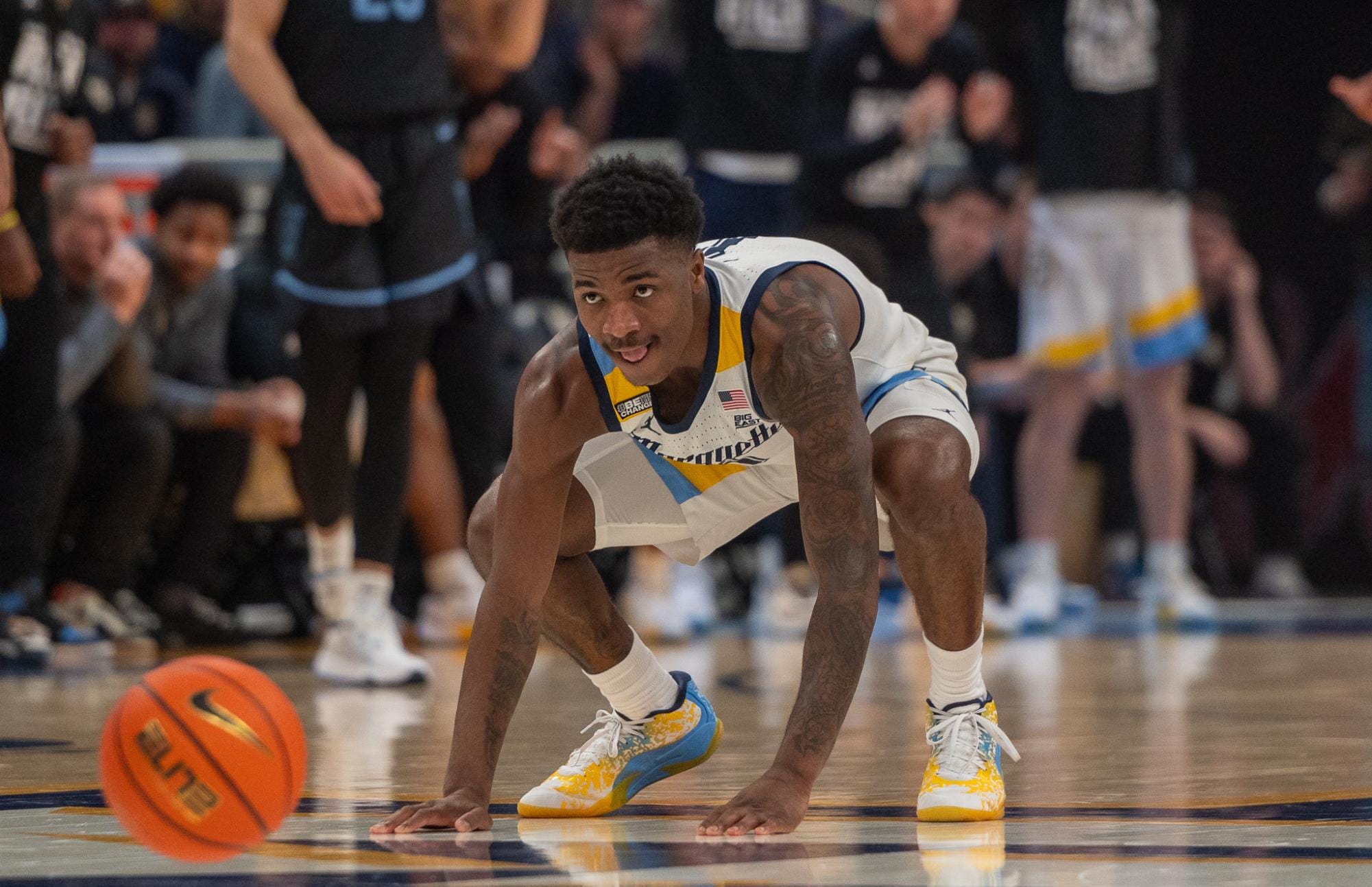
That said, the added on-ball load may have come at a cost to his efficiency as a scorer. His shooting percentages dipped slightly this past season, and while the mechanics remain clean and repeatable, the change in role likely contributed to some rhythm disruption. He had to create more of his own looks, often in late-clock situations, and wasn’t able to consistently benefit from catch-and-shoot opportunities the way he did as an off-ball threat.
Long-term, Jones appears better suited as a combo guard who thrives next to a primary initiator, rather than as a full-time lead guard. He’s dangerous when he can spot up, attack off the catch, or serve as a secondary ball-handler who keeps the offense flowing. His off-ball movement, shooting gravity, and comfort relocating around screens make him a natural fit in lineups that emphasize spacing and multiple playmakers.
Scoring remains the cornerstone of his game. He’s comfortable at all three levels and has a knack for creating just enough space to get his shot off. His pull-up game is reliable, and he can score out of isolation, in transition, or off quick curls and handoffs. He’s not a player who needs high volume to impact a game — a valuable trait for someone likely to come off the bench at the next level.
Defensively, Jones competes but is more serviceable than standout. He lacks the elite size or burst to guard up positions, but he stays engaged, rotates well, and makes few mental mistakes. He’s not likely to be a defensive stopper, but his high IQ and effort level keep him playable in most schemes — particularly when paired with stronger defenders around him.
In the modern NBA, where combo guards who can shoot, handle, and make decisions are in constant demand, Jones fits the mold. His ability to blend into various offensive structures — whether next to a star or running a second unit — gives him real value as a rotation piece.
Kam Jones may not project as a star or a lead guard, but he checks all the boxes for a plug-and-play contributor. He’s efficient, composed, and knows how to impact the game without dominating the ball — the kind of player coaches trust late in games and rely on for stable minutes. With the right fit, he could carve out a long NBA career as a reliable, low-mistake, scoring guard off the bench.
Maxime Raynaud: A 7’1″ Stretch Big with Intriguing Potential — But Questions About Role and Impact Persist
Maxime Raynaud presents a unique offensive profile for a big man — a true 7’1″ floor-spacer with touch, feel, and perimeter confidence that jumps off the tape. His ability to stretch the floor and knock down shots from deep makes him an intriguing prospect in today’s NBA, where size and shooting are more valued than ever. But with that intrigue comes a fair share of questions — particularly around his role, mobility, and how his perimeter-oriented style meshes with the realities of NBA physicality.
Raynaud’s offensive calling card is his shooting. He has a smooth, repeatable stroke that extends beyond the arc, and he’s not just a standstill shooter — he actively looks to spot up, trail in transition, and operate in pick-and-pop actions. He can stretch defenses vertically and laterally, which adds significant value in lineups built around spacing and guard penetration. He’s also a capable passer who sees the floor well, makes the right reads, and plays within offensive structure.
But Raynaud also has a tendency to drift too far onto the perimeter — and at times, he treats himself more like a wing than a big. He often looks to put the ball on the floor, facing up defenders and attempting to create from the outside, which at the college level can work in spurts — but at the NBA level, this is unlikely to be sustainable. The athleticism and length of pro defenders will severely limit his effectiveness in these situations, and turnovers or wasted possessions become a real concern if this habit persists.
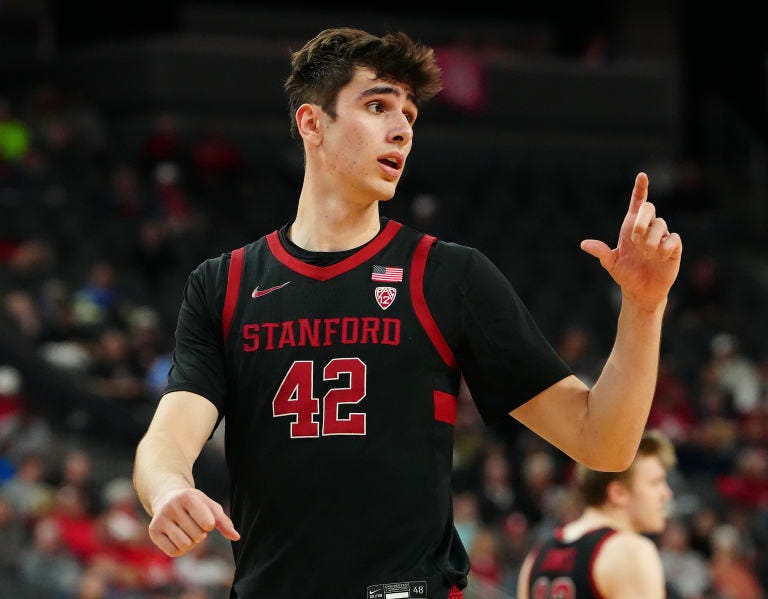
The question then becomes: do you want your 7’1” big man spending so much time away from the basket? The answer may be situational, but the cost is real — particularly on the defensive and rebounding ends. When Raynaud is pulled out to the perimeter, it leaves the paint vulnerable, especially since he’s not a vertical rim protector or defensive anchor in the traditional sense. He’s not quick enough to recover or switch in space, and if he’s not providing interior presence on either end, his overall impact may be diminished.
Defensively, he needs to be paired with another big — ideally one with mobility and rim protection instincts — to fully unlock his value. Raynaud lacks the agility to guard in space or consistently hold up in pick-and-roll coverages, which limits his versatility. He does rebound well, particularly on the defensive end, but he’s not going to provide shot-blocking or deterrence at the rim. His instincts are solid, but the physical tools just aren’t ideal for primary interior defense.
Rebounding and spacing are the two pillars of his value, and in the right role — likely off the bench or in stretch-heavy lineups — Raynaud can thrive as a low-usage big who knocks down shots, keeps the ball moving, and hits the glass. But he’ll need to scale back his perimeter creation attempts and focus on doing the little things that fit a defined role.
In short, Raynaud is a unique offensive big, but one that requires specific context to succeed. His shooting at 7’1” gives him a legitimate edge, but his perimeter tendencies and defensive limitations mean that teams will have to carefully consider the internal tradeoffs. He can provide value — but only if his role is disciplined, his shot remains efficient, and he’s paired with the right complementary frontcourt piece.
The question is not whether he belongs in the modern NBA — it’s whether teams are willing to accept what he doesn’t provide in exchange for what he does.
Ryan Kalkbrenner: A Reliable Rim Protector with Defensive Stability and Limited Offensive Upside
Ryan Kalkbrenner projects as one of the most reliable interior defenders in this draft class — a shot-blocking specialist with a clear identity as a rim protector and paint anchor. At 7’1” with a long wingspan, excellent timing, and disciplined positioning, Kalkbrenner has made a name for himself as the defensive backbone of Creighton’s system, and his strengths translate cleanly to a defined NBA role.
Defensively, Kalkbrenner offers a steady foundation. He excels at protecting the rim, using his size and instincts to contest and alter shots without fouling. He rarely chases blocks recklessly, instead playing vertical and staying within his role as the last line of defense. He has a natural feel for positioning, and while he’s not the most mobile big, his drop coverage fundamentals are rock solid — making him an ideal fit for teams that run traditional pick-and-roll defensive schemes.
Rebounding is another area of consistent impact. Kalkbrenner does the dirty work on the glass, boxing out with discipline and securing defensive rebounds to finish possessions. He’s not a high-flying pogo-stick rebounder, but he’s physical, understands angles, and brings consistent effort on the boards. His presence alone helps stabilize a defense, especially when paired with perimeter players who can funnel drives into the paint.
Offensively, Kalkbrenner’s game is more limited, but functional. He’s not a primary scoring option, nor does he create offense for himself outside of the occasional post touch or putback. However, he’s effective in his role: finishing around the rim, sealing defenders for easy buckets, and catching lobs in drop-offs or short rolls. His hands are solid, and he’s shown enough touch to keep defenses honest around the paint. He won’t stretch the floor or be featured in offensive sets, but he stays within himself and doesn’t try to do too much.
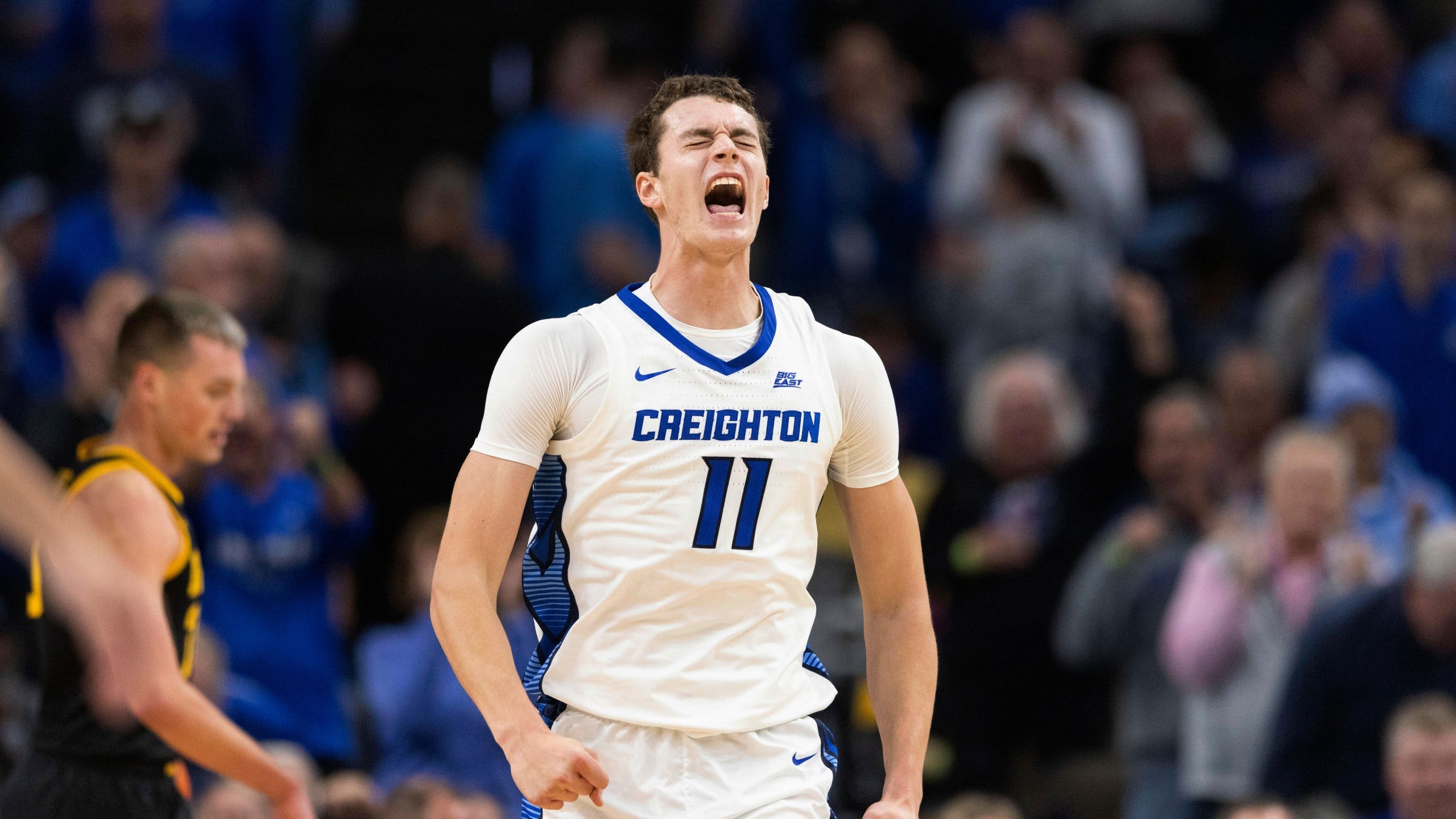
His lack of offensive versatility and perimeter mobility does cap his upside, and in today’s pace-and-space league, Kalkbrenner’s role will likely remain matchup-dependent. He doesn’t offer much shooting range and isn’t a great option in switch-heavy defensive systems, which may limit his ceiling to that of a situational or matchup-based rotation big. However, in the right context — particularly with strong defenders around him — he can be a valuable anchor for bench units or even spot starts.
Ultimately, Kalkbrenner fits the mold of a classic low-maintenance, high-IQ big man. He won’t wow with flashy skill or elite athleticism, but he knows exactly who he is and plays to his strengths. Teams in need of rim protection, rebounding, and a reliable interior presence will find plenty to like in his profile.
He may not project as a long-term starter or high-usage big, but as a backup center or defensive-minded role player, Kalkbrenner offers real value — and he’s ready to contribute from day one. In a league that always has room for dependable bigs who can protect the rim and finish in the paint, his skill set should keep him firmly on draft boards.
Max Shulga: A High-IQ Floor Spacer with Sharp Shooting and Valuable Role Player Traits
Max Shulga is a sharp-shooting wing with a polished offensive game, high basketball IQ, and a well-defined role that translates cleanly to the NBA. While he may not possess elite athleticism or eye-popping explosiveness, his value lies in his ability to space the floor, make smart decisions, and operate effectively within a system — traits that are highly sought after in role players, especially on contending teams.
Shooting is the core of Shulga’s game. He’s a proven perimeter threat with consistent mechanics and deep range, capable of knocking down spot-up threes, relocating off-ball, and punishing defenders who sag off in help coverage. Whether it’s off a catch, a pindown, or as a trail shooter in transition, Shulga is reliable and confident with his jumper. His high release and quick trigger allow him to get shots off against closeouts, and he rarely forces bad looks — a testament to his shot discipline and understanding of his strengths.
Beyond shooting, Shulga’s offensive value is boosted by his feel for the game and unselfish approach. He makes the right reads, moves without the ball, and plays with a rhythm that makes offenses flow smoother. He’s not a primary ball-handler or playmaker, but he can keep the offense humming as a connector — moving the ball, recognizing mismatches, and taking what the defense gives him.
Defensively, he competes and positions himself well, but his physical tools may limit his versatility at the next level. He lacks the lateral quickness to consistently stay in front of quicker guards and may struggle in switch-heavy schemes. However, his awareness, effort, and understanding of rotations allow him to hold his own in team defense concepts. He communicates well, closes out under control, and doesn’t take unnecessary risks — all signs of a disciplined defender who understands his role.
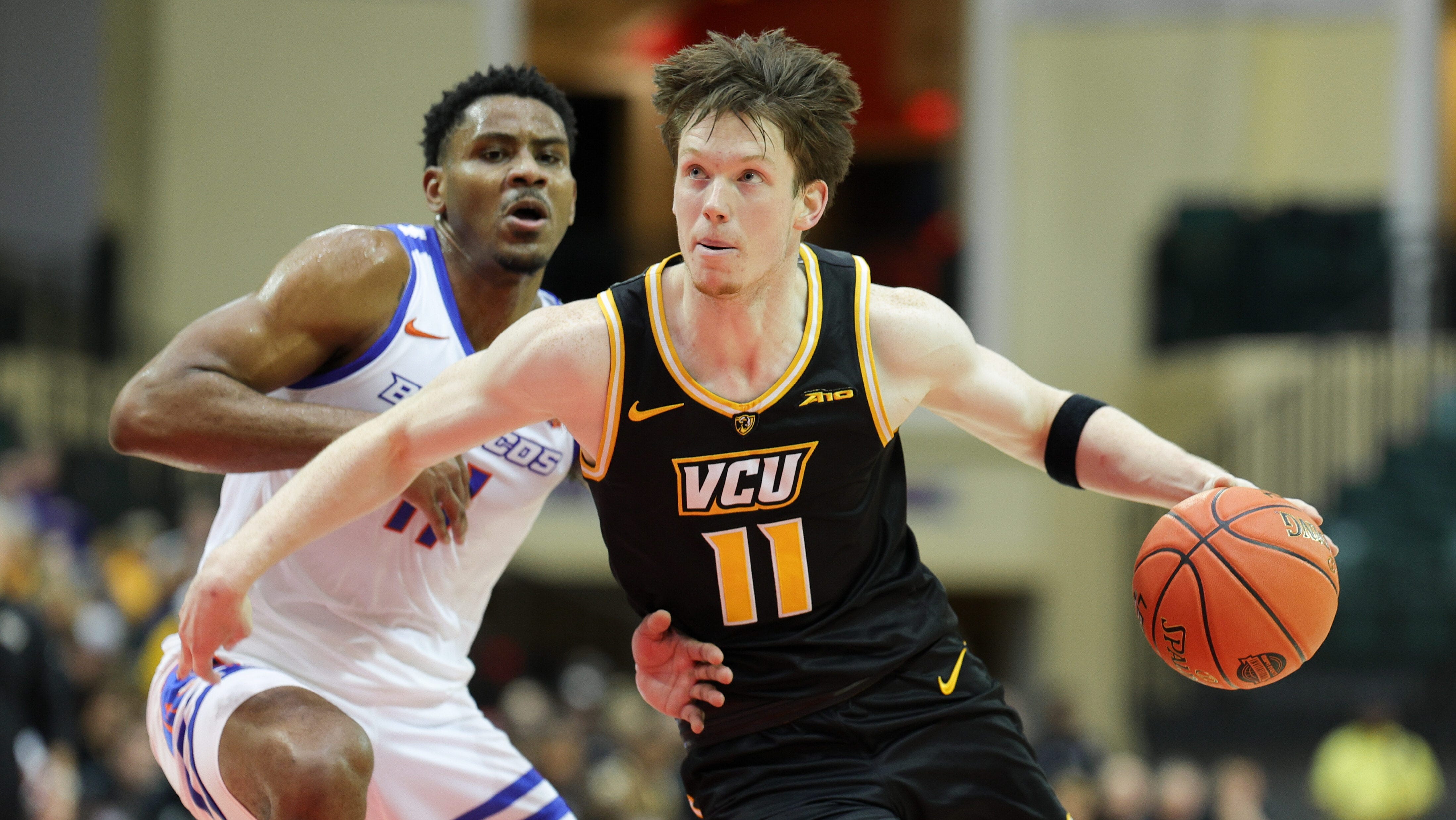
Shulga’s limitations athletically are real, but they don’t overshadow the value he brings as a specialist. In today’s NBA, where shooting gravity and floor spacing are non-negotiable, players who can reliably knock down threes while playing within themselves tend to stick. He projects best as a bench shooter who can give second units a scoring boost and fit seamlessly into offensive sets without needing volume touches.
On a contending team, Shulga’s skill set makes him an easy plug-and-play option. He doesn’t need the ball to be effective, doesn’t break offensive rhythm, and provides a legitimate threat from deep. For teams looking to surround stars with shooting, spacing, and smart decision-makers, Shulga fits the blueprint.
He’s not flashy, but he’s efficient — and in a league built on maximizing possessions, Max Shulga offers the kind of quiet reliability that can make a real impact. As a specialist shooter and high-IQ floor spacer, he has a clear path to earning a rotation role in the NBA.
Tyrese Proctor: A Versatile Combo Guard with High IQ and Role Player Potential
Tyrese Proctor is a versatile, high-IQ combo guard whose well-rounded game positions him as one of the more intriguing backcourt depth options in this class. A mature floor presence with international experience and a strong feel for the game, Proctor brings a blend of scoring, playmaking, and defensive upside that projects well in a rotational NBA role — especially in systems that value guard versatility and off-ball movement.
This season, Proctor shifted more into an off-ball role — and flourished as a perimeter scoring option. With other ball-dominant guards in Duke’s backcourt, Proctor found his rhythm playing off the catch, running off screens, and spacing the floor. His ability to knock down spot-up jumpers, attack closeouts, and make smart reads as a secondary creator stood out. While not a prolific scorer, his efficiency and timing allowed him to make meaningful contributions without needing heavy usage.
As a playmaker, Proctor is composed and unselfish. He has shown the ability to initiate offense when needed, making sound decisions in pick-and-roll sets and consistently delivering clean passes to shooters or rollers. He doesn’t force the issue, and while he’s not a flashy passer, he’s reliable — especially in second-unit settings where control and tempo matter more than creativity.
Defensively, Proctor has the tools to be a plus guard defender. At 6’5”, he has the size, length, and instincts to defend both backcourt spots. He moves well laterally, contests shots without fouling, and understands how to rotate within team schemes. He competes on that end and has the frame to handle physical guards at the next level. With continued development and strength, he could evolve into a switchable, multi-positional defender — a trait that adds value in today’s NBA.
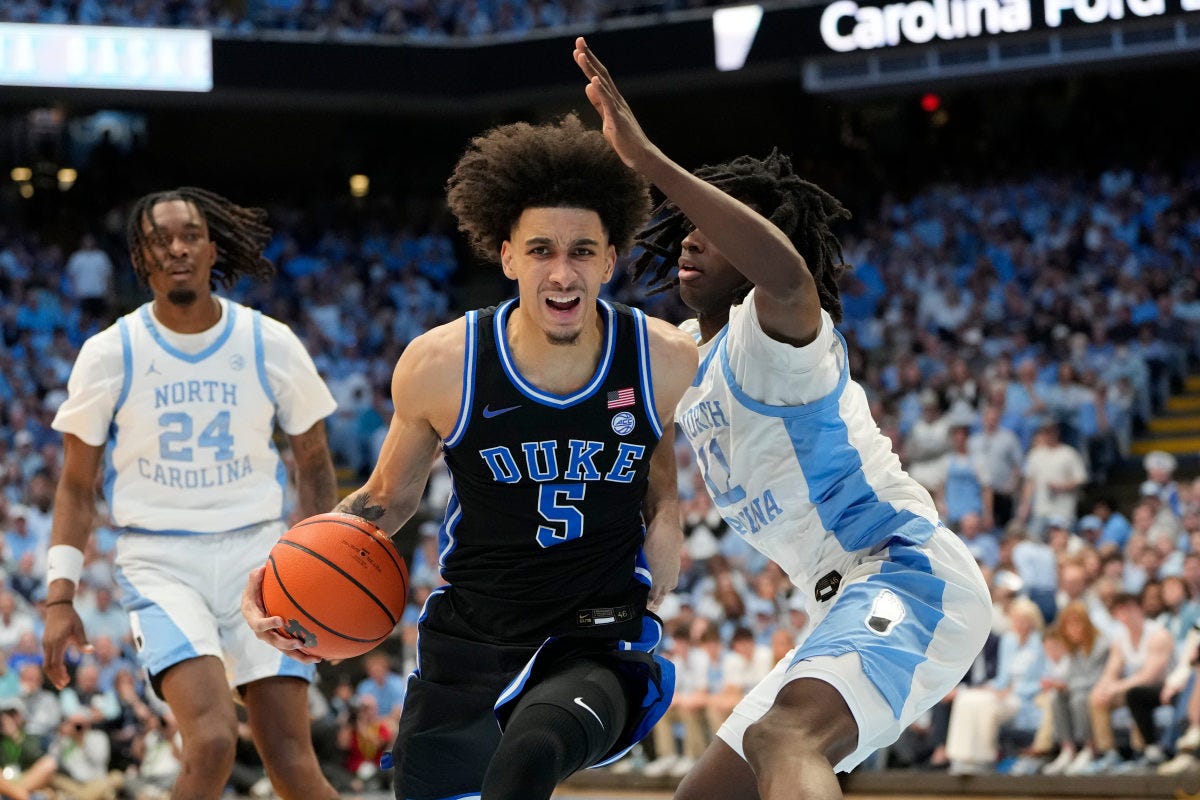
The biggest swing skill for Proctor remains his shooting. While he showed improvement as a spot-up shooter this season, his jumper is still developing, particularly off the dribble. Consistency from three-point range and mid-range spots will be key for him to carve out a long-term role. If he can become a reliable catch-and-shoot threat, his value as an off-ball combo guard increases significantly.
Proctor doesn’t have the scoring burst or elite shot-creation of a starting NBA guard, but he brings poise, versatility, and a strong understanding of the game — all traits that coaches trust in backup roles. His ability to play both on and off the ball gives him lineup flexibility, and he profiles well as a steady contributor in second units or as a complementary piece alongside star guards.
In short, Tyrese Proctor is a high-floor, low-ego guard with real value in a modern NBA backcourt. If the shooting continues to develop, he could become a dependable 3-and-D-style combo guard who provides ball movement, defensive switchability, and smart decision-making. He may not carry the flash of some of his peers, but his polish and adaptability make him a name worth watching in the second round.
He fits the mold of a winning role player — the kind who sticks around longer than expected because he just knows how to play.
Adou Thiero: A Defensive Dynamo with Grit and Versatility for Bench Roles
Adou Thiero is the kind of player whose value goes well beyond the box score — a tough, defensive-minded wing/forward hybrid who brings grit, energy, and a relentless motor to every possession. While he may not project as a primary scorer or high-usage offensive option, Thiero has carved out a reputation as a glue guy — someone who does the little things that contribute to winning and can slide into a number of different lineups without needing the ball in his hands.
Defensively, Thiero is where his calling card lies. He’s a tenacious on-ball defender who takes pride in locking up opposing perimeter threats, often taking the toughest assignment night in and night out. With good lateral movement, strong hands, and a competitive edge, he can defend across multiple positions — from quick guards to bigger wings and forwards. He fights through screens, closes out under control, and plays with a physical edge that coaches love. His defensive versatility gives him potential as a plug-and-play option for teams that need point-of-attack defense or someone who can be trusted in high-pressure matchups.
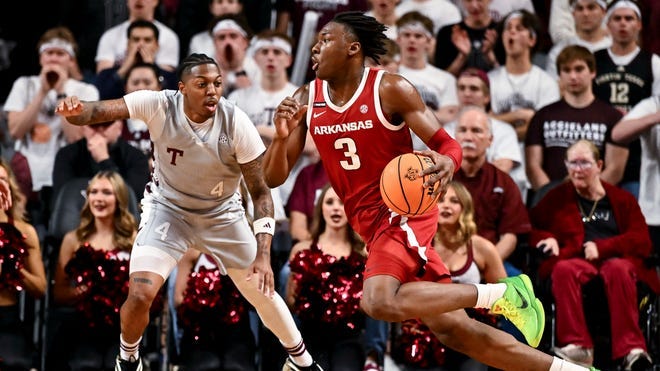
Offensively, Thiero’s game is still developing. He’s not a natural scorer and doesn’t project to be a primary or even secondary option at the next level. Most of his points come off effort — offensive rebounds, backdoor cuts, transition opportunities, and hustle plays. He’s an opportunistic scorer more than a shot creator, which aligns with his projected role as a low-usage, high-impact utility player.
His shooting remains a concern. While he has worked to improve his jumper, consistency from beyond the arc is still lacking, and defenders at the next level may sag off him unless he proves capable of knocking down open looks. The mechanics are serviceable, but the confidence and repetition aren’t quite there yet. Without reliable shooting, his offensive ceiling is limited, and he’ll need to find ways to stay effective — through cutting, screening, and crashing the glass — to stay on the floor.
His positional fit at the next level is a bit fluid. At 6’6” with good length and strength, Thiero has the physical tools to guard multiple spots, but he doesn’t fit neatly into either the traditional guard or forward role. He’ll likely function best as a defensive-minded wing who can switch across positions and bring energy off the bench. His utility will depend heavily on team context — ideally one that values defense, rebounding, and toughness in role players.
Thiero projects as a depth piece — a situational defender and hustle player who can give teams a burst of energy and defensive grit. He won’t command offensive touches, but he can make life difficult for opposing scorers, rebound out of his area, and play with an edge that lifts second units. For playoff-caliber teams looking to tighten their rotation with players who understand their role, Thiero offers a compelling, no-nonsense skill set.
He’s not flashy, but he’s fierce — and for teams that need toughness, effort, and defensive presence off the bench, Adou Thiero could be a valuable piece. Continued development of his jumper will be crucial, but his floor as a defensive specialist is already in place.
Tier 12 — Experienced Players with Rotational Appeal
Tier 12 is made up of older, more experienced prospects who have shown enough skill and potential in specific areas to make them appealing bets for rotational roles at the NBA level. These players are ready to contribute in a variety of ways but still have noticeable gaps in their games that need further development. While their upside may be more limited compared to younger or more unrefined prospects, each player brings a valuable skill set that could make them useful pieces for NBA teams looking for depth or specialized roles. Whether it’s a particular strength like shooting, defense, or athleticism, the players in this tier have shown that they can contribute in certain contexts and could develop into reliable bench players with the right environment and coaching.
Alex Karaban: A Modern Stretch-Forward Perfectly Suited for the Pace-and-Space Era
Alex Karaban projects as a modern stretch-forward whose game is tailor-made for today’s pace-and-space era. At 6’8” with a smooth shooting stroke and a feel for the floor, Karaban’s value lies in his ability to stretch defenses, create space for ball-handlers, and knock down perimeter looks with confidence. He’s not the kind of player who will overwhelm with athleticism or flashy handles, but he plays within himself and understands how to impact the game through spacing, timing, and shot selection.
Offensively, Karaban’s biggest weapon is his jumper. He has a clean, repeatable shooting motion and has shown flashes of being a legitimate threat from beyond the arc — both in catch-and-shoot situations and as a trailer in transition. His ability to space the floor from the four spot forces defenses to make tough choices, especially when paired with downhill guards or dominant interior players. He doesn’t need the ball to be effective and excels as a complementary piece — relocating off the ball, picking his spots, and capitalizing on defensive breakdowns.
While Karaban isn’t a self-creator, he plays with a high IQ. He moves well without the ball, sets smart screens, and has a knack for finding open space. He won’t break defenders down off the dribble, but he makes timely reads and keeps the offense flowing. He also has some touch inside the arc, capable of knocking down mid-range shots or finishing with soft floaters when attacking closeouts. His offensive versatility, even in a low-usage role, makes him an asset for teams that value floor balance and ball movement.
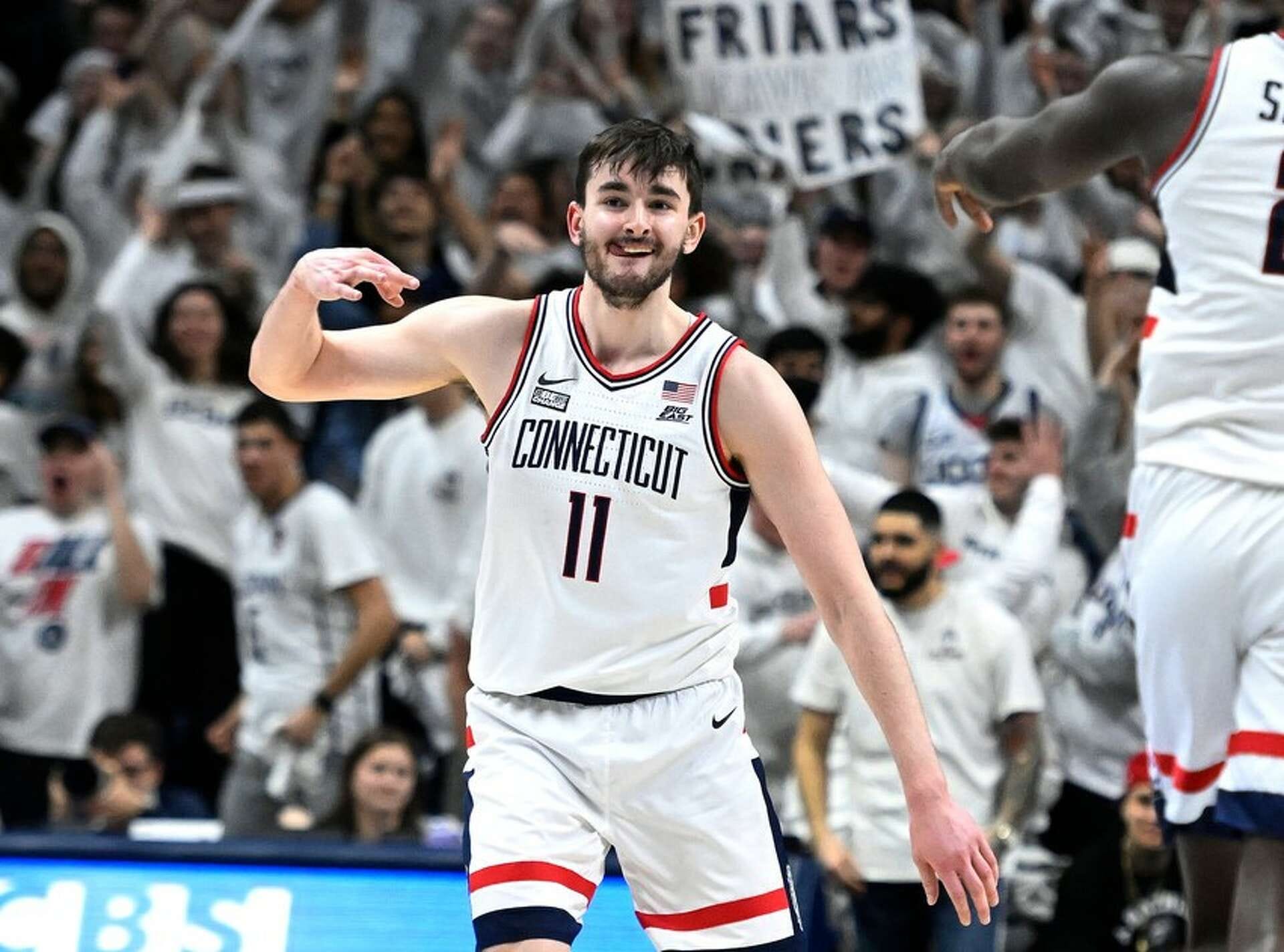
Defensively, Karaban is still a work in progress. He’s not a liability, but he doesn’t project as a switch-heavy or lockdown defender either. Lateral quickness and foot speed are areas where he could improve, particularly when matched up with quicker wings or guards. That said, he has decent size and positional awareness, allowing him to hold his own in team schemes. With added strength and continued emphasis on footwork and positioning, he could develop into a reliable team defender who understands how to rotate, contest, and box out effectively.
His rebounding is functional, though not a standout aspect of his game. He secures boards by positioning and effort rather than vertical pop or physical dominance. He’s not likely to be a high-volume rebounder, but he does enough to avoid being a net negative on the glass.
From a positional fit standpoint, Karaban is a prototypical stretch-four — a forward who can slot in seamlessly next to a rim-running five or a slashing wing. He doesn’t need plays drawn up for him, and his game scales well depending on the talent around him. In lineups with strong creators, his value increases as a floor spacer who forces defenders to stay home.
The path forward for Karaban revolves around consistency and defensive development. If he can shoot 38–40% from deep on decent volume while holding his own defensively, he becomes a plug-and-play role player who fills a need for many NBA rosters. Teams looking for low-maintenance, floor-spacing forwards with a mature approach to the game will see his value right away.
He’s not a star in the making, but he doesn’t have to be. Karaban’s floor is high thanks to his shooting, and his ceiling grows with every defensive rep he logs. For playoff teams that want spacing without sacrificing structure, Alex Karaban offers a modern, versatile solution — a stretch-four who knows his role, plays it well, and brings reliable shooting to any rotation.
Sion James: A Tough, Versatile Wing with Defensive Prowess and Emerging Offense
Sion James is a tough, versatile wing whose defensive versatility and improving offensive toolkit make him an intriguing two-way prospect. Best known for his intensity on the defensive end, James has recently added a quietly efficient offensive element to his game — including strong outside shooting numbers that suggest real growth, even if the mechanics remain a bit deliberate.
Defensively, James brings a competitive edge that shows up in every possession. At 6’6” with long arms and solid strength, he can credibly guard across the one through three and doesn’t shy away from physical matchups. He moves well laterally, plays with active hands, and takes pride in locking up opposing guards and wings. He fights through screens, contests shots with discipline, and makes smart reads in help situations. He’s the kind of defender who sets the tone — a “first off the bench, first on the floor” type that coaches trust to stabilize chaotic moments.
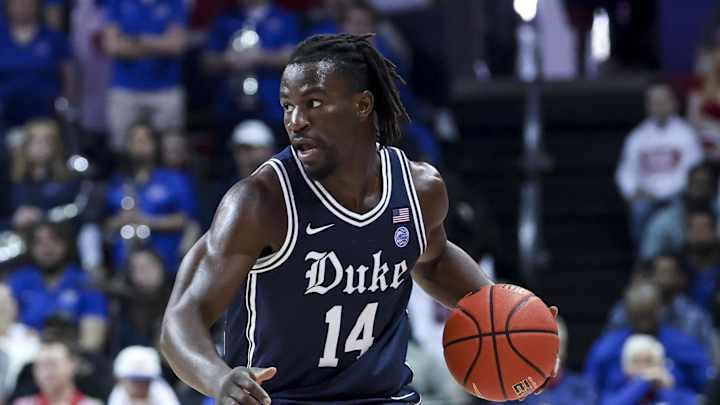
But what makes James particularly intriguing is the progress he’s made as a shooter. Despite a somewhat slow release, he’s posted consistently strong percentages from deep, especially in catch-and-shoot opportunities. His mechanics may not be lightning-quick, but they’re repeatable and under control, allowing him to stay efficient when given time and space. Defenders are starting to respect his shot, which opens up lanes for others and creates new wrinkles in halfcourt sets.
Offensively, James isn’t a creator, but he excels as a connector — moving the ball, keeping the offense flowing, and making smart reads from the wing. He understands spacing, cuts with purpose, and makes the extra pass. While he’s not going to dominate the ball or create in isolation, his willingness to play within the team concept and make unselfish plays adds real value to lineups that already have scoring engines in place.
He’s also effective in transition, where his motor and athleticism shine. He runs the floor hard, fills lanes, and finishes through contact. Whether it’s diving for loose balls or forcing turnovers with timely digs, James consistently impacts winning plays — the kind that don’t always show up in the box score but are felt throughout the game.
Positional flexibility is another plus. James can toggle between the two and three, and even slide into small-ball lineups thanks to his strength and toughness. He doesn’t need plays run for him, doesn’t need the ball to be effective, and fits well as a low-usage, high-impact role player who brings consistent energy.
The next step? Quicker shot release and more volume from deep. If he can speed up his mechanics just enough to get his shot off under tighter closeouts, he becomes even more valuable in spot-up situations. But even as it stands, his blend of effort, toughness, and emerging floor-spacing gives him a legitimate role-player trajectory.
Sion James may not wow you with highlight plays, but he wins possessions — and that matters. For NBA teams seeking defensive versatility, high IQ play, and a guy who’s not afraid to do the dirty work, James offers the kind of well-rounded, team-first skill set that coaches love to have in their rotation.
Koby Brea: Elite Shooter with Instant Offense Potential, Yet Needs Defensive Growth
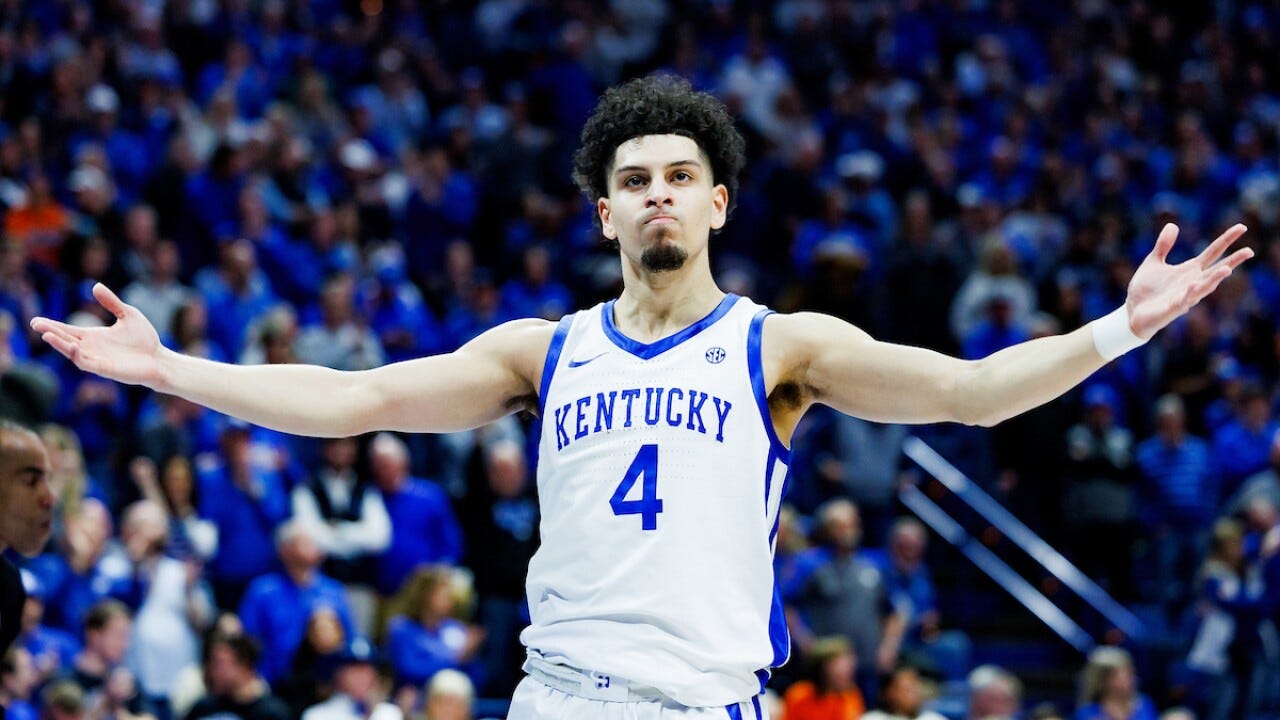
Koby Brea is one of the best pure shooters in college basketball — a smooth, high-IQ perimeter threat who thrives off the ball and punishes defensive lapses with elite-level marksmanship. After leading the nation in three-point shooting percentage at Dayton, Brea successfully transitioned his game to one of the toughest conferences in the country — the SEC — where his shooting continued to hold up against high-level athletes and aggressive defensive schemes.
Shooting is his calling card, and it’s not just good — it’s elite. Brea’s release is quick and compact, and he doesn’t need much space to get it off. Whether it’s catch-and-shoot threes, movement shooting coming off screens, or relocating to the corner, Brea consistently knocks down shots at a high clip with deep range and excellent shot preparation. His ability to stretch the floor changes spacing dynamics and forces defenders to stay attached, creating gravity that benefits team offense.
What separates Brea from many other spot-up shooters is his comfort in rhythm-based shot creation. He’s not a primary ball-handler or isolation threat, but he can attack closeouts with one or two dribbles and pull up confidently. He’s got a smooth handle for straight-line drives and flashes a mid-range pull-up when defenders overcommit. That said, his shot creation is limited — he struggles to break defenders down in isolation, lacks burst in tight spaces, and isn’t someone you run your offense through.
Playmaking is not a major part of his profile. Brea keeps the ball moving and makes the right reads, but he’s not a facilitator or secondary creator. His offensive value is almost entirely tied to his shooting and floor spacing, making him a more specialized player than a do-it-all offensive engine.
Defensively, Brea is a step behind. He competes and understands where to be, but lacks elite lateral quickness and can be targeted by quicker guards or stronger wings. He’s more reliable in team defense concepts than as a one-on-one stopper. Improving his footwork, screen navigation, and on-ball positioning will be critical if he wants to stay on the floor at the next level — especially when teams start hunting matchups.
Despite those defensive concerns, Brea’s offensive skill set has real translatability. He fits the mold of a shooting specialist or floor-spacing wing off the bench — the kind of player who can come in, change the tempo of a game with his shooting, and punish teams for leaving him open. His success in both the A-10 and SEC shows he can adapt to different levels of athleticism and physicality.
The projection: Brea won’t be asked to carry a scoring load, but in the right system — surrounded by creators who draw help — he can thrive as a low-usage, high-efficiency sniper. If he commits to improving his defense and conditioning, he has a path to carving out a rotational role as a specialist who provides instant offense and spacing.
Koby Brea doesn’t need a high volume of touches to make an impact — and in today’s NBA, that kind of efficiency has value. He’s not a two-way contributor yet, but his elite shooting gives him a legitimate shot at sticking in a league that increasingly prioritizes spacing, role clarity, and off-ball movement.
Miles Byrd: Athletic, Two-Way Wing with Defensive Versatility and Offensive Upside
Miles Byrd is a long, athletic wing with intriguing two-way upside and the physical tools to impact games on both ends of the floor. At 6’6” with a wiry frame, fluid movement, and plus length, Byrd has the makings of a modern, switchable wing who can guard multiple positions and flash in transition.
Defensively, Byrd shows real promise. His agility and lateral quickness allow him to stick with quicker guards, while his length and timing help him contest shots and disrupt passing lanes. He’s an active help defender who rotates well and uses his wingspan to alter shots at the rim. Byrd’s ability to switch across two through four and offer secondary rim protection gives him scheme versatility — a highly valuable trait in today’s NBA. He brings a competitive edge defensively, playing with energy, urgency, and a willingness to embrace physicality.
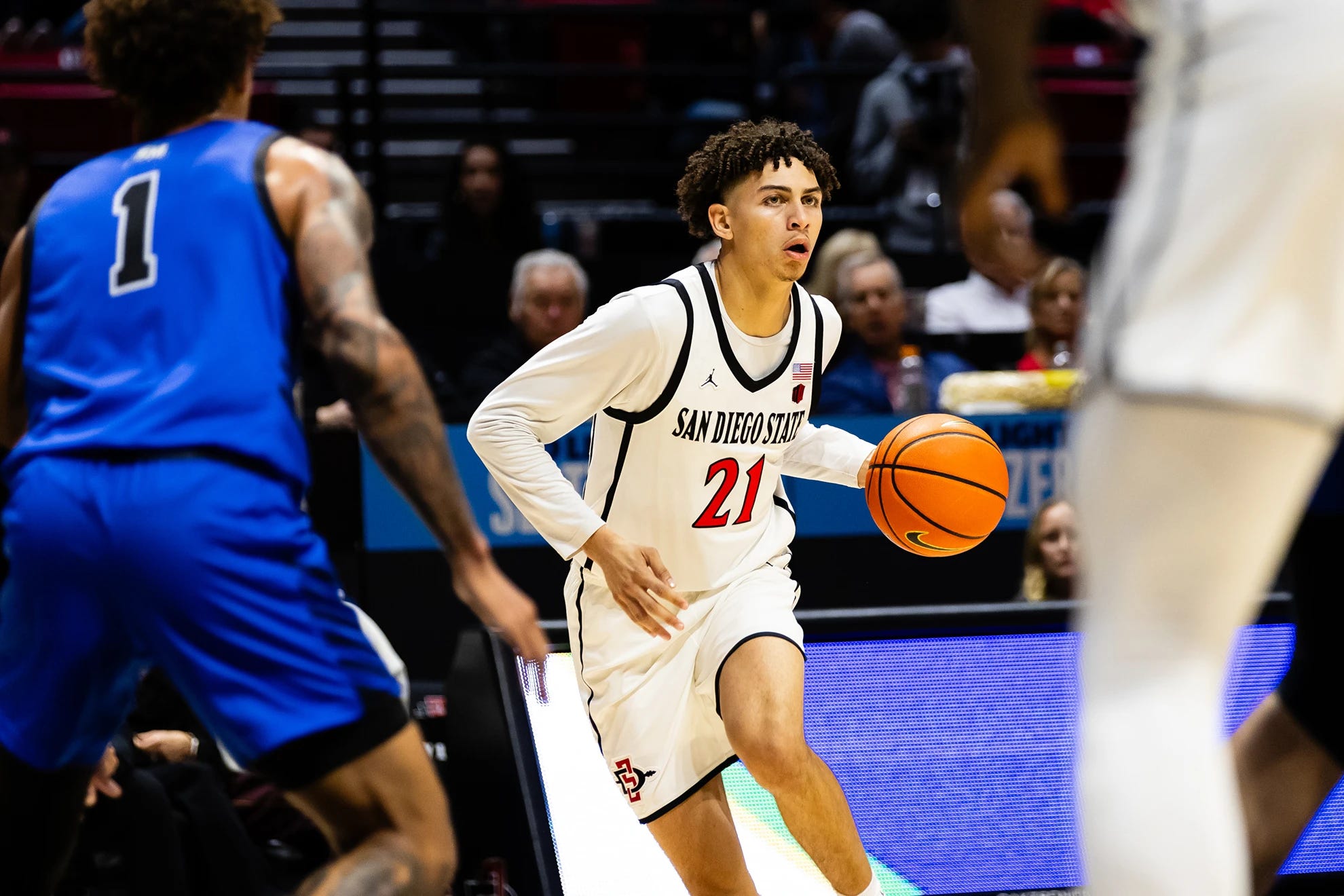
Offensively, Byrd is still a work in progress, but the foundation is there. He’s at his best in the open floor, where his athleticism shines as a transition finisher. He fills lanes well, runs the floor hard, and can elevate above the rim. In the halfcourt, he’s shown flashes as a slasher, attacking closeouts with long strides and fluid body control. While he’s not yet a polished shot creator, Byrd has a developing handle and a feel for getting downhill when given space.
His perimeter shooting is inconsistent, but there’s room for optimism. The form is clean, and he’s shown the ability to knock down open threes when his feet are set. Improving his catch-and-shoot consistency and confidence will be key to unlocking more offensive utility and spacing gravity. Right now, he’s more of a reactive offensive player than a self-starter — but he doesn’t force bad shots and typically plays within the flow of the offense.
Playmaking flashes add another layer to his upside. Byrd has shown solid vision in transition and has made smart reads out of slashes and drives. He’s not a primary initiator, but he makes quick decisions and can facilitate within motion or secondary actions.
The projection here is centered on defensive versatility and athletic upside, with the potential to grow into a capable offensive contributor. If Byrd can continue developing his shot and refining his handle, he has the tools to become a low-usage, high-impact role player — one who can defend across positions, thrive in transition, and add value without needing heavy touches.
Miles Byrd isn’t a finished product, but the ingredients are all there — length, athleticism, defensive feel, and flashes of slashing and playmaking. For NBA teams looking to invest in a two-way wing with upside and coachability, Byrd is the kind of prospect worth developing. If his offense catches up to his defensive instincts, his long-term projection as a true two-way wing becomes a very real possibility.
Chaz Lanier: Versatile Scorer with Elite Shooting
Chaz Lanier offers a well-rounded offensive game with a clear calling card as a perimeter shooter. At 6’4”, he’s a bit undersized for a traditional wing, but he compensates with a strong frame, shot-making versatility, and a mature approach to the game. His ability to score in multiple ways — whether spotting up, attacking closeouts, or pulling up off the dribble — makes him a legitimate offensive threat at the college level and an intriguing depth prospect for the next.
Lanier’s smooth shooting stroke and quick release are his standout traits. He’s particularly effective from deep, showing the confidence and mechanics to space the floor at a high level. Whether it’s off movement or in catch-and-shoot situations, Lanier consistently demonstrates range and rhythm — tools that translate well to the modern game. His shot selection has improved, and his efficiency even after making the leap from North Florida to Tennessee is a major testament to the scalability of his game. Maintaining production against SEC competition speaks volumes about his adaptability and offensive polish.
Beyond shooting, Lanier has shown flashes of scoring craft. He can attack closeouts, finish through contact, and get to his spots with decent body control. While he’s not a primary initiator, he moves well without the ball, understands spacing concepts, and plays with purpose in offensive sets. He’s more of a complementary scorer than a self-creator, but he thrives when playing off others and taking advantage of defensive rotations.
Defensively, there are question marks. While he’s a willing defender with decent strength and positioning, his lack of length and elite lateral quickness can be exposed against bigger or more dynamic guards. He’ll need to prove he can hold his own defensively to secure a role at the next level. Continued improvement in consistency and on-ball engagement will be key to increasing his floor as a reliable two-way contributor.
Projection-wise, Lanier fits the mold of an off-the-bench shot-maker — someone who can come in, space the floor, and give a second unit an offensive boost. If he can hold his own defensively and continue refining his off-ball movement and decision-making, he has the tools to become a valuable rotation piece. His successful jump to the SEC while continuing to do the same things — shoot, score, and compete — is an encouraging sign for teams looking for proven productivity in a smaller role.
Chaz Lanier’s shooting is his ticket, and if he can maintain that efficiency while rounding out the rest of his game, there’s a real pathway to sticking as a floor-spacing, scoring guard with plug-and-play potential at the next level.

 The Center Hub
Leave a comment