
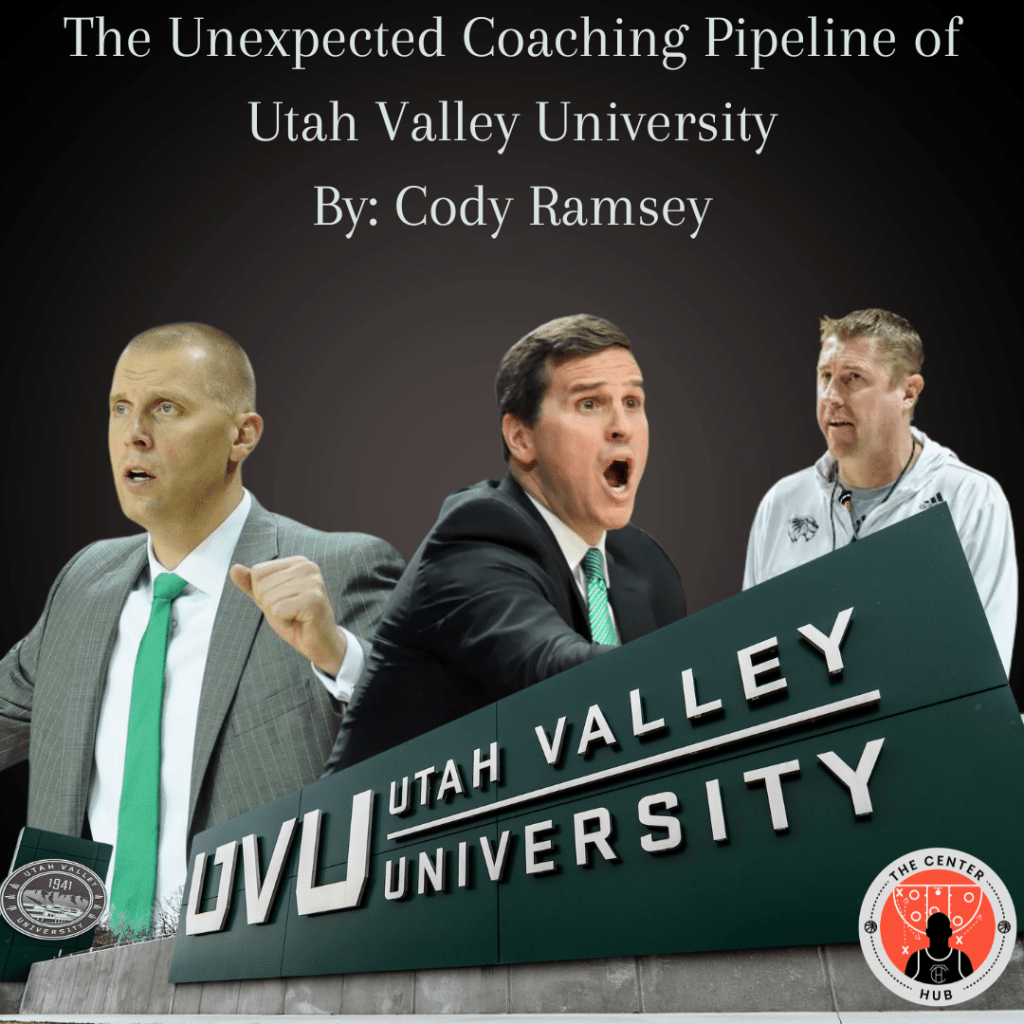
Utah Valley University (UVU) has achieved remarkable success in a relatively short period of time since its transition to Division I basketball. To truly appreciate how far the program has come, it’s essential to look back at its history and understand the challenges and milestones that have shaped its current stature.
UVU’s basketball journey began in the 1984-1985 season when the program first took the court. For nearly two decades, the team competed at the junior college level within the National Junior College Athletic Association (NJCAA). However, the 2003-2004 season marked a groundbreaking shift for the program as they made an unprecedented leap to Division I basketball. This move was historic, making UVU the only collegiate basketball program to transition directly from Junior College to Division I, a feat that drew significant attention from both the college basketball world and sports media.
In the 2008-2009 season, UVU joined the Great West Conference, marking another important chapter in its growth. The Great West, which no longer exists, was home to a collection of programs that would later be absorbed by other conferences such as the Horizon League, Big West, and Western Athletic Conferences. Despite the challenges inherent in being part of a newly formed, non-automatic qualifying conference, UVU’s basketball program continued to develop, setting the stage for the success it enjoys today.
As we look back on the history of UVU basketball, we can better understand the path the program has taken—from humble beginnings at the junior college level to competing at the highest levels of NCAA Division I basketball. The story of UVU basketball is one of perseverance, ambition, and an unyielding drive to compete at the top of the collegiate basketball world.
Dick Hunsaker Era (2002-2015)
Coach Dick Hunsaker took on the daunting challenge of leading a program transitioning from the junior college (JUCO) level to Division I basketball. This move was unprecedented, and it occurred during his second season as head coach of the Utah Valley Wolverines. At the time, Utah Valley was classified as an independent school, not yet associated with any conference. The first season in Division I was a steep learning curve, as the Wolverines finished with a 16-13 record. However, this season laid the foundation for future success and growth.
In the 2006-2007 season, Utah Valley made a significant leap forward, finishing with a 22-7 record and posting an impressive point differential of +11.3. This strong performance put the Wolverines on the radar of various conferences, as Utah Valley’s success made them an attractive potential member for conferences looking to expand.
The next notable moment of success came in the 2010-2011 season when Utah Valley finished first in the Great West Conference, with an 11-1 conference record and an overall mark of 19-11. The following season, the Wolverines continued their upward trajectory, securing another 20+ win season and once again finishing first in the Great West Conference. They earned a postseason bid to the CollegeInsider.com Tournament (CIT), although they were eliminated in the first round.
With the eventual disbandment of the Great West Conference, Utah Valley joined the Western Athletic Conference (WAC) in 2013. In their first season in the WAC, the Wolverines continued to impress, finishing with a 20-12 record and a 13-3 mark in conference play, which earned them a first-place finish in the WAC standings. This season also marked a historic achievement for the program, as Utah Valley earned its first invitation to a nationally recognized postseason tournament—the National Invitation Tournament (NIT). Although the Wolverines were eliminated in the first round, this was a significant accomplishment considering the program had only been elevated to Division I just a decade earlier.
Coach Hunsaker’s tenure came to an end after the 2014-2015 season, with a solid overall record of 96-91 (.513), including four conference coach of the year honors in his tenure. While there was some speculation about Hunsaker’s departure, the respect he garnered from both his coaching staff and former players speaks volumes about his character and the positive culture he cultivated within the program. His leadership played a crucial role in Utah Valley’s successful transition from JUCO to Division I, and his legacy remains a significant part of the Wolverines’ rise to national prominence.
“Coach Hunsaker is the best coach that I have ever played for. He is a leader, role model, counselor, and since I’ve left UVU he has become and even closer friend to family and I. He prepared me for the NBA, as well as life after basketball. I’m honored to have had a chance to play for him, and grateful to be able to call him family.”– Ronnie Price, Former UVU Player From 2002-05
“I love Coach Hunsaker. He treated me like a son. I have never worked for a more competitive coach, or a coach that cared more about his players. I am very appreciative of my experience coaching with him.” – Terry Parker, Former UVU Assistant Coach, 2013-14
Mark Pope Era (2015-2019)
Mark Pope’s journey into coaching has been anything but linear. In 2006, Pope made a surprising career shift when he enrolled in medical school at Columbia University, after having spent time in the NBA. However, his passion for basketball eventually led him back to the sport. In 2009, he was offered a position on the coaching staff at the University of Georgia under head coach Mark Fox. From there, Pope’s coaching path took him to Wake Forest and then BYU as an assistant coach.
In 2015, following the departure of Coach Dave Rose’s assistant coach, the opportunity arose for Pope to take on a head coaching role at Utah Valley University (UVU). His first season, 2015-2016, was a period of transition, as he guided the team to a 12-18 overall record and a 6-8 conference record. The following year, Pope’s leadership began to take shape, with UVU finishing 17-17, again with a 6-8 record in conference play. While this record may not have seemed spectacular, there was significant progress. Notably, Pope’s emphasis on defense resulted in an improved point differential of +4.0, demonstrating a noticeable shift in the team’s overall performance.
Building a program from the ground up takes time, and Pope’s ability to lay a strong foundation was evident in his third season. The 2017-2018 campaign marked a breakthrough for UVU, as Pope led the team to a 23-11 overall record and a 10-4 mark in conference play, earning a second-place finish in the WAC. The team’s point differential improved dramatically to +10.2, reflecting the growing success of Pope’s system and approach. Pope’s coaching began to gain national attention, with many viewing him as one of the most underrated coaches in the country.
Pope continued his success into the 2018-2019 season, finishing with a 25-10 record and a 12-4 conference record, again securing second place in the WAC. At this point, Pope’s tenure at UVU came to an end as he was offered head coaching positions at several high-major schools. Ultimately, Pope chose to return to BYU, where he had previously served as an assistant coach under Dave Rose.
One of Pope’s defining qualities is his connection with players, earning him a reputation as a “players’ coach.” This is exemplified by the fact that players are drawn to play for him, regardless of the school he is at. During his time at Utah Valley, Pope compiled a 77-56 (.577) overall record, including a 33-24 mark in WAC play. Perhaps his most impressive accomplishment was his role in helping UVU make the biggest three-year improvement in the country according to KenPom rankings, taking the team from No. 343 in 2015-2016 to No. 91 by the end of the 2017-2018 season.
Pope’s lasting impact at UVU helped catalyze the program’s rise, setting the stage for the continued success that is now unfolding. His leadership, vision, and commitment to developing both players and the program have made him a key figure in college basketball, and his legacy at Utah Valley remains evident to this day.
“Mark Pope’s appointment might be the best hire in the country. I coached him over 20 years ago and he later served as part of my staff. He and Lee Anne are wonderful people and will be great additions to the Utah Valley family. He has an infectious spirit that will immediately energize the program. Mark was able to play for great coaches during his terrific playing career. His knowledge of the game and the skill set he brings to the job will make him a huge success.”– Mark Fox
“Utah Valley is getting a great coach in Mark Pope. He will bring great energy and a love for the game to that program. Mark is a great recruiter and has all the tools to be a successful head coach. This is a great opportunity for him and his family. I wish him nothing but the best.”– Dave Rose, Head Coach, Bringham Young University
Mark Madsen (2019-2023)
Mark Madsen has long been associated with success in basketball, most notably through his time as a player on the early 2000s Los Angeles Lakers teams, where he became known for his work ethic and leadership. After retiring from the NBA, Madsen transitioned into coaching, starting with the NBA Development League (D-League). In 2009, he was hired as an assistant coach for the Utah Flash, but his stint was short-lived. By 2012, Madsen had taken an assistant coaching role at Stanford University, marking the beginning of his journey back to the G-League, where he served as an assistant coach for the Los Angeles D-Fenders in 2013.
When Byron Scott was dismissed as head coach of the Los Angeles Lakers in 2016, a significant shift in the Lakers’ coaching staff occurred. The G-League staff, including Madsen, was promoted, and Luke Walton was named the new head coach of the Lakers, with Madsen following him as an assistant coach. Madsen spent six seasons with the Lakers, contributing to the team’s development and continuing to build his coaching resume.
In 2019, following the departure of Mark Pope, Madsen took the head coaching position at Utah Valley University, tasked with continuing the success of the program. His first season as head coach, however, was a challenging one. The Wolverines finished the 2019-2020 season with a record of 11-19 and an 8th-place finish in the Western Athletic Conference (WAC), with a 5-10 conference record. While this could be perceived as a down year following Pope’s strong tenure, it’s important to recognize that regime changes take time, and Madsen was in the process of establishing his own identity and system within the program.
The 2020-2021 season saw a significant turnaround. In a condensed year due to the pandemic, Madsen led the Wolverines to an 11-11 record, and more impressively, the team finished tied for first in the WAC with a 9-4 conference record. This marked a turning point in Madsen’s tenure as he began to see the fruits of his labor, building the foundation for sustained success.
Over the next two seasons, Madsen’s Utah Valley teams continued to improve, with the Wolverines winning 20 games in each season. The 2022-2023 campaign was especially memorable as the team reached the National Invitation Tournament (NIT) for the first time in 9 years. Utah Valley finished with a remarkable 28-9 record, including a 15-3 mark in conference play. This was the program’s best season in recent memory, highlighted by a deep run in the NIT, where the team reached the semifinals.
Madsen’s success at Utah Valley solidified his reputation as a rising star in Division I basketball. His ability to develop players and lead his team to postseason success earned him widespread recognition, culminating in his winning the WAC Coach of the Year award for the 2022-2023 season. By the end of his tenure, Madsen had compiled a 70-51 record (.579) at Utah Valley, and his impact on the program was undeniable.
After the 2023 season, Madsen accepted the head coaching position at the University of California, marking the next chapter in his coaching career. While his departure was a significant loss for Utah Valley, Madsen’s time with the Wolverines left a lasting legacy. He instilled the same values of hard work, determination, and a commitment to excellence that had been passed down by his predecessors, continuing the tradition of winning basketball at Utah Valley University.
“When we interviewed Mark my immediate reaction was No. 1, he understood excellence; he’s got a track record of it. No. 2, I had a sense that he had character and care, and for UVU our fundamental value is exceptional care, so I knew he would care about our students, our players and the institution, not just basketball and himself. No. 3, he had coached already (assistant with the Lakers, head coach in the G League), so he had experience.” – Astrid Tuminez- UVU President
“I tell everybody that I know that Mark Madsen is the one-and-only, 100% honest basketball coach in America. He would rather get his arm cut off than break a rule.”– Nate Mathis, UVU Assistant Athletic Director for Corporate Partners
Todd Phillips (2023-Present)
Todd Phillips may be the next in line for a major coaching opportunity, following in the footsteps of his successful predecessors at Utah Valley University. Phillips began his coaching career as an assistant at Westminster College, where he spent eight years from 2000 to 2008. Afterward, he moved on to Salt Lake Community College, spending three more years (2008-2011) as an assistant coach before being named head coach in 2011.
During his eight-season tenure at Salt Lake Community College, Phillips built an impressive resume, amassing a record of 205-58 (.776) and leading the team to a NJCAA National Championship in 2016. His success at the junior college level caught the attention of higher-level programs, and in 2019, Phillips transitioned to the NCAA Division I ranks as an assistant coach under Mark Madsen at Utah Valley.
Following Madsen’s departure after the 2023 season, Phillips was promoted to head coach at Utah Valley. As with any coaching change, the first season under a new regime is often seen as a period of rebuilding. Phillips’ first year as head coach in 2023 saw Utah Valley finish with a 16-16 record. While this was considered a “down” year compared to the program’s previous successes, it is important to note that Phillips is the first coach in Utah Valley’s history to win more than 16 games in their inaugural season as head coach.
As of this writing, Phillips’ second season at the helm is proving to be a breakout year. Utah Valley holds an impressive 15-6 overall record, with a perfect 7-0 mark in conference play, placing them at the top of the Western Athletic Conference (WAC). This early-season success has generated excitement among fans and observers, signaling that Phillips may be on the verge of continuing the program’s upward trajectory.
Given the trajectory of Phillips’ coaching career, it is not out of the question that his success at Utah Valley will attract attention from high-major programs looking to poach a rising star. Like his predecessors, Phillips’ ability to build a competitive team and maintain success could make him a desirable candidate for larger programs in the future. If Phillips continues to lead Utah Valley to success, it’s likely that his name will be on the radar of athletic directors at high-profile universities across the country. For now, however, he remains focused on leading the Wolverines to even greater heights in the WAC and beyond.
Utah Valley High Major Coach University
Utah Valley University’s basketball program has undergone a remarkable transformation since its unprecedented jump from junior college to Division I in 2003. Over the course of its relatively short history, UVU has risen from humble beginnings to become a force in college basketball, thanks to a succession of dedicated and skilled coaches who have built the program step by step.
The foundation was laid under the leadership of Dick Hunsaker, who successfully navigated the challenges of transitioning a junior college program into the Division I ranks. His perseverance set the stage for future success, and his leadership in the early years proved essential in building the team’s credibility. Mark Pope continued this momentum by implementing a new defensive philosophy and achieving remarkable improvement in just a few years, cementing UVU’s position as a competitive force in the WAC. Mark Madsen, with his NBA pedigree and work ethic, further elevated the program, reaching new heights with a historic NIT run and earning accolades that placed UVU on the national map.
Now, under the leadership of Todd Phillips, UVU finds itself at another exciting crossroads. While Phillips inherited a program coming off a successful era, his early success in the WAC, including an impressive start to his second season as head coach, suggests that the program is poised for continued growth. Like his predecessors, Phillips has shown that he possesses the qualities necessary to lead UVU to sustained success—vision, determination, and the ability to connect with players. His potential to further elevate the program makes it clear that UVU’s basketball future remains bright.
The pipeline of coaches at UVU is one of continuous improvement and adaptability, and each coach has played a critical role in propelling the program to new levels. As the Wolverines continue to build on the success of their past, it’s evident that the legacy of strong leadership and high-level coaching will remain a key element in their quest for even greater achievements. Whether it’s winning conference titles or making deep postseason runs, Utah Valley’s basketball program is well-positioned to remain a contender, with the coaches who have shaped its history helping to fuel its continued rise.

 The Center Hub
Leave a comment