
We were really feeling the post-Feast Week blues at the beginning of the week, weren’t we?
The college basketball slates on Monday and Tuesday were pretty underwhelming, so it was a nice time to reflect on what transpired the week before. A lot of big boards were updated, taking into account what happened in Maui, Bahamas, Vegas and other tournaments.
I did an update as well. Putting together a big board at this point in time became immediately challenging immediately after writing down “1. Cooper Flagg, 2. Dylan Harper” – everything after that still feels super fluid and I’d have some qualms over almost any player that I could theoretically put at 3.
I still have Ace Bailey there, one of the reasons is that I really buy the defensive upside for him as a significant floor raiser. He did, however, had a very disappointing outing against Ohio State. How on earth does Bailey take 16 field goals, with only one of them being a 3 pointer?
Anyways, there’s a world outside of the Ace Bailey rim pressure discussion which seemingly becomes the hottest topic in draft circles every time he sets foot on a court. So let’s look into that world.
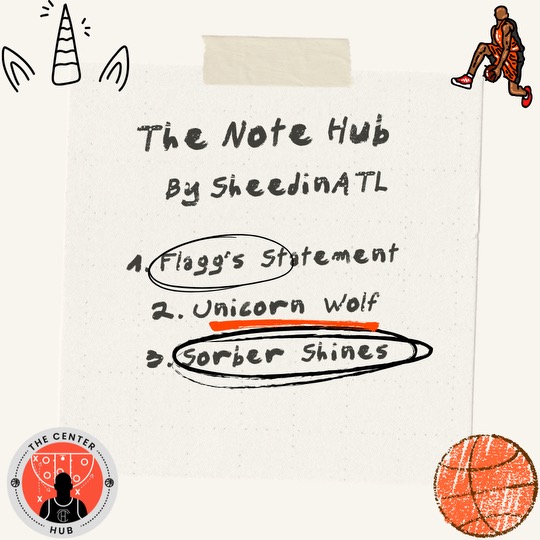
Flagg’s statement
With Harper putting up massive numbers in the Player’s Era Tournament in Vegas, Flagg’s position as the number 1 pick in the 2025 NBA Draft came into question, probably for the first time since he reclassified.
Flagg’s answer? He puts up 22 points, 11 rebounds, 4 assists, 3 steals and 2 blocks, en route to a win against the Auburn Tigers, winners of Maui Invitational, and at that time the best team in the nation. At least that’s what many people thought of Auburn.
There was never a debate about Flagg being a great defensive prospect; it was always more about his offense.
I have criticised Duke’s coach Scheyer, especially for his 2nd half coaching in the Champions Classic game against Kentucky, where he basically asked Flagg to carry his team offensively to the victory, which he failed gracefully, if that makes any sense.
Flagg has been hovering around 30% usage this season, logging 33% USG against Auburn. He’s basically been asked to be the offensive engine for Duke, so it shouldn’t be a shock for anyone to see him struggle from time to time, especially considering that, alongside a heavy offensive load, Flagg has also been anchoring the defense of a team with the best defensive rating in the entire D1.
His offensive creation is rough around the edges, but there’s definitely promise. He does lack counter moves when his initial driving lane is blocked off, but Flagg can always lean on his physical traits to aid him in creating space. Against Auburn, he displayed some neat footwork and nailed a couple of self-created mid range shots.
Flagg was thrust in a role of Duke’s primary generator of offense, which was not the role that most people expected to see him in. If anything, Flagg has been doing better than expected – per Synergy, as a p&r ballhandler he’s generating 1.017 points per possession, good enough for 73th percentile.
Considering that Flagg is not even 18 yet, and a generational defensive prospect, his early offensive output at Duke shouldn’t be a discouragement; quite the opposite, flashes have been very encouraging.
Unicorn Wolf
The Big Ten is back and on it’s first night of conference play it immediately served up some surprises, namely Michigan going out on the road and beating 11th ranked Wisconsin.
How did the Wolverines do it? Well, they did it by spamming pick & rolls with their two 7’0” bigs. Wait, what?
This is the unique proposition presented Wolverines, and it’s enabled by Danny Wolf, one of the most unorthodox players in all of college basketball, up until this season buried in the depths of the Ivy League at Yale, being at arms length from the national spotlight.
At the beginning of the week I wrote about my admiration for Wolf’s guard-like abilities at 7’0”, but I still refrained from putting him in my big board, assuming that, as a junior, he’d be back for another college season.
Wolf indeed does handle the ball and play a lot like a guard; he has to for the combination with Vlad Goldin, a more of a traditional back-to-basket center, work. As a 7’0” guard, Wolf is a matchup problem every time he comes up the floor.
Bigs struggle to guard him because he consistently pulls them out on the perimeter and forces to defend p&r’s. He has the vision, height and court awareness to throw skip passes to the corner. Wolf has some of the most ridiculous live-dribble passing abilities that you’ll ever see from a player of his stature.
There are a few caveats with Wolf. First of all, so far this season he commits an absurd amount of turnovers, something that was not the case at Yale (though Wisconsin game was his best in terms of protecting the ball). I think some of it is down to adjusting – as well as Wolf and Golding worked against Wisconsin, they’re still feeling each other out. At least this season so far, Wolf has been a player that’s as capable of making incredible reads and passes as he is prone to bad decisions and inexplicable passes.
His defense would be another question at the next level, but at least against Wisconsin, I did like his activity on that end of the floor.
Sorber shines…
Georgetown’s Thomas Sorber had already opened up a lot of eyes with his play to begin the season, but before last weekend, he was mostly dominating much weaker opposition. For that reason I decided to remain in a bit of a wait-and-see mode and put Sorber at 25 in my big board.
On Friday Georgetown came to Morgantown, to face a rejuvenated West Virginia squad, fresh off two mightily impressive quad 1 wins in Bahamas. This Big East/Big 12 challenge matchup was Georgetown’s biggest test so far.
The Hoyas fought admirably for most of the game, but ultimately gave up a run in the second and lost 60:73.
Interestingly enough, the Mountaineer’s run coincided with Sorber picking up his 4th foul, which forced him to a bench at a crucial moment of the game. This was probably the biggest criticism I had of Sorber in that game – he limited his influence by committing some avoidable fouls fighting for position in the post and defending vertically. He did pick another two defending guard drives – his body did seem out of control and Sorber had trouble keeping his body away from the attacker and using length to contest instead.
But his blend of size and feel is really moving. Sorber is super imposing with his physicality, using his naturally big frame to carve out space in the post and gobble up rebounds. His hustle and willingness to keep possessions alive and go after loose balls adds another layer to his dominant interior play.
This, combined with strong screen setting, handoffs, quick rolls to the basket and the ability to make great basketball plays for his teammates sets him apart from your average center. Sorber flashed his impressive driving ability, which is aided not only by his physicality, but also ability to make quick reads and hit corner shooters with precise passes.
…Demin struggles
Big East/Big 12 face-off brought about the first real test for another early riser in the 2025 NBA Draft, BYU’s Egor Demin.
Unlike Sorber, he, however, had a very rough outing away at Providence, going 0-10 from the field (0-5 from three), with his only 6 points coming from the line.
Demin’s rise came from his early play in non-con, where he looked like a 6’8” lead guard with super high level court awareness and passing ability – the sort of prototype that could get you drafted in the top5, or even higher, i.e. Sam Vecenie from The Athletic actually went with Demin in 2nd on his latest big board, instead of Dylan Harper, the more popular choice nowadays.
The “Demin, 6’8” offensive engine” prototype was really put to a test in Providence. The Friars made BYU’s star uncomfortable, especially with Bensley Joseph really pushing the boundaries of physical on-ball defense.
Demin had major problems beating that pressure. Providence sped up his decision making, made him uncomfortable on the drives, forced to give up the dribble and the ball. When he managed to at least semi-beat the first layer of defense, Demin was often left knocked off his stride a bit, and then facing another layer of defense at the rim.
It was not all doom and gloom for Demin, however. The BYU player made good plays when teammates set him free with good ball screens and his phenomenal playmaking abilities were apparent, albeit in small doses. Demin’s teammates smoked some layups after he set them up well. He missed some very makable shots as well. Demin could’ve easily had something like 13 points and 6 assists.
With Demin, his draft position will surely be determined by the role that he’ll be able to project himself onto at the next level. If he’s a 6’8 lead guard, Demin is a player worthy of a top5 pick. If he’s a connective wing, well, we’re most likely talking about the back end of the lottery. Either way, he’s still only 18; the “Demin, the 6’8” offensive engine” vision should not get killed after a single bad game in Long Island.
Essengue goes to the line. A lot
Like Flagg, Ratiophram Ulm forward Noa Essengue is not yet 18, but is quietly putting together a very good season, especially in the EuroCup. He ranks 7th in the entire competition in performance index rating, though,
The PIR, a metric widely used in Euroleague and FIBA competitions, rewards a few things, like efficient shooting, rebounding and foul creation. Essengue has been excelling at the latter, generating fouls and free throws at a ridiculous rate and sits at an
Essengue has been living at the free throw line in European games. He has shot an astounding 74 foul shots in just 10 Eurocup games; he’s taken more FT’s than FG’s.
The forward has a very advanced foul drawing craft for a player of his age. He works the angles very well and has a great knack for leaning into opponents while shooting. Essengue’s frame is narrow and he has ways to go getting stronger, but that doesn’t detract him from driving and seeking contact.
His shooting has been streaky; Essengue is shooting 70% from the line in the Eurocup, around the same level he shot in the U18’s. He’s consistently adding new things to his game, including playmaking from the post, which was apparent in last week’s game against Sopot Trefl.
For some reason, the Frenchman hasn’t been able to translate this level of production in the German league so far.
Despite that, the long-term upside bet on Essengue is still pretty much on.

 The Center Hub
Leave a comment